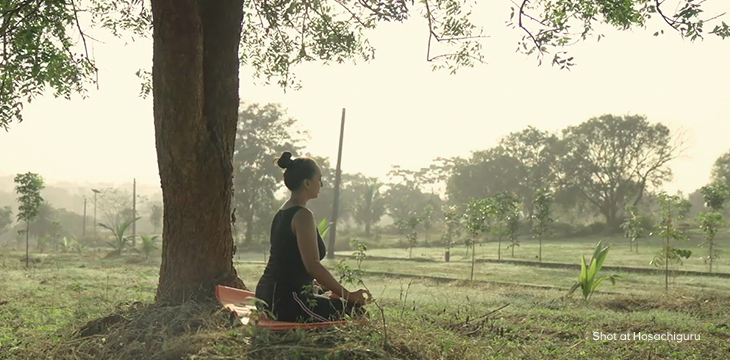
You have been thinking about owning a farm plot near Bengaluru for months. The idea of fresh air, mango trees, and weekend escapes sounds perfect. But here is the honest question: can you actually use a farm plot if you visit only once a month? For Bengaluru families with demanding careers, the answer depends entirely on how you choose the plot and who manages it between visits. Hosachiguru, a managed farmland company operating since 2013 with 1,600 acres under management, has built its model around exactly this kind of owner.
TL;DR – Summary
- What is managed farmland? – Managed farmland is agricultural land where a professional team handles planting, irrigation, soil care, and harvesting on your behalf. You own the title; the management company runs daily operations. This model is designed for city families who cannot visit frequently.
- Why does visit frequency matter? – Monthly visitors need reliable on ground management, digital visibility into farm activity, hospitality readiness for family stays, and legal clarity that removes operational anxiety. Without these, a farm plot becomes an unused liability.
- What criteria should guide your choice? – Prioritize drive time under 90 minutes, professional farm management with agronomy support, a digital tracking app like Hosachiguru’s MyFarm, clear legal title with due diligence support, and on site hospitality such as cottages and a clubhouse.
- Where are the best corridors? – Hosachiguru operates across two main corridors near Bengaluru: the Chikkaballapur and Hindupur corridor in the north (45 to 90 minutes from the airport) and the Ramanagara and Denkanikottai corridor in the south (45 to 90 minutes from NICE Road or Electronic City).
- How does the MyFarm app help? – The MyFarm app by Hosachiguru provides real time farm updates, harvest reports, water usage data, plantation tracking, retreat booking, and document access, so monthly visitors stay connected to their land without being physically present.
Why monthly visits need a different checklist
Most farm plot buyer guides assume weekly or biweekly visits. That assumption changes everything: irrigation oversight, pest response times, harvest coordination, and security monitoring all require someone on the ground. If you plan to visit once a month, the plot itself matters less than the ecosystem around it.
A monthly visitor needs five things working in parallel: short drive time, professional management, digital transparency, legal peace of mind, and hospitality infrastructure. Miss any one, and the farm becomes a source of stress rather than a retreat. The criteria below are ordered by how directly each one affects a monthly owner’s experience.
Criterion 1: drive time under 90 minutes
If a round trip eats four or more hours, monthly visits start feeling like chores. The sweet spot for Bengaluru families is 45 to 90 minutes of drive time. This keeps the farm accessible for a single day trip or a comfortable overnight stay.
Hosachiguru’s projects are positioned within a 60 to 90 minute drive from Bangalore. The Chikkaballapur and Hindupur corridor in the north and the Ramanagara and Kanakapura corridor in the south (45 to 60 minutes from NICE Road) anchor the two main directions.
Specific projects illustrate the range. Unnati, near Chikkaballapur, sits 45 minutes from Bengaluru airport. Maamara, near Ramanagara, is described as the closest managed farmland to Bengaluru, nestled between a hill and a lake across 25 or more acres. Sambrahma Farms near Denkanikottai is 120 or more acres of forest and countryside, positioned for the South Bangalore and Electronic City corridor.
Before shortlisting, map the route from your home or office, not just from a city landmark. Weekend highway traffic on the Mysore expressway or NH 44 can add 20 to 30 minutes. A test drive on a Saturday morning gives you the real number.
Criterion 2: professional farm management
This is the single most important factor for a monthly visitor. Without a professional team handling daily operations, your land sits idle between visits. Managed farmland solves this by assigning an agronomy team, irrigation planners, and on ground staff to your plot.
Hosachiguru takes care of planting and nurturing trees, irrigation, soil management, farm maintenance, and harvesting. Their agronomy team handles planting, pruning, irrigation, and pest control, while sensors, drones, and AI track every tree and plant.
When evaluating any managed farmland provider, ask these questions before signing:
- How large is the on ground team?
- What farming method do they follow?
- How are harvests distributed to owners?
- What does the annual maintenance cover?
Hosachiguru positions itself as offering 15 year professional farm management and describes itself as a 100 percent organic managed farmland developer. Their Abhivrudhi project, for example, offers 15 year management with chemical free farming and a thriving agroforest.
Criterion 3: digital transparency via app
Monthly visitors cannot inspect their plot in person every week. A farm management app bridges that gap. It should show what is growing, what was done this week, how much water was used, and whether any issues arose.
The MyFarm app by Hosachiguru offers multi farm support, real time notifications, a dashboard with media updates and asset overview, an activities screen showing recent plot work, an assets screen with land extent and plantation details, and a monitoring screen with real time weather, plant, and soil data.
Every irrigation, pruning, and harvest activity is logged in the MyFarm app, and owners receive real time alerts, drone imagery, soil metrics, and financial tracking. Recent updates introduced a plantation module to track live plantation status with tree count and age, plus the ability to view the design layout of a unit plot directly in the app.
For a monthly visitor, this kind of visibility can replace the anxiety of not knowing what is happening on the ground. If a provider does not offer a comparable digital layer, you are relying entirely on phone calls and trust.
Criterion 4: legal clarity and title
Farmland purchases in Karnataka involve specific legal frameworks that every buyer should understand before committing funds. The 2020 repeal of Sections 79A and 79B opened farmland ownership to non agriculturists and companies. Buyers no longer need to prove they are full time farmers; the 2020 Land Reforms Amendment removed the old agriculturist certificate requirement.
Key documents to verify before purchase include the title deed with an unbroken chain of ownership, a 30 year encumbrance certificate, RTC records, mutation register extract, and zoning clearances. An independent legal review is strongly recommended.
Hosachiguru Unnati is one of the limited RERA approved farmland projects around Bangalore, meaning the developer must provide project timelines, escrow protected funds, and is legally accountable for delivery. The RERA registration number for Unnati is PRM/KA/RERA/1251/446/PR/190924/007045.
RERA approval is not common in the managed farmland category. Most agricultural plots do not fall under RERA requirements. When a project does carry RERA registration, it can provide an additional layer of regulatory protection for the buyer.
Criterion 5: hospitality and stay infrastructure
A monthly visit only feels worthwhile if you can stay comfortably. Look for projects that offer eco farm stay cottages, a clubhouse, outdoor dining, and family friendly amenities. Without these, your visit is a site inspection, not a retreat.
Hosachiguru Unnati’s amenities include a swimming pool, indoor games area, yoga and meditation decks, fitness center, forest trails, nature campsites, rock climbing walls, and cycling and jogging tracks. The project features a 20,000 sq ft clubhouse.
Co farmers at Maamara describe the experience as a true escape with deer roaming freely, farm fresh food, and warm hospitality, calling it a blend of nature and comfort. The MyFarm app also supports retreat booking using membership points.
For families with children, hospitality readiness transforms a monthly visit into a genuine family retreat. Kids activities, outdoor play areas, harvest experiences, and chemical free farm fresh meals make the trip meaningful beyond just checking on the land.
Quick comparison: Hosachiguru project corridors
| Dimension | North corridor (Chikkaballapur, Hindupur, Bagepalli) | South corridor (Ramanagara, Denkanikottai) |
|---|---|---|
| Drive time from Bengaluru | 45 to 90 minutes from airport or city | 45 to 90 minutes from NICE Road or Electronic City |
| Key ongoing projects | Unnati, Abhivrudhi, Eco Habitat, Samruddhi | Maamara, Sambrahma |
| Plot sizes available | 5,400 sq ft (Unnati) to half acre and above (Abhivrudhi) | Quarter acre and above (Sambrahma), 8,200 sq ft (Maamara) |
| Starting price range | From approximately 40L (Abhivrudhi) to 1.25 Cr (Unnati) | From approximately 55L (Sambrahma) to 1.15 Cr (Maamara) |
| RERA approved option | Yes (Unnati) | Not indicated for current projects |
| Landscape character | Hills (Varlakonda, Skandagiri), agroforest, open grassland | Ramanagara hills, mango orchards, forest views, Cauvery Wildlife Sanctuary route |
| Hospitality amenities | 20,000 sq ft clubhouse (Unnati), eco farm stay cottages | Eco retreat cottages, farm fresh meals, lake and hill setting |
Scoring matrix for monthly visitors
Use this matrix to evaluate any farm plot near Bengaluru against the five criteria that matter most for once a month ownership. Score each dimension from 1 (poor) to 5 (excellent) based on your site visit and documentation review.
| Criterion | What to evaluate | Red flag (score 1 to 2) | Green flag (score 4 to 5) |
|---|---|---|---|
| Drive time | Actual weekend drive from your home | Over 2 hours one way | Under 75 minutes with highway access |
| Farm management | On ground team size, farming method, AMC scope | No dedicated team; owner must arrange labor | Full time agronomy team, chemical free methods, 10 or more year management commitment |
| Digital transparency | App or portal with real time updates | No app; updates only via phone calls | Dedicated app with activity logs, harvest reports, water data, and document access |
| Legal clarity | Title chain, EC, mutation, RERA or equivalent | Incomplete title chain; no independent legal review offered | Clear title, in house legal team, RERA registration where applicable |
| Hospitality readiness | Cottages, clubhouse, family amenities | No stay infrastructure; bare land only | Cottages, clubhouse, farm fresh dining, kids activities, retreat booking via app |
A total score of 20 or above across all five criteria suggests the plot can realistically serve a monthly visitor. Below 15, the ownership experience is likely to feel burdensome rather than rewarding.
How managed farmland works in India
Hosachiguru’s approach centres on combining land ownership with organised farming and plantation management. The managed farmland model in India works like this: you purchase a titled plot of agricultural land. A management company then handles all farming operations on that land, from soil preparation and planting to irrigation, pest management, and harvesting.
The MyFarm app serves two purposes: it brings the experience of owning farmland to the customers’ fingertips through farm assets, activities, and weather monitoring data, and it helps the operations team on the farm conduct their activities. This dual function is what makes the model viable for owners who visit infrequently.
Hosachiguru describes itself as India’s largest managed farmland brand, with 1,200 or more acres and 1,000 or more co farmers. As of 2026, the company reports 1,600 acres under management, 1,800 co farmer families, and 27 farms delivered.
What to do before your first visit
Before you even schedule a site visit, complete these steps from your desk. First, verify the legal framework. Karnataka now allows any individual to buy agricultural land, even from a non agriculturist background, and Indian residents, institutions, and corporate establishments can buy and sell land. Confirm your eligibility based on current income thresholds and zoning rules.
Second, request a soil test report for the specific plot you are considering. Soil health data, including pH, organic carbon content, and drainage assessment, tells you whether the land can sustain the farming model being promised.
Third, ask for a 30 year encumbrance certificate and an independent title verification. The title deed should show an unbroken 30 year chain of ownership. Do not rely solely on the developer’s legal team; engage your own lawyer for a parallel review.
Fourth, download the management app (if one exists) and explore its features before committing. A robust app signals operational maturity. A missing or shallow app suggests the management layer may not be strong enough for a monthly visitor’s needs.
Choosing a farm plot for monthly visits is not about finding the most beautiful land. It is about finding the most reliable system around the land. The five criteria above, drive time, management depth, digital transparency, legal clarity, and hospitality readiness, form a practical framework for Bengaluru families who want ownership without operational burden. Hosachiguru’s managed farmland model, with its MyFarm app, on ground agronomy teams, and projects across both north and south Bengaluru corridors, is designed to address exactly this pattern of ownership. Evaluate every option against the scoring matrix, visit at least twice before buying, and prioritize the system over the scenery.
FAQs
1. How does managed farmland work in India?
You purchase titled agricultural land, and a professional management company handles all farming operations including planting, irrigation, soil care, and harvesting. Hosachiguru, for example, assigns an agronomy team and provides digital tracking through its MyFarm app, so owners do not need farming experience or daily involvement.
2. How does the MyFarm app help farm owners?
The MyFarm app by Hosachiguru gives owners real time updates on farm activities, harvest reports, water usage, plantation status with tree count and age, retreat booking, and document access. It is designed for owners who cannot visit frequently and need remote visibility into their land.
3. What is the best farmland within 1 hour of Bangalore?
Hosachiguru operates multiple projects within 45 to 90 minutes of Bengaluru. Unnati near Chikkaballapur is 45 minutes from the airport, and Maamara near Ramanagara is accessible within 45 to 60 minutes from NICE Road. Both corridors offer managed farmland with hospitality amenities.
4. Can non agriculturists buy farmland near Bangalore?
Yes. Karnataka’s 2020 Land Reforms Amendment removed the old agriculturist certificate requirement. Indian residents can now purchase agricultural land regardless of profession, subject to income thresholds and zoning rules. An independent legal review before purchase is still recommended.
5. What should I check before buying a farm plot for monthly visits?
Evaluate five criteria: drive time under 90 minutes, professional farm management with a dedicated agronomy team, a digital app for remote monitoring, clear legal title with independent verification, and on site hospitality infrastructure like cottages and a clubhouse for comfortable stays.