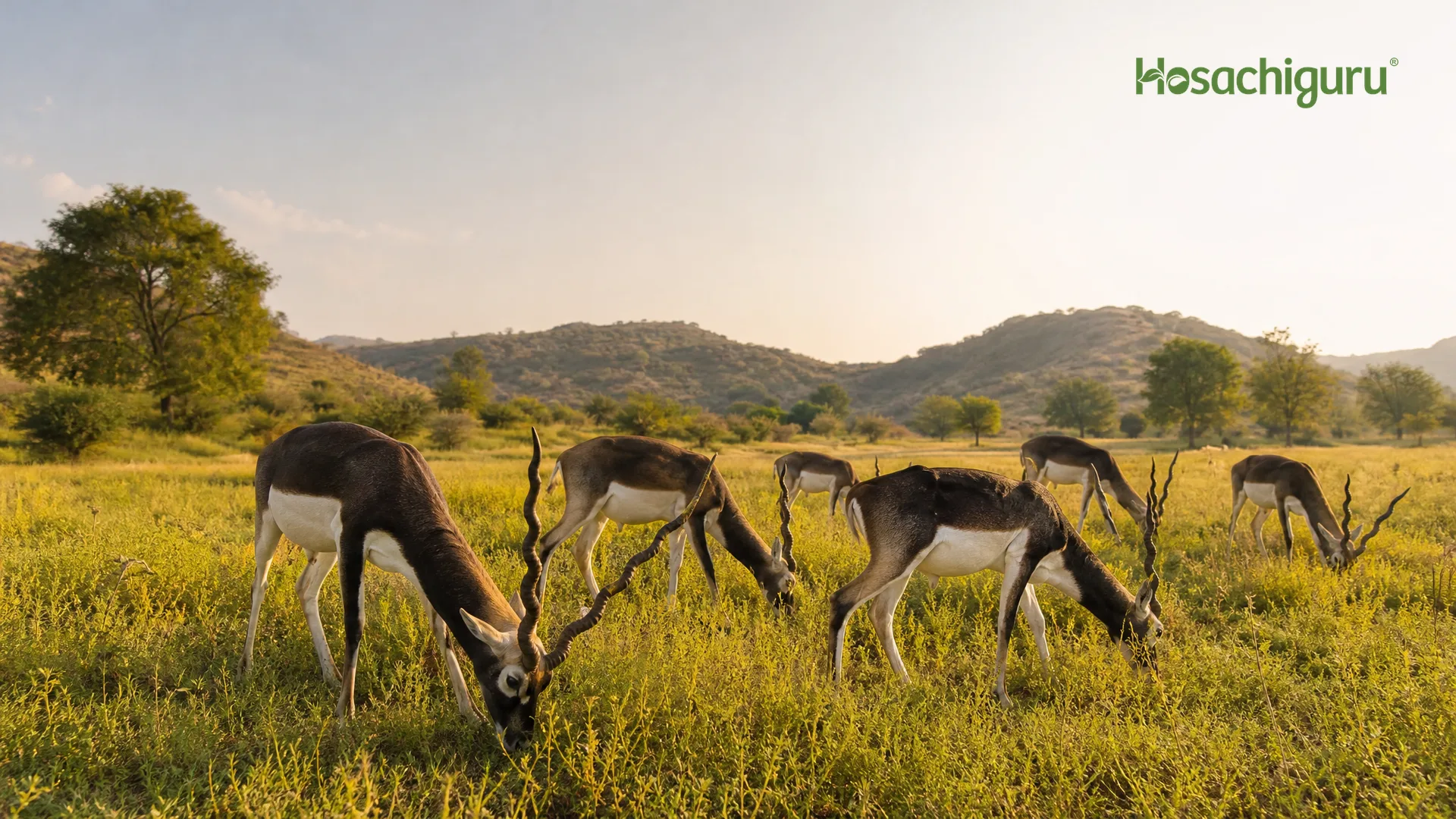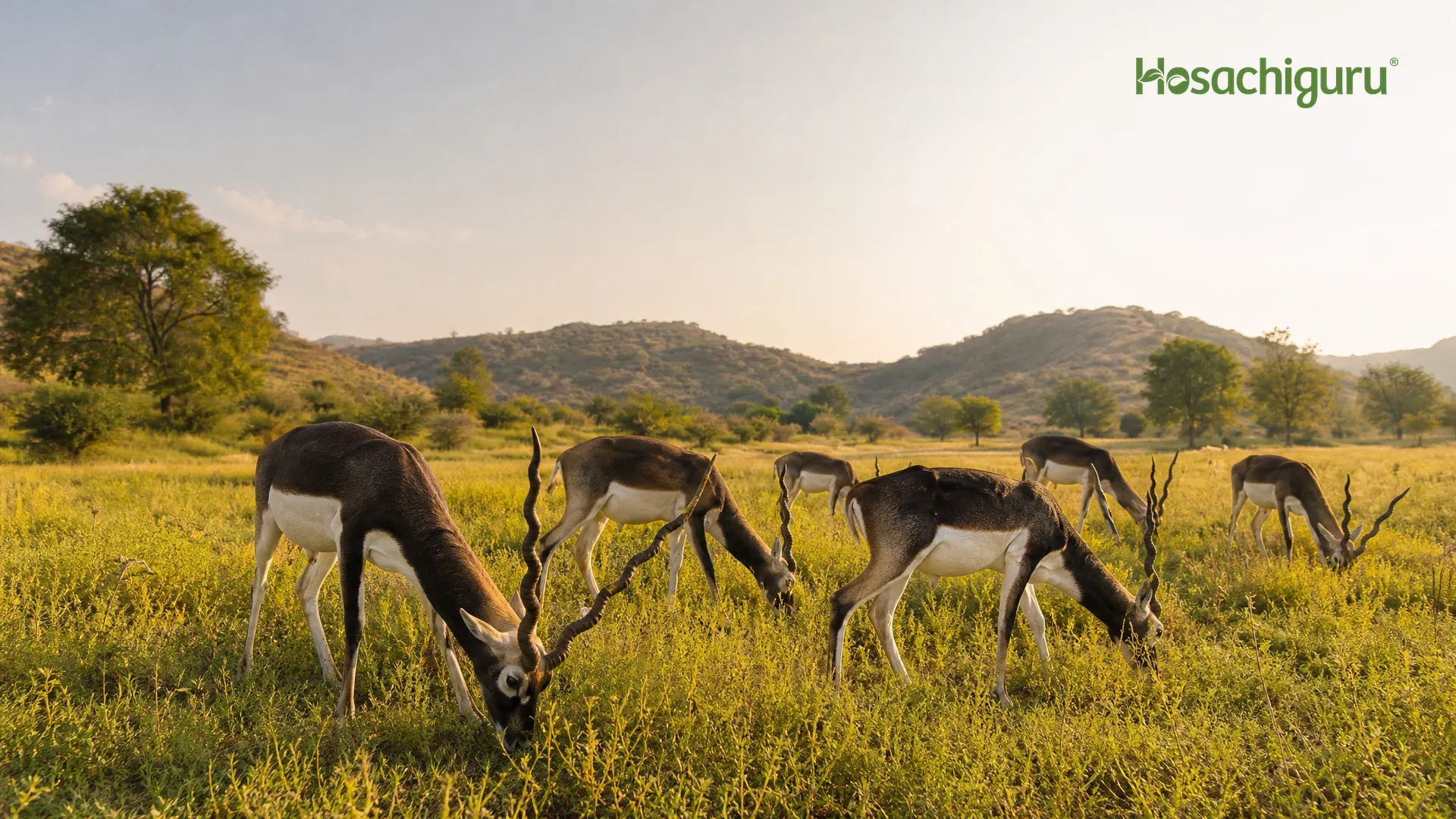
You have probably never thought of blackbucks as soil scientists. Yet the Jayamangali Blackbuck Reserve, tucked between Hindupur and Madakasira, holds a quiet lesson for anyone eyeing farmland in this belt. The grasslands these antelope depend on are not accidental. They are indicators of something valuable happening underground.
TL;DR – Summary
Why do blackbuck grasslands matter? – Thriving native grasslands at Jayamangali signal high soil organic carbon, active microbial life, and strong water retention, all markers of genuinely healthy land in the Hindupur to Madakasira belt.
What makes this region’s soil special? – The semi-arid Deccan plateau soil here holds moisture efficiently when its organic layer is intact. Grassland root systems build carbon reserves and prevent erosion across seasons.
How does soil health connect to farmland value? – Land with higher organic carbon supports better yields, needs fewer chemical inputs, and retains water longer. These traits reduce long-term management costs and improve land resilience.
What is regenerative farming’s role? – Regenerative practices like mulching, companion planting, and chemical-free methods restore and maintain the same soil qualities that make wild grasslands thrive.
Who should care about this? – Bengaluru residents exploring farmland near Hindupur benefit from understanding soil character before investing. Healthy soil is the foundation of any productive, sustainable farm plot.
What Jayamangali’s grasslands reveal about soil beneath
The Jayamangali Blackbuck Reserve spans open grasslands along the Karnataka and Andhra Pradesh border. Blackbucks are selective grazers. They thrive only where grass species are diverse and nutritious, which requires soil that cycles nutrients effectively. Their sustained presence across decades tells us the soil here maintains its fertility naturally, without external chemical inputs.
Native grasses in this landscape send roots deep into the earth, sometimes over a metre down. These root networks do two critical things. They deposit organic carbon into the soil profile, and they create channels that allow rainwater to percolate rather than run off. The result is land that holds moisture well into the dry months.
Soil organic carbon and why it matters for farmland
Soil organic carbon is the single best indicator of productive land. It feeds microbial communities that break down nutrients into forms plants can absorb. In the Hindupur to Madakasira belt, soils with intact grassland cover tend to have measurably higher organic carbon than land that has been repeatedly tilled or treated with synthetic fertilisers over many years.
For anyone considering farmland near Hindupur, this distinction is practical, not academic. Higher organic carbon means the soil holds water longer during dry spells, supports healthier root systems, and requires fewer costly amendments. It is the difference between land that works with you and land that constantly demands correction.
Microbial activity as a hidden asset
Beneath every square metre of healthy grassland, billions of microorganisms process organic matter into plant-available nutrients. Mycorrhizal fungi extend root reach. Nitrogen-fixing bacteria reduce dependence on synthetic fertilisers. This microbial ecosystem is fragile. Overuse of chemicals or aggressive tilling can collapse it within a few seasons, and rebuilding takes years of careful management.
When you evaluate a farm plot, soil testing that includes microbial activity indicators gives you a clearer picture than pH and nutrient profiles alone. Plots in this belt that have been managed with regenerative or chemical-free methods tend to show richer microbial diversity, a genuine competitive advantage for long-term productivity and lower input costs.
Water retention in a semi-arid landscape
The Hindupur to Madakasira corridor sits in a semi-arid zone where rainfall is seasonal and sometimes unpredictable. Land with poor soil structure loses most of its rainwater to surface runoff. But land with high organic matter acts like a sponge, absorbing and holding moisture in the root zone where crops and trees actually need it.
This natural water retention capacity reduces dependence on borewells and external irrigation. Combined with rainwater harvesting systems and drip irrigation, farmland in this belt can sustain productive agroforestry and food forest plantings even through lean monsoon years. The soil’s ability to hold water is, in many ways, the most valuable infrastructure a plot can have.
What this means for farmland buyers from Bengaluru

If you are exploring farmland near Hindupur or along the Hindupur Madakasira NH, the land’s natural soil character should be central to your decision. A soil test report covering organic carbon content, microbial activity, pH, and drainage assessment tells you more about long-term viability than location or price alone. Healthy soil is the foundation everything else builds on.
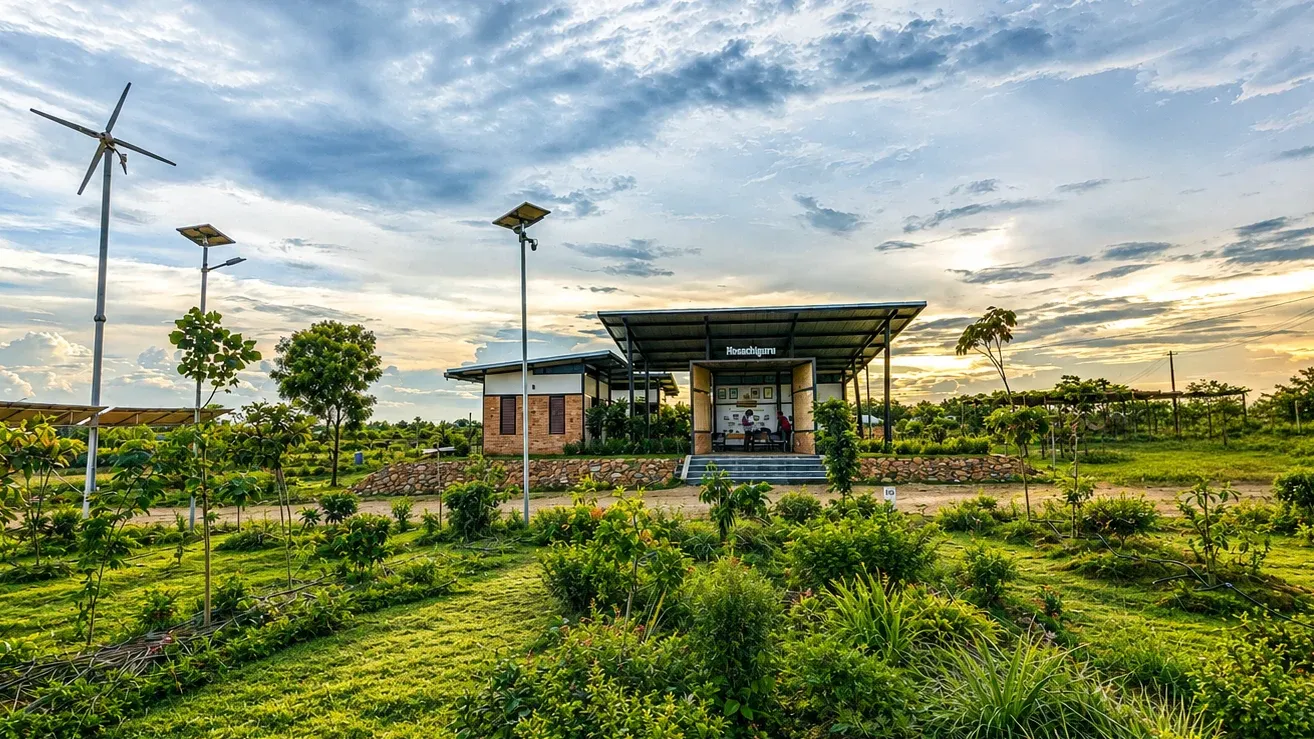
Organisations like Hosachiguru, which operate managed farmland in this region, have adopted regenerative farming practices that align with the soil’s natural strengths. Their approach, centred on chemical-free methods, companion planting, mulch layers, and biodiversity restoration, works to preserve and enhance the same soil qualities that keep Jayamangali’s grasslands alive. It is a model that respects the land rather than extracting from it.
Regenerative farming and the grassland connection
Regenerative agriculture borrows directly from what healthy grasslands do naturally. Cover crops mimic the continuous root presence of native grasses. Mulching replicates the organic litter layer that feeds soil microbes. Avoiding chemical inputs protects the microbial communities that cycle nutrients. These are not abstract principles; they are observable in the contrast between well-managed plots and degraded ones across this belt.
For Bengaluru families considering a managed farm plot, understanding this connection reframes the investment. You are not just buying a piece of land. You are acquiring a living ecosystem whose value compounds over time, provided it is managed with practices that build soil health rather than deplete it. The blackbucks at Jayamangali already know which land is worth standing on.
Start by requesting a detailed soil test report for any plot you are considering in the Hindupur to Madakasira belt. Compare organic carbon levels, check microbial health indicators, and ask how the land has been managed. Whether you choose managed farmland or an independent plot, let the soil’s story guide your decision. Healthy land is the smartest investment you can make.
FAQs
1. Why is soil organic carbon important when buying farmland near Hindupur?
Soil organic carbon directly determines how well land retains moisture, supports microbial life, and delivers nutrients to crops. Farmland with higher organic carbon needs fewer chemical amendments and performs better during dry spells. For buyers in the Hindupur to Madakasira belt, it is the clearest indicator of long-term land productivity and resilience.
2. How does the Jayamangali Blackbuck Reserve indicate soil health in the region?
Blackbucks thrive only on diverse, nutrient-rich grasslands sustained by healthy soil. Their continued presence at Jayamangali signals that the surrounding land maintains high organic carbon, active microbial ecosystems, and strong water retention naturally. This makes the reserve a living reference point for soil quality in the Hindupur corridor.
3. What should I check in a soil test report before buying farmland?
Look for organic carbon content, pH levels, microbial activity indicators, nutrient profiles, and drainage assessment. These five parameters reveal whether the soil can sustain productive farming long-term without heavy chemical inputs. A plot-specific soil report is essential before committing to any farmland purchase near Bangalore or Hindupur.
4. How does regenerative farming improve soil health on managed farmland?
Regenerative farming uses practices like mulching, companion planting, cover cropping, and chemical-free pest management to rebuild soil organic carbon and microbial diversity. Over time, these methods improve water retention, reduce erosion, and increase natural fertility. Managed farmland projects applying regenerative methods often show measurable soil improvement within a few seasons.
5. Can managed farmland near Hindupur support water-efficient farming?
Yes. Soils with high organic matter in the Hindupur to Madakasira belt naturally retain more rainwater. When combined with drip irrigation and rainwater harvesting systems, managed farmland in this region can sustain agroforestry and food forest plantings even during below-average monsoon years, reducing borewell dependence significantly.