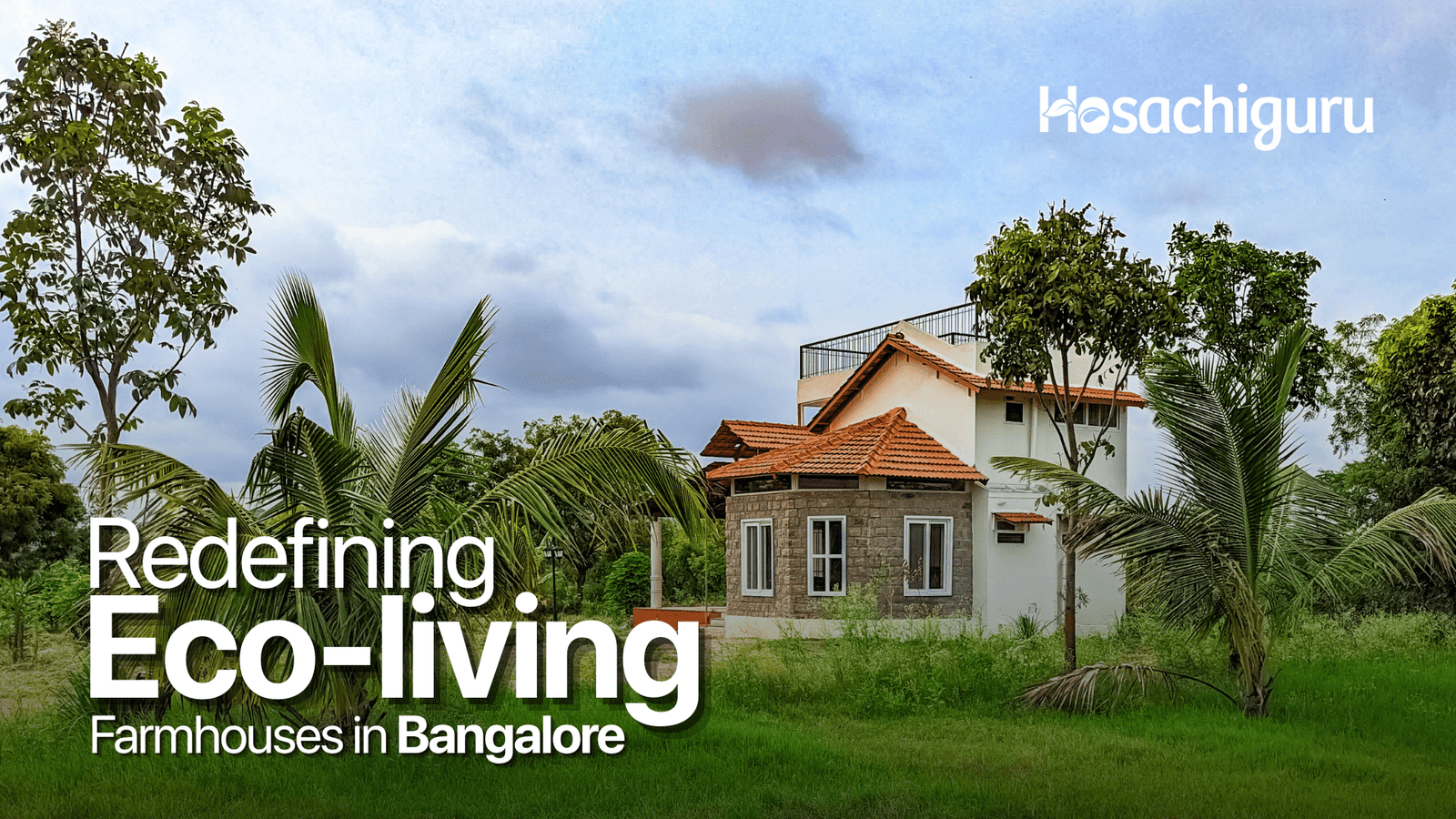
Owning farmland in India has traditionally meant either tilling the soil yourself or leaving it fallow. Urban families near Bangalore increasingly want a third option: titled land ownership paired with professional farm operations they never have to manage personally. Hosachiguru pioneered this managed farmland model, and understanding how it works is the first step toward deciding whether it fits your goals.
TL;DR – Summary
- What is managed farmland? – Managed farmland is a model where you hold legal title to agricultural land while a professional team handles all farming operations, from soil care and irrigation to harvests and reporting. Hosachiguru offers this model across multiple projects near Bangalore.
- How does ownership work? – You receive a registered sale deed in your name after thorough legal due diligence, including title verification, mutation, and compliance with the Karnataka Land Reforms Act. The land is yours; the management is outsourced.
- What does the farm management team do? – The on ground team manages agronomy, organic farming practices, drip irrigation, pest management, soil health, tree plantation, and harvest logistics. Owners receive regular updates through tools like the Hosachiguru MyFarm app.
- Can I visit my farmland? – Yes. Owners can visit their plots for weekend retreats, harvest experiences, and family time. Many Hosachiguru projects include cottages, clubhouse amenities, and farm stay facilities.
What is managed farmland?
Managed farmland separates two roles that Indian agriculture has always bundled together: owning the land and working it. In this model, you purchase a titled farm plot. A professional farm management company then takes over daily operations on your behalf.
Hosachiguru structures this as a clear division. The buyer holds the registered sale deed. The Hosachiguru agronomy and farm management team handles soil testing, crop planning, irrigation planning, organic farming methods, pruning cycles, and seasonal harvests. Owners pay an annual maintenance charge (AMC) that covers these services.
This approach suits urban families, salaried professionals, and NRIs who want farmland exposure without needing agricultural expertise or constant on ground involvement.
How does ownership work?
Legal farmland ownership in India follows state specific rules. In Karnataka, where most Hosachiguru projects are located, the process involves several steps that protect the buyer.
First, the Hosachiguru in house legal team conducts due diligence. This includes title verification, survey verification, encumbrance certificate (EC) review, and an independent legal review of ownership records. Compliance with the Karnataka Land Reforms Act Section 109 is confirmed before any transaction proceeds.
Once cleared, the buyer executes a registered sale deed. The land is mutated into the buyer’s name in revenue records, and a patta book entry is updated. The result is clear, titled land registered in your name, no different from any other property purchase in India.
Several Hosachiguru projects also carry RERA approval (PRM KA RERA), adding a layer of regulatory protection and transparent pricing that raw land sellers rarely offer.
How farm operations are managed
After purchase, the Hosachiguru farm management team takes over all agricultural activity on your plot. The scope covers the full farming cycle.
Soil health comes first. Plot specific soil reports assess pH, nutrient profile, organic carbon content, and drainage. Based on these results, the agronomy team designs a crop and tree mix suited to the land. Hosachiguru projects typically follow permaculture and agroforestry principles, planting layered canopies of fruit trees, timber species, companion crops, and food forest layers.
Water management includes borewell maintenance, drip irrigation networks, rainwater harvesting systems, and recharge planning for dry months. Chemical free farming methods, including organic pest management and mulch layering, protect soil biology and produce zero residue harvests.
Owners track all of this through the Hosachiguru MyFarm app, which provides real time farm updates, harvest reports, water management data, payment tracking, and access to land documents. This transparency is what distinguishes managed farmland from vague investment schemes or raw land sales.
Beyond farming, many Hosachiguru projects offer lifestyle amenities: cottages, clubhouse facilities, cycling paths, community vegetable gardens, and hospitality services. Owners visit for weekend retreats, harvest experiences, and family time without shouldering any operational burden.
Managed farmland through Hosachiguru gives urban families a way to own titled agricultural land, benefit from professional organic farming, and enjoy farm life on their own terms. The model works because ownership and management are cleanly separated, each handled by the party best equipped for it.
FAQs
1. What is managed farmland?
Managed farmland is agricultural land you legally own while a professional team like Hosachiguru handles all farming operations, including soil care, irrigation, organic cultivation, and harvests, on your behalf.
2. How does managed farmland work in India?
You purchase titled farmland through a registered sale deed after legal due diligence. A farm management company then operates the land using organic and permaculture methods, providing regular updates through apps and reports.
3. Can non agriculturalists buy managed farmland in Karnataka?
Hosachiguru ensures compliance with the Karnataka Land Reforms Act Section 109 during due diligence. Eligible buyers receive a registered sale deed and mutation in their name, with full legal ownership of the plot.