
Author: Ruchi Renavikar | Nihal Anand
India’s highly variable climate, extremities of temperature and rainfall (eg. drought & flood), led to numerous innovations in water management techniques since the Indus valley civilisation. As a result of this, wells, pumps, irrigation systems, water storage systems and innovative, regional water harvesting techniques, developed over time. Even ancient Indian literature points towards an intuitive understanding of nature and its natural processes. Some traditional methods of rainwater harvesting such as, johads & Kunds (Rajasthan), kuls (Himachal Pradesh), bamboo drip irrigation systems (Meghalaya), Zabo (Nagaland), Eri (Tamil Nadu), Surangam (Karnataka), Ahar pynes (Bihar) are used even today. These traditional systems were intricately designed based on the climatic conditions, soil type and land elevation to harvest maximum rainwater during the heavy monsoons witnessed in India.
The continuous evolution of technology and Ai based models that support decision making have now set water management in agriculture on a new trajectory. Although one can never completely replace or mimic natural ecosystems, Ai in water management helps in understanding and analysing when a plant is stressed due to either scarce or excess water supply. Both these conditions are detrimental and fatal to plants if not corrected immediately. Ai models are programmed to assess the optimum level of water required for a plant based on a nexus of interrelated factors such as: plant type, species, climatic data, temperature, soil moisture, soil type and the irrigation system as well. With the advent of automated irrigation systems, human error of approximation can also be eliminated when coupled with Ai models.
How does irrigation automation help in saving water?
When linked to the soil moisture sensors, the automated irrigation systems can be programmed to sense the area’s dryness and irrigate the land. This can help save water in the following ways:
- It will irrigate the land only when the plant is thirsty.
- It will avoid excess irrigation by stopping the water flow as soon as the sensor gives an ideal reading. Leaching of soil nutrients is a frequent, undesirable occurrence that results due to excessive moisture in the soil, something that can be easily avoided by such smart irrigation systems.
- Different soil types might be present in the same piece of land, each with a different water requirement. Manually irrigating these zones without over-irrigating or under-irrigating is a logistical nightmare. A smart irrigation device will take into consideration the soil retention capacity of each of the soil types, and customize its water flow so as to keep the moisture content ideal.
What are the benefits of smart water management systems?
- As mentioned above, smart irrigation can help save water, time, and costs, by bringing down manual labour through automation
- Irrigation motors can be switched on and off with the push of a button, sitting miles away; they can also be used with either run time or water flow as a variables
- Soil dryness and Leaching can be brought down to a bare minimum by the soil moisture sensors recognizing the water requirement of the plant
What are the best methods to harvest water and make it sustainable for both farm operations and the environment?
- Rainwater harvesting systems (RWHs)
The most traditional form of rainwater harvesting, rainwater is captured on roof catchments and stored in groundwater reservoirs. The use of this rainwater can be intermittent, such as for irrigation during dry spells, or for the entire year for domestic uses. India’s primary source of freshwater is not actually rivers but the annual monsoons that feed the rivers. Therefore harnessing rainfall during this season is critical and anyone with a farming background will be familiar with this. Rainfall naturally seeps into the soil and fills the ground water table. The rainwater stored in the ground can be extracted using borewells. - Flood water harvesting (FWH)
In this additional form of rainwater harvesting, flood water is abstracted during the peak rainy season and stored in an underground tank that can later be used for irrigating the farm when water is scarce during the dry season.. - Microcatchments
Microcatchments are designed to collect water from runoffs in a small catchment area. They are constructed in such a way that the runoff water infiltrates the soil and collects in the root zone, supplying water directly to the plants. On a larger scale, these microcatchments can lead to significant groundwater recharge.
According to the United Nations, 40% of the worlds’ population lives in areas of moderate to high water stress. However, this stress is not evenly distributed around the world. States like India, Mexico, USA and China rank among the fastest consumers of ground water sources. Agriculture in India, accounts of 90% of total groundwater use due to high levels of extraction and poor irrigation systems. We are using our groundwater faster than it can be replenished and therefore it is crucial that we put back the water that we are not using. Maintaining a balance in the groundwater table is essential to the functioning of natural ecosystems. The Gaia Hypothesis for example, embodies the same. The Gaia hypothesis is a greek concept for mother earth that suggests that “the Earth is a living organism with a complex feedback system that seeks an optimal balance in its physical and chemical environment”. Today, we may be able to achieve ground water balance through Ai supported machine learning systems. In essence natural systems are characterised by negative feedback loops and therefore are self-limiting in any scenario, however human controlled resource systems have positive feedback loops which are self-reinforcing. For example, ground-water extraction leads to more productivity on land and this leads to higher produce output which further leads to more groundwater extraction. Ai can allow us to create negative feedback loops that limit the over-use of groundwater in India.
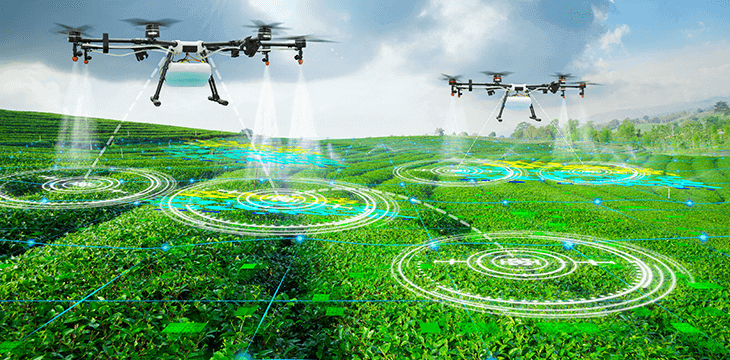
With Ai, smart farmers are realising it is no longer necessary to uniformly apply fertilizers, pesticides and water across the farms. Instead, many farmers are realising that applying the minimum required quantity of nutrients and water is not only sufficient but beneficial for plant growth. Farms and agricultural industries are expected to run very differently than before. Advancements in technologies such as Ai, remote sensing, field sensors, drones, machines and information technology will make agriculture more profitable, efficient and environmentally conscious than ever before.
References
Tietenberg, T. & Lewis, L., 2012. Environmental & Natural Resource Economics. 9th ed. Boston: Pearson Education.
Nair, K. S., 2004. Role of water in the development of civilisation in India- A review on ancient literature, traditional practices and beliefs. The basis of civilisation – water science, Issue 286, pp. 1660-166.
Dhawan, V., 2017. Water and agriculture in India. Background paper for South Asia expert panel during the Global Forum for Food and Agriculture, s.l.: Teri, German Agribusiness Alliance, German Asia-Pacific Business Association.
Microsoft, 2021. News Microsoft. [Online] Available at: https://news.microsoft.com/europe/features/how-ai-and-satellite-data-are-helping-farmers-waste-less-water/ [Accessed 2nd March 2021].