

Bangalore’s air exceeds safe pollution limits on more than 80% of days. You already knew that, you’ve felt it in your throat on morning runs, seen it in your child’s recurring cough, sensed it in the way the city never quite feels clean.
What you may not have considered is that there’s a version of your life, about an hour from here, where the air is five times cleaner. Where the pace is different. Where the land is yours. Not as a fantasy. Not as a retirement plan. Right now, while you’re still working, still raising children, still fully embedded in city life. A farm you own, without the burden of running one. That’s not a contradiction. It’s exactly what managed farmland makes possible.
The Quiet Crisis Nobody Talks About
The numbers are harder to ignore than most people realise.
Daily PM2.5 levels in Bangalore average around 117 µg/m³, nearly five times higher than rural levels of 22 µg/m³. In 2019 alone, urban air pollution was directly linked to over 2,700 pediatric asthma cases in the city. Northern India’s rural air pollution causes approximately 384,000 premature deaths annually, but in peri-urban and managed green zones, vegetation buffers meaningfully reduce both NO₂ and particulate exposure.
The health math is stark: cleaner rural air could add anywhere between 3 to 8 years to life expectancy. Rural residents, beyond infancy, also report fewer years lived in poor health compared to their urban counterparts, a metric researchers call ailment-free life expectancy (AFLE).
But this isn’t just about lungs. A large UK study tracking 20,000 adults found that spending just 120 minutes or more per week in nature significantly boosts overall health and wellbeing, consistently across all age groups, income levels, and demographics. Nature contact has been linked to lower rates of cardiovascular disease, obesity, diabetes, anxiety, and depression. Farm life, specifically, enhances mental clarity, mindfulness, and stress reduction through daily nature engagement.
City life isn’t just making us breathless. It’s making us tired in ways sleep can’t fix.
So Why Don’t More People Do Something About It?
The answer is simple: practicality gets in the way of dreams.
Most people who romanticise farm life have never had to deal with borewell failures, soil pH problems, crop cycles, or the sheer logistics of managing land 60 kilometres from their apartment. The idea of owning a farm sounds beautiful on a Sunday. By Wednesday, it sounds exhausting.
Questions stack up fast : Who will maintain it? What about the water supply? Who handles security? Who manages the crops? Is this even legally straightforward? This is exactly the gap that managed farmland was built to fill.
What “Managed Farmland” Actually Means
At its core, managed farmland separates land ownership from farm operations. You own the land: registered in your individual name, with full legal title. A professional on-ground team handles everything else: soil preparation, plantation planning, irrigation, plantation, day-to-day maintenance, and site security.
You arrive when it matters. To pluck fruit straight from your trees. To watch your children run between rows of green. To host a slow Sunday lunch under an open sky. The farm life, without the farm work.
This isn’t a timeshare or a lease arrangement. The land is yours outright. Any Indian citizen with a valid government ID can purchase. And the management? Handled by people who do this every single day.
How Hosachiguru Has Built This Model Over a Decade
Hosachiguru has spent over 10 years developing and refining what responsible farmland ownership looks like at scale. Across 1,500+ acres and 1,600+ co-farmers, Hosachiguru has planted over a million trees, neutralised 60,000 tonnes of CO₂, and conducted more than 300 scientific soil analyses.
Every project begins long before anyone signs anything. Legal due diligence covers full ownership history, survey records, access rights, and regulatory compliance, so buyers never inherit someone else’s problem. Water planning integrates borewells, rainwater harvesting, and natural catchment systems, designed for long-term sustainability rather than short-term extraction. Dedicated on-ground teams manage daily operations and security year-round.
The portfolio of projects – Maamara, Unnati, Dharani, Eco-Habitat, Samruddhi, and Abhivrudhi – each reflect this philosophy: scientifically planned, ecologically grounded, and legally structured from the ground up.
Farmland, in this model, is approached as a long-term ecosystem, not a one-time transaction.
The Investment Logic Behind the Emotion
Let’s be honest, for many buyers, this is also about the numbers.
Land near growing cities is finite. As urbanisation accelerates, peri-urban farmland appreciates in ways most other asset classes don’t replicate. Agroforestry investments, where trees mature over years and decades, create compounding value that isn’t correlated to stock market cycles or rental yield fluctuations.
Farmland also serves as a hedge: against inflation, against urban chaos, and against the risk of having no fallback when city life becomes untenable. In a world increasingly shaped by climate anxiety, food security concerns, and rising land scarcity, those who own productive land are quietly positioning themselves well ahead of the curve.
But perhaps more meaningfully, it’s an asset that pays dividends in ways a balance sheet can’t capture. Karnataka farmers cite nature, community, and environmental connection as measurable protective factors against stress and depression. Studies show younger farmers display lower rates of hypertension than urban peers. Peri-urban farm households that blend crops with active outdoor lifestyles report better nutrition and physical health than sedentary city counterparts.
The return on farmland, for many owners, isn’t just financial. It’s physiological.
What Ownership Actually Looks Like Day-to-Day
You can visit your farm anytime. With prior notice, the on-ground team can arrange a farm-fresh lunch during your visit, produce grown on the very land you own. Ownership at any Hosachiguru project also grants you access to visit their other farms, making the experience part of a living, breathing community rather than an isolated plot somewhere on a map.
Limited construction is permitted, typically up to 10% of the land area, subject to local regulations, giving you the flexibility to build something personal over time.
The term Hosachiguru uses for its buyers is deliberate: co-farmers. Not investors. Not landowners. Co-farmers: people with shared purpose, shared land stewardship, and shared experiences. It implies something beyond a transaction. It implies belonging.
Is This For Everyone?
Honestly? No.
If four walls feel safer than open landscapes, if weekends need schedules more than silence, if nature feels more unfamiliar than restorative, this probably isn’t the right fit.
But if you’ve ever felt the pull of something slower and greener, if you want your children to grow up knowing where food comes from, to inherit not just an asset but a memory, then the question isn’t really whether you should own farmland. It’s whether you can afford to keep waiting.
The Next Step
Hosachiguru is hosting a Farm Showcase on March 20, 21 & 22 at our Corporate Office in Jayanagar, Bangalore.
You can speak with farm advisors, see real project updates, view master plans, understand the full management model, and block a site visit slot on the spot.
The farm is already being managed. The land is available. The only thing left is the decision to show up.
Come see what it feels like to own something that breathes.

Every Bangalore real estate conversation has a moment of pause.
You mention villa plots near Bangalore airport, and the other person goes quiet for half a second. Not long enough to be rude. Just long enough to process distance. Then comes the line—soft, careful, polite:
“Hmm. Isn’t that… far?”
Which is interesting, because Bangalore has been saying this exact sentence for about two decades now. Whitefield was far. Sarjapur was far. Yelahanka was once described the way people describe a hill station. And yet, here we are, sitting in traffic, reminiscing about when those places felt optional.
So instead of pretending the airport belt is some bold new experiment, let’s be honest. This isn’t a surprise. It’s Bangalore doing what Bangalore always does: expanding slowly, reluctantly, and then all at once.
The Market Reality: Already Moved, Still Moving
Let’s address the uncomfortable part first: prices.
As of 2024, plotted developments along New Airport Road are sitting around ₹68,000–72,000 per sq. yard, or roughly ₹7,500–8,000 per sq. ft. In Devanahalli, a “typical” villa plot has crossed ₹1.75 crore. Which sounds dramatic until you remember how dramatic these numbers looked five years ago elsewhere.
Over the last three to four years, appreciation has stayed in the 10–15% annual range. Overall prices have climbed over 100% since 2021. Not because someone woke up one day and decided the airport belt was fashionable, but because infrastructure arrived, jobs followed, and land continued being land: limited, stubborn, and very unimpressed by sentiment.
What’s also changed quietly is the buyer profile. Nearly 70% of buyers today are under 40 and buying to eventually build. These aren’t people flipping plots between WhatsApp groups. These are people planning for a future version of themselves: slower, calmer, possibly with fewer meetings.
Which, inconveniently, makes this market more stable.
The Next Five Years: No Fireworks, Just Compounding
If you’re looking for explosive, overnight appreciation, this may disappoint you. The next five years around the airport belt will likely be… reasonable.
Expect steady price growth, high single digits to low double digits, driven by two very boring forces: demand that isn’t going away, and land supply that isn’t increasing.
The government’s decision to not acquire 1,777 acres near Devanahalli for industrial use—and instead preserve it as agricultural land—quietly tightened the supply tap. Large parcels are no longer casually entering the market. Which means whatever exists now matters more tomorrow.
Add to this the slow but persistent expansion of offices, logistics hubs, hospitality, and airport-linked employment. This isn’t speculative demand. It’s functional demand. The kind that shows up every month, not just during launches.
In short: this market isn’t sprinting. It’s settling in.
Infrastructure: Progress, With a Side of Patience
Infrastructure in Bangalore has always required faith. And Google Maps. Mostly Google Maps.
That said, progress around the airport is tangible. The Metro’s Phase-2B Blue Line connecting the city to the airport is expected between 2025 and 2027. When it opens, the distance conversation ends abruptly. Places stop being “far” the moment travel becomes predictable.
The Satellite Town Ring Road is already operational in parts, easing freight movement and diverting heavy traffic away from the city. Peripheral roads, bypasses, and feeder routes continue to improve connectivity—slowly, quietly, and without much fanfare.
Utilities are catching up too. Dedicated water pipelines, power infrastructure, and Airport City development mean this area is moving past the “we’ll manage somehow” phase.
Will everything be ready on schedule? Probably not. Will it be significantly better than today? Almost certainly.
Regulations: Less Guessing, More Grown-Up Rules
Real estate regulation in Bangalore used to feel like a choose-your-own-adventure book. That phase is ending.
Plotted developments now require RERA registration. Title clarity is being enforced more strictly. Building rules—especially for smaller plots—have been relaxed, making it easier to actually build without sacrificing half the land to compliance.
This shift rewards developers who plan long-term and buyers who ask uncomfortable questions. Which, frankly, is overdue.
Why Gated Villa Plots Are Winning (Quietly)
Over the next five years, raw, unplanned plots will struggle to compete. Buyers increasingly want infrastructure that already exists, not promises that expire after the sales office shuts.
Internal roads. Drainage. Green buffers. Security. Water planning. These aren’t luxuries anymore. They’re expectations.
This is why well-planned villa plot communities near the airport are emerging as the default choice. They’re not trying to be aspirational. They’re trying to be functional, and that’s far more convincing.
Hosachiguru’s Way of Doing Things: Less Noise, More Care
Hosachiguru’s approach to land around the airport belt is refreshingly unexpected.
Across projects like Abhivrudhi, Madhuvana, Eco Habitat, Samruddhi, Aamrut, and Unnati, the philosophy is consistent: land should improve over time, not merely appreciate on paper.
This means planned layouts, water-sensitive design, soil regeneration, native planting, and long-term land management, built into the project.
Unnati, Hosachiguru’s farm-villa plot concept, takes this one step further. With a 50:50 approach—half the land dedicated to farming and ecology, half to living—it redefines what owning land can look like.
Here, land isn’t waiting for construction. It’s already working.
Managed Farmlands: The Detail Most People Ignore (Until It Matters)
Managed farmlands don’t make for flashy conversations. They don’t come with dramatic price charts or bold claims. Which is exactly why they’re effective.
Active farming preserves soil health, maintains green cover, and ensures land remains productive, even before a home is built. It also protects against neglect, which is the fastest way land loses value quietly.
Projects like Aamrut and Madhuvana integrate this thinking seamlessly. The land is cultivated, monitored, and cared for, whether or not the owner visits every weekend.
Five years from now, this difference will be visible. And difficult to replicate.
Lifestyle: Catching Up, Without Rushing It
Schools, healthcare facilities, and hospitality infrastructure are steadily expanding around the airport corridor. International schools are operational. Healthcare services are closer. Retail and entertainment will follow population density, as they always do.
The airport’s own expansion—new terminals, hotels, and commercial zones—continues to pull in employment and services. This isn’t about turning the area into another CBD. It’s about making it comfortably livable.
Quieter. More open. Less frantic.
So, By 2029?
Villa plots near Bangalore airport will no longer be described as “emerging.” They’ll just be… there. Established. Occupied. Taken seriously.
Prices will be higher, but no longer surprising.
Infrastructure will be functional enough to complain about less.
And developments built with long-term land stewardship—like Hosachiguru’s—will feel noticeably more mature than those built for speed.
The question won’t be whether this area made sense. It will be why it felt so obvious later.
And Bangalore, true to form, will already be debating whether the next edge of the city is “too far.”
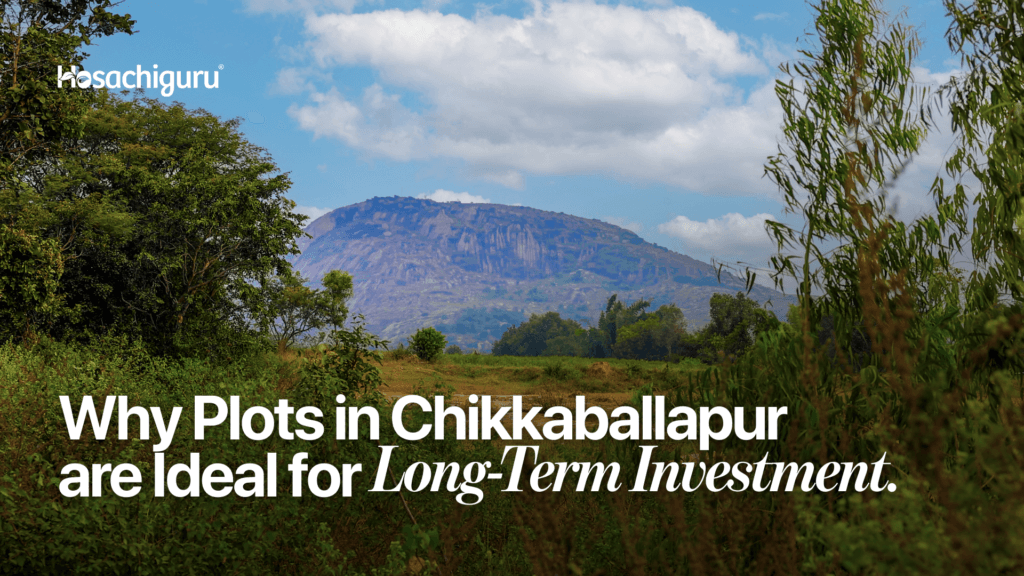
There’s a quiet misunderstanding that often surrounds land investments near Bengaluru. That once infrastructure arrives, the only sensible thing to do is build—maximise coverage, compress layouts, and convert every square foot into “usable area.”
Chikkaballapur challenges that assumption.
Here, land still has memory. Of farming cycles. Of water movement. Of seasons that don’t care about construction schedules. And that’s precisely why plots in Chikkaballapur demand a different kind of thinking—closer to how farmers think, and farther from how speculators do.
If you look at this region only as an extension of the city, it can feel slow. If you look at it as a long-term land asset—one that can remain productive while appreciating, similar to well-planned managed farmland near Bangalore—it begins to look unusually stable.
The Price Story: Strong Growth, No Hysteria
Land prices in Chikkaballapur have risen decisively, but without panic.
Colliers India reports that land rates across north Bengaluru micro-markets, including Chikkaballapur, increased by roughly 2.5 times between 2020 and 2024, moving from around ₹1,800 per sq.ft to approximately ₹4,500 per sq.ft. That’s not incidental growth—it’s sustained demand meeting improving fundamentals.
What’s important is what hasn’t happened yet.
Despite this rise, Chikkaballapur still trades at a discount to its neighbours. A Bangalore Mirror feature notes that land prices here remain “relatively modest compared to Devanahalli or Yelahanka.” For context, Yelahanka averages around ₹6,300 per sq.ft, while many Devanahalli parcels command even higher rates.
Residential plots near Chikkaballapur often sit at nearly half the per-sq-ft cost of Devanahalli, despite sharing the same macro growth drivers. That gap exists because Chikkaballapur is still transitioning—without having surrendered its agricultural character.
For long-term investors, that restraint is a feature, not a flaw.
Infrastructure Will Arrive. The Land Must Survive It.
The infrastructure narrative around Chikkaballapur is real and well underway.
The Bengaluru–Vijayawada Expressway, under construction, passes through Devanahalli and Chikkaballapur, transforming eastward connectivity. The Satellite Town Ring Road (STRR) already connects parts of the region and will eventually allow movement between satellite towns without pushing everything through Bengaluru.
Add to that the planned Peripheral Ring Road (PRR), the proposed Bengaluru Suburban Rail (Sampige Line), and the continued expansion of Kempegowda International Airport, and the picture becomes clear: Chikkaballapur is being folded into Bengaluru’s extended urban system.
But infrastructure alone doesn’t guarantee long-term value. Bengaluru’s own history shows that land which is overbuilt, poorly planned, or disconnected from natural systems often becomes expensive to maintain, not just expensive to buy.
This is where Chikkaballapur still has an advantage—it hasn’t been stripped down to bare land yet.
This Is Agricultural Land First. Everything Else Comes Later.
Chikkaballapur isn’t an empty canvas. It’s a functioning agricultural district. Soil here is active. Water movement still follows topography. Fruit trees, farms, and open tracts are not placeholders—they are productive systems.
This is the same underlying logic that defines successful managed farmland near Bangalore: land that continues to work even as ownership patterns evolve.
Hosachiguru’s managed farmland approach emerges directly from this reality. Instead of treating farmland as land waiting to be converted, it treats agriculture as a stabilising force—something that protects value while ownership and infrastructure evolve around it. As a managed farmland company, Hosachiguru anchors land value in productivity, not speculation.
Managed farmland thinking prioritises:
- Soil health as long-term capital
- Water planning before construction
- Land productivity alongside ownership
In a region already experiencing water stress, this approach isn’t philosophical—it’s pragmatic.
Unnati: a Farm-Themed Plot that Formalises Restraint
This thinking finds clear expression in Unnati.
Unnati is a farm-themed plotted development, structured around a deliberate 50–50 land-use concept:
- 50% of the land remains dedicated to growing—fruit orchards, green cover, and productive farmland
- 50% is allocated for building farm plots or homes
This is not a stylistic decision. It’s a governance decision.
By design, Unnati prevents overbuilding. It ensures that land continues to function—ecologically and economically—even as people build homes on it. The growing portion isn’t ornamental landscaping; it’s productive land, managed professionally in line with how a responsible managed farmland company would operate.
What this achieves over time is significant:
- Built spaces don’t overwhelm water systems
- Soil quality improves instead of degrading
- Open land remains economically useful, not just visually pleasant
- The land retains its rural intelligence even as lifestyles change
In Chikkaballapur, where unchecked development could easily strain resources, this 50–50 model aligns naturally with the land’s limits.
Regulation Quietly Supports this Approach
Chikkaballapur falls under the Chikkaballapur Urban Development Authority (CUDA), governed by Karnataka’s Town & Country Planning Act. The Master Plan defines land-use zones, setbacks, and development controls clearly.
The 2031 Master Plan earmarks over 55% of the planning area for residential use, signalling long-term housing growth—but not at any cost.
Only CUDA/DTCP-approved layouts with valid e-Khata titles are legally secure. Developments that respect land-use discipline, water planning, and zoning norms are far more likely to age well—financially and legally.
Farm-themed layouts like Unnati don’t work around regulation; they work with it. That alignment reduces future friction and makes ownership easier to sustain over decades.
How Chikkaballapur Compares, When Land Quality Is Factored In
Viewed purely through price, Chikkaballapur competes with Devanahalli, Doddaballapur, and North Bengaluru.
Viewed through land quality, it stands apart.
- Devanahalli is efficient, airport-driven, and increasingly dense
- Doddaballapur remains industrial-heavy with slower residential evolution
- North Bengaluru (Yelahanka, Hebbal) is mature and largely built out
Chikkaballapur still allows land to be both residential and productive—a characteristic increasingly associated with thoughtfully planned managed farmland near Bangalore. This makes plots in Chikkaballapur particularly attractive to investors who value longevity over immediacy.
Risks—and Why Farm-Led Planning Reduces Them
There are risks, of course. Infrastructure timelines can stretch. Social amenities will take time to develop. Water availability must be managed deliberately. Certain hilly or ecologically sensitive zones will remain restricted.
But farm-led, managed land models don’t ignore these realities—they design around them. They assume ownership will last decades. They limit overbuilding. They plan water first and construction second.
That mindset changes outcomes.
The Real Investment Thesis
Chikkaballapur is not a story about speed.
It’s a story about land that is allowed to remain productive while value accumulates.
Plots in Chikkaballapur—especially farm-themed developments like Unnati, shaped by Hosachiguru’s philosophy as a managed farmland company—offer something rare: land ownership that appreciates without exhausting the land itself.
For investors who understand that land rewards patience more than urgency, this isn’t a speculative play.
It’s a grounded one. And grounded land, more often than not, is what lasts.

If you’ve read even three real estate brochures, you already know the script: serene, lush, exclusive, premium. Words that sit comfortably on glossy pages but rarely explain whether you’ll actually go there more than twice a year.
That’s why villa plots near airport Bangalore deserve a less dramatic, more honest look—one that asks a simpler, more useful question: will this fit into real life, or just sound impressive at dinner conversations?
Because here’s the thing about vacation homes today: the romance matters, but usability matters more. The modern second home is no longer about heroic drives or disappearing off-grid. It’s about arriving easily, staying often, and letting the place grow with you over time.
This is where the Bangalore airport corridor, especially around Devanahalli, quietly makes a strong case for itself—much like well-planned managed farmland near Bangalore, which balances access with breathing space.
The Airport Advantage (Without the Noise, Or the Hype)
“Near the airport” sounds far less glamorous than “nestled in the hills.” And that’s precisely why it works.
Villa plots near airport Bangalore benefit from something most second-home destinations lack: predictability. Devanahalli and its surrounding micro-markets sit roughly 20–30 minutes from Kempegowda International Airport via NH-44. Roads like IVC Road, along with upcoming links such as the Peripheral Ring Road (PRR) and Satellite Town Ring Road (STRR), make access smoother and more reliable with each passing year.
This proximity doesn’t exist so you can admire airplanes. It exists so your weekend doesn’t begin with traffic negotiations and Google Maps debates. When a vacation home is easy to reach—especially after a long workweek—it gets used. Often.
That, more than any poetic description, determines whether a second home actually earns its place in your life.
Roads That Do the Heavy Lifting
The airport corridor isn’t relying on a single road or promise. STRR, a 288-kilometre expressway gradually stitching together satellite towns, is already operational in key stretches connecting Devanahalli to Doddaballapura and Hoskote.
This has quietly cut down travel time to Bengaluru’s eastern and northern suburbs, while also creating a natural value premium for land parcels closer to the corridor.
Add NH-44, the Outer Ring Road, and upgraded arterial roads, and you get a network that connects Hebbal, Yelahanka, Whitefield, and even central Bengaluru within a realistic 40–60 minute drive. Not brochure speed—actual, lived-in speed.
Looking ahead, the planned Namma Metro Blue Line extension to the airport under Phase 2B further strengthens the case. For a second home that may one day become a primary one, this kind of transit access is less of a bonus and more of a long-term insurance policy.
Climate That Doesn’t Need Exaggeration
North Bengaluru has geography quietly working in its favour. At an elevation of around 900 metres and close to Nandi Hills, Devanahalli enjoys a climate that is noticeably milder than the city core. Cleaner air, open skies, and lower ambient noise levels are daily realities here.
This isn’t wilderness living, and it doesn’t pretend to be. Instead, it offers something far more practical: farmland, lakes, tree cover, and large open parcels that allow developments to breathe.
For vacation homes—and increasingly, for managed farmland near Bangalore—this balance is critical. You get greenery without isolation, and calm without inconvenience.
Investment Potential That Feels… Grown-Up
Let’s talk numbers, without shouting them.
Over the last six years, land values in the Devanahalli region have grown steadily, with overall appreciation close to 49% by mid-2024. More recently, values have climbed by about 15–20% in just two years, with projections pointing toward 8–12% annual growth as infrastructure projects reach completion.
Plots near STRR and other major corridors are already commanding higher resale values, while those slightly inside remain comparatively accessible. This gradient isn’t speculative—it’s infrastructure-led. Historically, such corridors reward patient buyers more reliably than trend-chasing does.
Add to this the region’s economic momentum. Manufacturing facilities, aerospace hubs, and the proposed Bengaluru IT Investment Region are creating sustained job growth. Housing demand here is structural, not seasonal.
Rental yields for completed villas currently average around 4–5%, with monthly rentals in the ₹30,000–40,000 range. Meanwhile, apartment rentals nearby have already risen sharply—often an early indicator of broader housing pressure.
Perhaps the most understated advantage? Entry prices. Gated villa plots near airport Bangalore still begin in the mid-₹40–60 lakh range, making them significantly more accessible than comparable city properties.
Designed for Use, Not Just Ownership
One reason villa plots near the airport work well as vacation homes is that they are designed for living.
Modern plotted developments offer clubhouses, swimming pools, gyms, walking trails, yoga decks, children’s play areas, and generous green buffers. These aren’t bare layouts waiting for a future that may or may not arrive. They’re functional communities meant to be used—on weekends, holidays, and extended stays.
A second home that feels empty rarely gets revisited. One that feels alive becomes part of routine.
The Modern Indian Second Home Buyer
The buyers here aren’t all the same, but they share a common mindset.
NRIs value airport proximity, easier management, and long-term appreciation. City-based families see these plots as weekend anchors that evolve over time. Retirees appreciate cleaner air, lower density, and quieter living.
For many, villa plots near airport Bangalore aren’t just second homes—they’re future-first homes waiting patiently.
What unites these buyers is intent. They’re not buying for quick exits. They’re buying to use.
Where Hosachiguru Brings a Different Lens
This is where Hosachiguru’s approach quietly shifts the conversation.
As a managed farmland company, Hosachiguru doesn’t treat land as a static asset. The focus extends beyond ownership into how soil health is maintained, how water is managed, and how biodiversity is allowed to thrive.
For second-home buyers, this isn’t abstract philosophy—it’s practical reassurance. A vacation home shouldn’t come with anxiety about neglect or degradation. Hosachiguru’s managed land models ensure that the land remains productive, balanced, and cared for even when owners are away.
This approach aligns naturally with the airport corridor’s strengths: accessibility paired with breathing space. Hosachiguru’s managed farmland near Bangalore demonstrates what modern, responsible second-home ownership can realistically look like—land that improves with time, not just in value, but in character.
A Location That Will Age Well
The strongest argument for villa plots near airport Bangalore is durability.
These locations are backed by infrastructure, employment, transit, and geography. They don’t depend on a single trend or promise. As the city expands northward, the airport corridor is likely to become less of an “alternative” and more of a default.
A good vacation home doesn’t shout. It waits patiently, gets better over time, and fits into your life instead of demanding adjustments.
Right now, villa plots near airport Bangalore understand that better than most—and that’s exactly why they make sense.
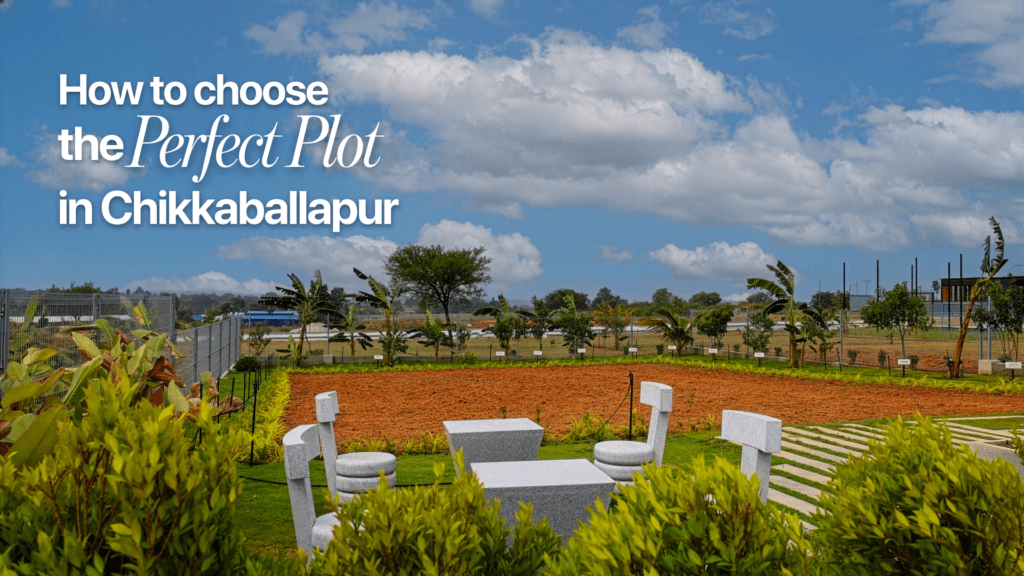
At some point in adult life—usually right after you start comparing air purifiers or Googling “best schools near Bangalore”—the idea of buying land creeps in. Not an apartment. Not another rental. Actual land. Something solid. Something future-proof. And very often, that thought leads to Chikkaballapur.
It’s far enough from Bangalore to feel breathable, close enough to still matter, and just early enough to trigger that familiar internal dialogue: “If we don’t buy now, will we regret it later?”
Maybe.
But only if you buy smart.
Because land buying is less about excitement and more about clarity. Less “wow, look at the view” and more “will this still make sense ten years from now?” So let’s break this down simply, honestly, and without brochure-level optimism.
First Things First: Why Chikkaballapur?
Chikkaballapur sits in that interesting growth pocket North Bangalore keeps expanding into. With NH-44 running through it, the airport within comfortable reach, and infrastructure plans steadily unfolding, the region has quietly moved from “too far” to “strategically placed.”
For families, it means space and affordability.
For investors, it means early entry.
For long-term planners, it means balance—if the plot is chosen carefully.
That “if” is doing all the work here.
Much like thoughtfully planned managed farmland near Bangalore, Chikkaballapur rewards buyers who think in decades, not discounts.
1. Legal Clarity: Not Exciting, But Absolutely Essential
Let’s get the boring but critical stuff out of the way first—because no amount of greenery can compensate for messy paperwork.
Clear Title Is Non-Negotiable
Your plot should have a clear, marketable title. Not “mostly clear,” not “developer said it’s fine.” Clear means no disputes, no confusion, no future surprises.
DC Conversion Is Mandatory
If the land was originally agricultural (which most land here was), it must be DC converted for residential use. Without this, you’re not buying a plot—you’re buying future stress.
RERA Registration Is Your Safety Net
If it’s a plotted development, RERA approval adds a layer of accountability. It doesn’t guarantee perfection, but it does reduce risk.
Never Skip Legal Due Diligence
No matter how trustworthy someone seems or how good the deal sounds, always do proper legal checks. Land doesn’t forgive shortcuts.
Location & Connectivity: Think Beyond Today
Chikkaballapur isn’t one single destination—it’s a collection of micro-locations. And in land buying, micro-details matter a lot.
Highways Make a Big Difference
Plots closer to NH-44 already enjoy better accessibility. Add the upcoming Satellite Town Ring Road (STRR) into the picture, and certain areas clearly stand out for long-term value.
Good connectivity today is useful. Good connectivity tomorrow is priceless.
Airport Access Is a Quiet Advantage
Being closer to Kempegowda International Airport isn’t just for frequent flyers. It attracts professionals, improves infrastructure focus, and supports resale demand.
Daily Convenience Still Counts
Peace is great—but not if basic needs are an hour away. Schools, hospitals, groceries, and fuel stations all affect how usable your plot really is.
Infrastructure: What Actually Makes Life Easy
A plot is more than four boundary stones. It’s part of a larger system—and that system decides comfort.
Roads, Water, Power (The Real Deal Breakers)
Check if:
- Roads actually exist (not just on plans)
- Water sources are reliable and realistic
- Electricity infrastructure is already in place
If these are vague, everything else is decorative.
Drainage Is Underrated
Visit the site during or after rains if possible. A plot that looks perfect in summer but struggles in monsoon will quickly lose its charm.
Future Infrastructure Matters Too
Chikkaballapur’s growth story includes logistics hubs, industrial zones, and planned developments. Plots aligned with this growth tend to appreciate steadily—not overnight, but sustainably.
Developer Matters More Than the Brochure
Land buying is as much about who you’re buying from as what you’re buying. A good developer:
- Has completed projects you can actually visit
- Is transparent about approvals and timelines
- Talks clearly about maintenance and community planning
This is where developers like Hosachiguru quietly stand apart. As a
managed farmland company, the focus isn’t just on selling plots, but on long-term land health—soil, water, biodiversity, and usability. When developers think beyond transactions, buyers benefit.
Also, look closely at the layout:
- Are green spaces thoughtfully planned?
- Are amenities realistic or just marketing material?
- Does it feel like a future neighbourhood or just a land parcel?
The Plot Itself: Details That Matter Later
Once the big picture looks right, zoom in.
Soil Quality Isn’t Just for Farming
Even if you don’t plan to farm, soil quality affects foundation strength, landscaping, and long-term maintenance.
Water Availability Is a Lifestyle Question
Ask practical questions:
- Borewell depth and success rates
- Rainwater harvesting plans
- Tanker dependency
Water decides whether land stays peaceful or becomes problematic.
Topography Tells You a Lot
Check slopes, boundaries, and surrounding land levels. A plot that works with the land is always easier to build on and live with.
Investment Potential: Slow, Steady, Sensible
Chikkaballapur isn’t a quick-flip market—and that’s actually a good thing.
Steady Demand, Real Users
Demand comes from families, long-term investors, and people planning second homes with purpose. That usually leads to stable growth rather than speculative spikes.
Visit More Than Once
Go on a weekday. Then go on a weekend. Observe noise levels, traffic, and the general vibe. Land reveals its truth over time.
So, What Does the “Right” Plot Really Look Like?
It’s not the cheapest.
It’s not the flashiest.
It’s the one that balances:
- Clean legal status
- Strong connectivity
- Reliable infrastructure
- Thoughtful development
- Long-term relevance
In other words, a plot your future self won’t complain about.
Where Hosachiguru & Unnati Fit In
This is exactly where Unnati by Hosachiguru fits into the Chikkaballapur story.
Unnati offers farm-themed villa plots designed around land stewardship—healthy soil, sensible water management, biodiversity, and community living. It’s not just about owning land, but about owning land that actually works over time.
Hosachiguru’s philosophy ties back to everything discussed here: legal clarity, long-term planning, usable infrastructure, and respect for the land itself. If you’re looking at Chikkaballapur not just as an investment, but as a lifestyle decision, Unnati sits comfortably at that intersection.
Final Thought
Buying land is one of those rare decisions where patience pays off and shortcuts come back to haunt you. Chikkaballapur offers real opportunity—but only if you slow down, ask the right questions, and think beyond the immediate excitement.
Choose land that grows with you, not just land that looks good on paper.
If you’ve been checking “Bengaluru AQI today” between meetings and silently negotiating with your lungs to make it through another week, here’s a clear sign: it might be time to look at farm plots in Chikkaballapur.
Yes, Chikkaballapur —
The place where the air doesn’t taste like traffic, the sky still offers its original palette, and you can step outside without feeling like you’ve unlocked a difficult level in a breathing simulator.
While much of the city debates whether the Outer Ring Road is the eighth circle of hell, plots at Chikkaballapur are quietly becoming the go-to retreat for professionals who want cleaner air, quieter weekends, and the rare experience of seeing a horizon uninterrupted by concrete.
And the best part?
These residential plots near Chikkaballapur are barely an hour from the airport — but emotionally, they’re worlds away from city chaos. It’s a lifestyle upgrade that blends proximity, peace, and perspective.
If you’ve ever visualized slow mornings, farm vibes, green spaces, fruit trees, and fewer notifications from your AQI app, Chikkaballapur is calling you — especially with communities like Unnati, our farm-themed villa plot project, proving that sustainable living can be elegant, restorative, and rewarding at the same time.
Alright, coffee in hand? Let’s get into the details.
Chikkaballapur’s Air Is Basically a Natural Detox Subscription
Forget wellness retreats — Chikkaballapur gives you fresher air by default. Investing in land here means waking up to breezes that aren’t mixed with exhaust or construction dust. Thanks to the region’s farmlands and greenery, the air quality consistently outperforms the city’s “Please don’t breathe too deeply” standards.
At Unnati, where the vibe is farm-meets-villa-plot-meets-slow-living, the principle is simple: plant more trees, reduce the built-up footprint, and keep the land alive — your health will follow. It’s wellness for people who’d rather breathe clean air than practice breathing techniques just to survive the workweek.
Imagine being able to say, “My plot comes with mango trees and better AQI.” That’s a flex with substance.
Sustainable Agriculture, Zero Drama
Chikkaballapur is that quiet achiever — fertile soil, balanced climate, and a natural inclination towards organic farming.
Perfect conditions for:
● Pesticide-free farming
● High-value plantations
● Native orchards
● Natural farming
When you invest in managed farmland projects like Unnati, you’re supporting a long-term ecosystem of sustainable agriculture — minus the operational hassle. You enjoy the benefits of clean, chemical-free produce, not a to-do list.
Farm-to-table, redefined for balance and taste.
Enhancing Green Spaces While Also Enhancing Your Main Character Energy
Let’s be honest — cities talk about green cover, but every tree planted barely lasts a traffic cycle. Chikkaballapur is that rare reversal.
When you invest in consciously designed communities like Unnati, you’re directly contributing to:
● More trees
● More green cover
● More natural soil
● Better air quality
● Lower heat islands
● Healthier microclimates
Your plot becomes a planet-positive asset — expanding both your net worth and the Earth’s lung capacity.
Land that appreciates and absorbs carbon? That’s the definition of meaningful growth.
Eco-Friendly Practices Without Becoming a Full-Time Sustainability Nerd
We all want to live responsibly, but not everyone has the hours for it. Chikkaballapur’s approach is effortless sustainability.
Projects like Unnati integrate:
● Drip irrigation
● Solar systems
● Native species plantations
● Rainwater harvesting
● Composting systems
● Low-impact layouts
These solutions ensure lasting ecological balance and reduce the environmental footprint — no lectures, just better living by design.
Biodiversity: AKA Nature’s Version of a Multiverse
Chikkaballapur thrives with:
● Birds
● Bees
● Butterflies
● Fruit trees
● Soil organisms
● Native plants
● Micro-habitats
At Unnati, open plantations and curated green belts create protected spaces that help biodiversity thrive. Every plot contributes to safeguarding local flora and fauna — a small but powerful environmental ripple.
Promoting a Low-Impact Lifestyle (Your Slow-Life Era Begins Here)
If Bengaluru is “rise-and-grind energy,” Chikkaballapur is “rise-and-breathe energy.”
The mild climate, open views, and natural quiet make it easy to:
● Take morning walks
● Do yoga outdoors
● Garden
● Stargaze
● Spend time in nature
● Go for short treks
● Simply slow down
At Unnati, wide farm lanes, fruit orchards, and nature trails make calm living effortless. This isn’t performative slow living — it’s natural balance coming back into your routine.
ESG-Friendly Investments: Because Your Portfolio Should Be Planet-Positive hosachiguru
Let’s talk returns — because sustainability and profitability can coexist.
Modern investors value ESG (Environmental, Social, Governance) metrics. Eco-friendly plots in Chikkaballapur, especially those like Unnati, align perfectly with this philosophy: ● Environmentally regenerative
● Socially uplifting
● Responsibly governed
● Long-term sustainable
● Resilient to climate shifts
Here, your portfolio performs with purpose — building wealth while enabling impact.
Circular Economy: Farming, Food, Fun — All in One Loop Chikkaballapur is leading a quiet revolution in zero-waste, community-first farmland models.
At Unnati, residents can:
● Grow their own produce
● Engage in community farming
● Participate in agro-tourism
● Attend sustainability workshops
● Support local food systems
● Turn waste into compost
● Watch that compost enrich the same soil
It’s a full-circle approach where every action strengthens the ecosystem — and everyone benefits.
So… Why Chikkaballapur? Why Now?hosachiguru
Because clean air is fast becoming a luxury, and sustainable living a necessity. Because the future belongs to those who nurture land, not exploit it. And because your lifestyle — and legacy — deserve the space, greenery, and calm this region naturally provides.
Plots in Chikkaballapur, especially farm-themed villa plots like Unnati, offer the ultimate blend of:
● Nature
● Investment
● Sustainability
● Farm vibes
● Wellness
● Long-term environmental value
This is where climate-positive living meets intelligent investment.
Ready to invest in land that cares for you and the planet?
Explore Hosachiguru’s managed farmlands, including Unnati, our farm-themed villa project in Chikkaballapur — where nature appreciates your investment as much as you do. hosachiguru;

Every January, we rush into the year with plans. Gym memberships, meal plans, self-improvement trackers — resolutions we hope will reshape our lives. But by February, the pace of reality catches up, and motivation quietly dissolves into routine.
Perhaps what we need isn’t more effort, but more balance.
The power of slowing down
Nature teaches us that growth cannot be forced. A seed doesn’t rush to sprout; it simply allows itself to unfold when the season is right. Our lives, too, thrive on gentler rhythms — time spent resting, reconnecting, and rediscovering our natural pace.
We often confuse progress with movement. But movement without mindfulness only drains us. What the body and mind crave is balance — fresh air instead of fluorescent light, silence instead of noise, moments of stillness between the hustle.
Grounding through nature
At Hosachiguru, we’ve seen what happens when people reconnect with the land. Health improves, stress softens, and perspective shifts. Spending even a few hours in green space changes how you see time — not as something to chase, but something to inhabit fully.
Your wellbeing is like the soil beneath a tree: the richer and more cared for it is, the stronger you stand above the surface.
Planting intentions, not resolutions
So instead of setting resolutions that exhaust you, set intentions that root you. Walk when you can. Step outside for sunrise. Share meals grown responsibly. Let outdoor time become part of your week, not an afterthought.
This year, nurture yourself the way you’d tend to a garden — patiently, consistently, and with care. Because the deeper your roots go, the lighter your life will feel.
In 2026, may your goals be quieter, your days slower, and your joy steadier. No rush. No resolutions. Just better roots.
Every January, we rush into the year with plans. Gym memberships, meal plans, self-improvement trackers — resolutions we hope will reshape our lives. But by February, the pace of reality catches up, and motivation quietly dissolves into routine.
Perhaps what we need isn’t more effort, but more balance.
The power of slowing down
Nature teaches us that growth cannot be forced. A seed doesn’t rush to sprout; it simply allows itself to unfold when the season is right. Our lives, too, thrive on gentler rhythms — time spent resting, reconnecting, and rediscovering our natural pace.
We often confuse progress with movement. But movement without mindfulness only drains us. What the body and mind crave is balance — fresh air instead of fluorescent light, silence instead of noise, moments of stillness between the hustle.
Grounding through nature
At Hosachiguru, we’ve seen what happens when people reconnect with the land. Health improves, stress softens, and perspective shifts. Spending even a few hours in green space changes how you see time — not as something to chase, but something to inhabit fully.
Your wellbeing is like the soil beneath a tree: the richer and more cared for it is, the stronger you stand above the surface.
Planting intentions, not resolutions
So instead of setting resolutions that exhaust you, set intentions that root you. Walk when you can. Step outside for sunrise. Share meals grown responsibly. Let outdoor time become part of your week, not an afterthought.
This year, nurture yourself the way you’d tend to a garden — patiently, consistently, and with care. Because the deeper your roots go, the lighter your life will feel.
In 2026, may your goals be quieter, your days slower, and your joy steadier. No rush. No resolutions. Just better roots.

There is a quiet revolution happening beneath our feet—not in boardrooms, policy manuals, or glass towers, but in the soft, dark, modest dirt. On the occasion of World Soil Day 2025, as we celebrate the theme “Healthy Soils for Healthy Cities,” we invite you to look down, literally, and rediscover the planet that sustains us spiritually, ecologically, and physiologically. The soil existed long before cities and nations were founded. Living. Breathing. Developing food, forests, and futures.
And as the world becomes more urbanized, it is earth—not steel—that will determine whether our cities remain liveable, breathable, and sane.
Soil—Handle With Care
Cities pride themselves on infrastructure: flyovers, skylines, expressways. But ask a toddler playing on a patch of open ground, or a gardener tending to balcony greens, and you’ll discover a deeper reality. Soil is not dirt. Soil is memory. Soil is a microbiome. Soil promotes health. Soil represents democracy.
Healthy soil is a living ecosystem composed of bacteria, fungi, nematodes, actinomycetes, worms, insects, organic matter, and minerals. A single teaspoon contains more life than the entire population of Europe. Yet, in the name of development, we have squeezed, paved, sprayed, and suffocated it. Urban soil today is often like a stressed-out office worker at 7 p.m.: compressed, fatigued, thirsty, and emotionally unavailable.
But it doesn’t have to be this way.
Why Soil Matters for Cities—Far Beyond Food
When we think about soil, agriculture often comes to mind. But for healthy cities, soil is just as crucial.
Healthy soil within and around cities:
- Reduces floods: Living soil acts like a sponge, holding several times its weight in water. When cities pave everything, rain has nowhere to go except your basement parking.
- Cleans air: Plants grown in healthy soil eliminate pollutants, regulate temperatures, and reduce heat islands.
- Promotes mental health: Soil bacteria such as Mycobacterium vaccae boost serotonin, the “feel-good” hormone. That sense of calm you feel while repotting a plant? It’s not magic—it’s microbes.
- Strengthens immunity: Children exposed to a variety of soil microbiomes have stronger immune systems and fewer allergies. It’s nature’s original vaccine method.
- Produces nutritious food: Food’s nutritional density mirrors that of the soil. Lifeless soil leads to lifeless food; living soil yields nutrient-dense vegetables.
To promote healthy lungs, stomachs, minds, and communities, restoring soil in and around cities is essential.
Hosachiguru’s Example: Soil as a Living Partner
At Hosachiguru, soil is more than just an input—it is a connection. It serves as mother, collaborator, elder, and medium of renewal. Over the years, our team has restored damaged soils to life. Our farms’ soil organic carbon increased by over 100%, from 0.25% to 0.6%. This demonstrates that working with nature can heal the land.
How We Do It
- No heavy tilling: Tilling is like opening every room in your house during a dust storm. It degrades structure, kills bacteria, and emits carbon. Hosachiguru’s managed farmlands minimize soil disturbance to maintain integrity.
- Mulching: Dry leaves, biomass, and wood chips provide a protective layer that retains moisture, creates humus, and promotes microbial life.
- Compost and organic matter: Instead of chemical shortcuts, we use compost, leaf mould, and activated organic biomass to nourish the subsurface environment.
- Aerobic soil: Over-watering kills microorganisms. Good aeration keeps the soil’s food web alive and well.
- Plant diversity: Trees, shrubs, cover crops, and fungi—a riot of diversity above ground guarantees a riot of diversity below. Monocultures may look “organized,” but biodiversity promotes resilience.
These approaches not only increase food production but also foster ecosystem growth. They convert land into carbon sinks, water reservoirs, pollinator habitats, and biodiversity sanctuaries.
Soil and Mental Well-being: The Connection We All Forgot
Urban anxiety isn’t a mystery. Humans evolved with soil beneath their feet, not tiles. We evolved with bacteria in our surroundings, not sanitizers in our pockets. When you plant, touch dirt, or walk barefoot on the ground, you’re not just relaxing—you’re reconnecting with an ancient biological bond.
Healthy soil equals a healthy microbiome, which equals a healthy mind.
- A child digging in the mud laughs more easily.
- Adults who garden have reduced cortisol levels.
- Communities with green, soil-rich environments experience greater enjoyment and belonging.
So, therapy is excellent. But mixing compost on a Sunday morning can be truly beneficial.
How Cities Can Restore Soil to Their Heart
Cities don’t need miracle solutions. They need soil-based thinking—grounded in nature, not concrete.
Practical Initiatives
1. Actual Green Parks (not green-painted lawns)
- Break up compacted dirt.
- Add organic matter.
- Plant native plants.
- Let leaves fall.
- Allow earthworms to work.
2. Urban forests and mini-woodlands
- Small, dense forest patches cool cities, restore soil, and reestablish biodiversity faster than manicured gardens.
3. Soil-based rainwater recharge zones
- Replace concrete storm drains with porous soil zones that absorb and store water.
4. Composting: A civic habit
- Apartment communities should compost kitchen waste on-site. The result? Free fertilizer, healthier soil, and fewer garbage disputes.
5. Kids’ soil play zones
- Replace rubber play mats with natural dirt areas to boost immunity and creativity. Mud pies are an underappreciated developmental tool.
6. Rooftop soil gardens
- Promote deep-soil rooftop gardens that cool buildings, grow food, and support pollinators.
7. Protect the soil beneath existing trees
- Avoid cementing tree bases. Trees, like us, need soil to breathe.
- Cities that rejuvenate the soil also revive themselves.
Urban Healing Starts With Soil
Let’s be honest: revolutions don’t always require speeches. Sometimes, vegetable peels are necessary.
How to Begin the Soil Movement at Home
- Compost something—anything: Banana peels can create soil magic. It’s nature’s recycling scheme, minus the lengthy customer service wait time.
- Keep one pot with real soil: Not just cocopeat or ornamental stones. Actual, microbiological, wriggly, earthy soil.
- Walk barefoot on earth once a week: Your brain will thank you. Your immune system will appreciate you. (Your laundry, however, may file a complaint.)
- Plant a native tree or shrub: Plants like neem, jamun, tulsi, and hibiscus are approved by generations.
- Visit a park to observe the soil: If the soil is suffocating under concrete, speak up. Cities improve when residents become delightfully annoying.
- Support regenerative farms: When you choose food grown on living soil, you support a healthy city.
Let This Be the Year Cities Remember Their Roots
On this World Soil Day, let us envision cities where earth breathes beneath our feet. Where parks thrive, woods grow, compost fertilizes rooftops, and children play in mud, not malls. Where every resident understands that soil health equals city health, which equals human health.
The city of tomorrow is not a concrete jungle. It is a living thing, rooted in soil, supported by soil, and healed by soil. So today, bend down. Feel the earth. Begin small. Let the soil remember you. Let the city remember itself.
Healthy soils create healthy cities. Healthy cities produce healthy people. And healthy people create healthy futures.
Let regeneration begin, one handful of soil at a time.
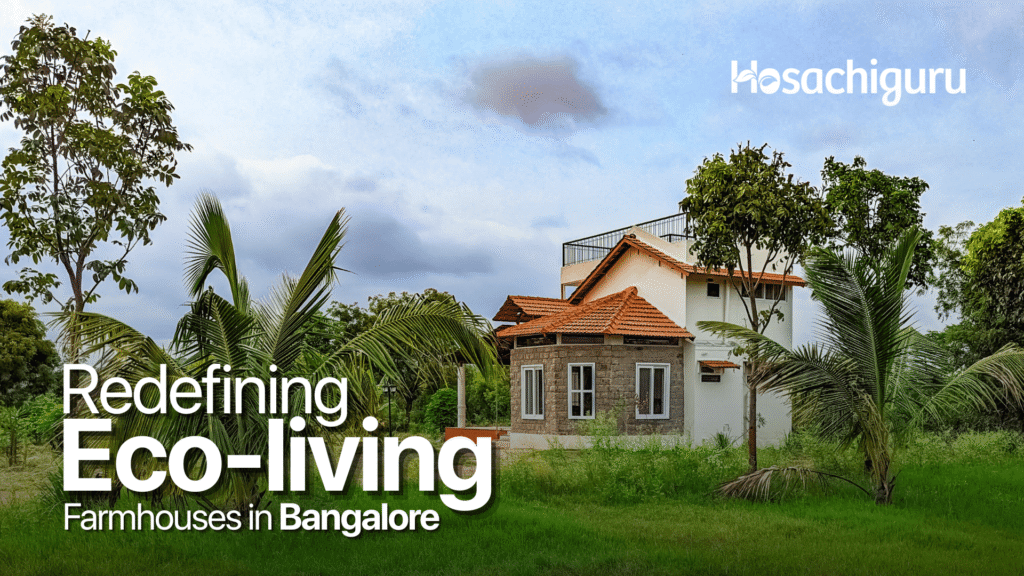
“The earth sings in flowers, but sometimes you have to drive an hour from Bangalore to hear it.”
Something remarkable is happening just beyond the final flyover, where the city eventually stops insisting on itself – silently, doggedly, and treesomely. Farmhouses are no longer the decorative objects they once were. They’ve grown into something grittier, sharper, and far more important: little pockets of ecological sanity that are reshaping how modern Indians perceive luxury, wellness, and responsibility.
These aren’t the “weekend resort” stereotypes with pastel hammocks and oddly symmetrical flower gardens. The farmhouses emerging on Bangalore’s outskirts are soil-scented, sunlight-framed, biodiversity-flirting examples of true eco-living. They are a combination of refuge and revolt, as well as comfort and climate action. And they speak a language that the city has forgotten: one in which wellness flourishes rather than being packed, delivered, or reduced.
Refer to it as a revival. Think of it as urban getaway therapy. You may also refer to it as the basic human need to regain equilibrium in a world where there are far too many notifications. Whatever the cause, there is no denying that this area is undergoing a quiet revolution in eco-friendly living, which is changing the definition of luxury in 2026 and beyond.
Where Concrete Ends and Responsibility Begin
The outskirts of Bangalore – Chikkaballapur, Doddaballapur, Kanakapura, and Sarjapur’s outer reaches, are no longer “the place where the city dumps its future expansion plans.” They’ve become transitional zones where urban promise gives way to the earthy honesty of the countryside.
And here’s the thing about soil: it doesn’t care about your lifestyle brand. It does not clap for your sustainability reels.
It just responds with drought, abundance, or health, based on how you treat it.
Farmhouses today are designed with this authenticity in mind. People looking for a Farm House For Sale in Bangalore are not looking for a nostalgic experience. They want to renew. Renewal of water tables, green cover, and their own fried neurological systems.
This is recalibration.
Sustainable Living: Not the Hashtag Version.
Let’s cut the romance: true eco-friendly living requires sweat, soil, patience, and resignation. But it also has a measurable impact, and that’s where these Bengaluru farmhouses really shine.
Many of them are adopting strategies that genuinely change ecosystems:
- Swales that replenish groundwater rather than drain it
- Food forests mimic natural succession, providing microhabitats.
- Plantations of native species that help restore local biodiversity
- Zero-chemical cultivation zones that improve soil structure
- Rainwater harvesting ponds that restore natural water flows
The brilliance of these designs lies in the fact that they are not staged. They’re not props. They’re not curated for a Sunday photoshoot. They are ecologically sound actions, and the land expresses thanks in the form of greener canopies, richer soil, and the return of birds that had quietly left years before.
This is eco-living in practice.
When Wellness Is Not a Spa Menu, But a Landscape
Meditation apps, ergonomic seats, fragrant candles, meal plans, and trackers that assess your sleep like an overbearing school principal have all become part of the urban wellness market.
Farmhouse wellness? It is different. It’s the type of health that:
- Drops cortisol levels without requiring a membership.
- Simply letting the sunrise in realigns circadian cycles.
- Increases immunity through microbe-rich soil and tree aerosols.
- Replaces artificial serotonin hacks with birdsong.
- Teaches stillness through gradual movement of leaves.
There’s a reason why when individuals walk onto farmland, something loosens inside them: the body is familiar with the conditions it originated in. And a mind that has been exposed to fluorescent illumination for too long suddenly recalls nature’s original instruction manual.
This is luxury, not in the gold-plated sense, but in the “I can breathe again” sense. It appears to be the rarest kind.
The Data Doesn’t Lie: Nature Rebounds Quickly When Allowed
The figures are what urban cynics enjoy most.
In Bangalore’s peri-urban areas, ecological rehabilitation around farmhouses has revealed:
- Once food forests develop, bird species counts significantly increase.
- Significant increase in soil organic carbon in managed agroforestry situations.
- Microclimate temperatures around tree belts are 2-3°C lower.
- Improved pollinator activity in areas transitioning from monoculture to mixed-species planting
These are not cosmetic upgrades. They are foundational improvements that cities badly require but rarely make place for.
When you live in an ecologically conscious farmhouse, nature rewards you at a rate that no financial instrument can match.
Sarcastic Reality Check (Because We’re Being Honest)
Of all, farmhouse living isn’t some Instagram-perfect paradise.
Mosquitoes will act as if they are paying rent.
Monkeys will believe your fruit bowl was built specifically for their convenience. Wild life will pleasantly remind you that you are an intruder here.
There will be days when your organic brinjal looks like it suffered an existential crisis.
But these are not inconveniences. They serve as reminders that you are a part of an ecosystem rather than an exception to it.
People in cities expect to have control. Nature trains them to expect consequences. Ironically, people are falling in love with this raw, unpolished, and unpredictable aspect of existence.
Luxury: The New Definition Includes Soil
Let’s get real. Today’s luxury has run its course. Every hotel, mall, and apartment employs the same terminology: “premium, curated, bespoke, and exclusive.” They have said it so many times that it no longer means anything.
Farmhouses, on the other hand, are redefining luxury entirely:
- A sky with genuine stars.
- A veranda that smells like petrichor after actual rain.
- A morning walk when you meet trees rather than automobiles.
- A kitchen cooks food gathered 30 feet distant.
- A mansion encased in quiet rather than marble.
Luxury has transitioned from being created to being grown.
This transformation is significant, and it is changing how Bangaloreans envision a happy life.
Investment Logic That is more rooted than risky.
Sure, emotion motivates many people to look for a Farm House For Sale in Bangalore, but the economics are not arbitrary.
- Land values near Bangalore’s outside belt have steadily increased.
- Regenerative landscapes provide long-term stability.
- Timber, fruit, and agroforestry cycles can yield rewards.
- Ecologically constructed properties are more resilient in fluctuating markets.
- Wellness-driven real estate has become a global trend.
The concept is no longer “buy land and wait.” It is “grow land and grow with it.”
People are investing not only in the soil, but also in the shape of their futures.
Philosophical Shift: From Escape to Return
Farmhouses are frequently framed as escapes. However, in actuality, they are returns. Return to flow, breathing, and meaning.
Modern living has severed our connection to the land. Farmhouses sew it back. They remind us that being environmentally conscious is instinctive rather than idealistic.
That instinct is resurfacing in Bangalore, stronger than ever.
Do you want to experience this revolution rather than just read about it?
If you like the notion of living regeneratively while balancing luxury, wellness, and ecological intelligence, contact Hosachiguru to learn more about managed farmland possibilities.
Hosachiguru provides long-term, sustainable green places where you can own farmland, care for it properly, and establish your own eco-living sanctuary on Bangalore’s outskirts.
If you’re looking for a Farm House For Sale in Bangalore that provides more than simply property, but also a place where restoration meets living, our projects are an excellent starting point.
Your trees are waiting. Your quiet is waiting.
And the land is still smiling; you only have to drive a little to hear it.