When you purchase managed farmland, the land itself is only the starting point. What determines whether your trees fruit on schedule, whether your soil stays fertile across years, and whether your plot produces consistent harvests is the agronomic planning that happens behind the scenes. At Hosachiguru, a dedicated agronomy team works across seasons to make crop and tree decisions that keep each managed farm plot productive, healthy, and aligned with the local climate and soil conditions of Karnataka and surrounding regions.
TL;DR – Summary
- How does managed farmland work in India? – Professionally managed farmland means an agronomy team handles soil testing, crop planning, irrigation scheduling, and harvest timing on your behalf. Owners hold legal title while experts manage the living assets year round.
- Why seasonal planning matters: – Crop and tree decisions shift with monsoon cycles, summer heat, and winter conditions. Hosachiguru’s agronomy team adjusts planting, pruning, mulching, and irrigation each season to protect soil health and optimize harvests.
- What role does soil testing play? – Before any planting decision, the team analyzes pH, nutrient profiles, organic carbon content, and drainage capacity. This plot specific soil data drives every subsequent crop and tree choice.
- How owners stay informed: – Hosachiguru provides harvest reports and farm updates so owners can track seasonal progress without needing to be on site. The MyFarm app is designed to offer real time visibility into farm activity.
What agronomy planning involves
Agronomy is the science of soil management and crop production. In a managed farmland context, it means a trained team decides what to plant, when to plant it, how to care for trees and companion crops, and how to respond to changing weather patterns. This is not a one time setup. It is a continuous, season aware process.
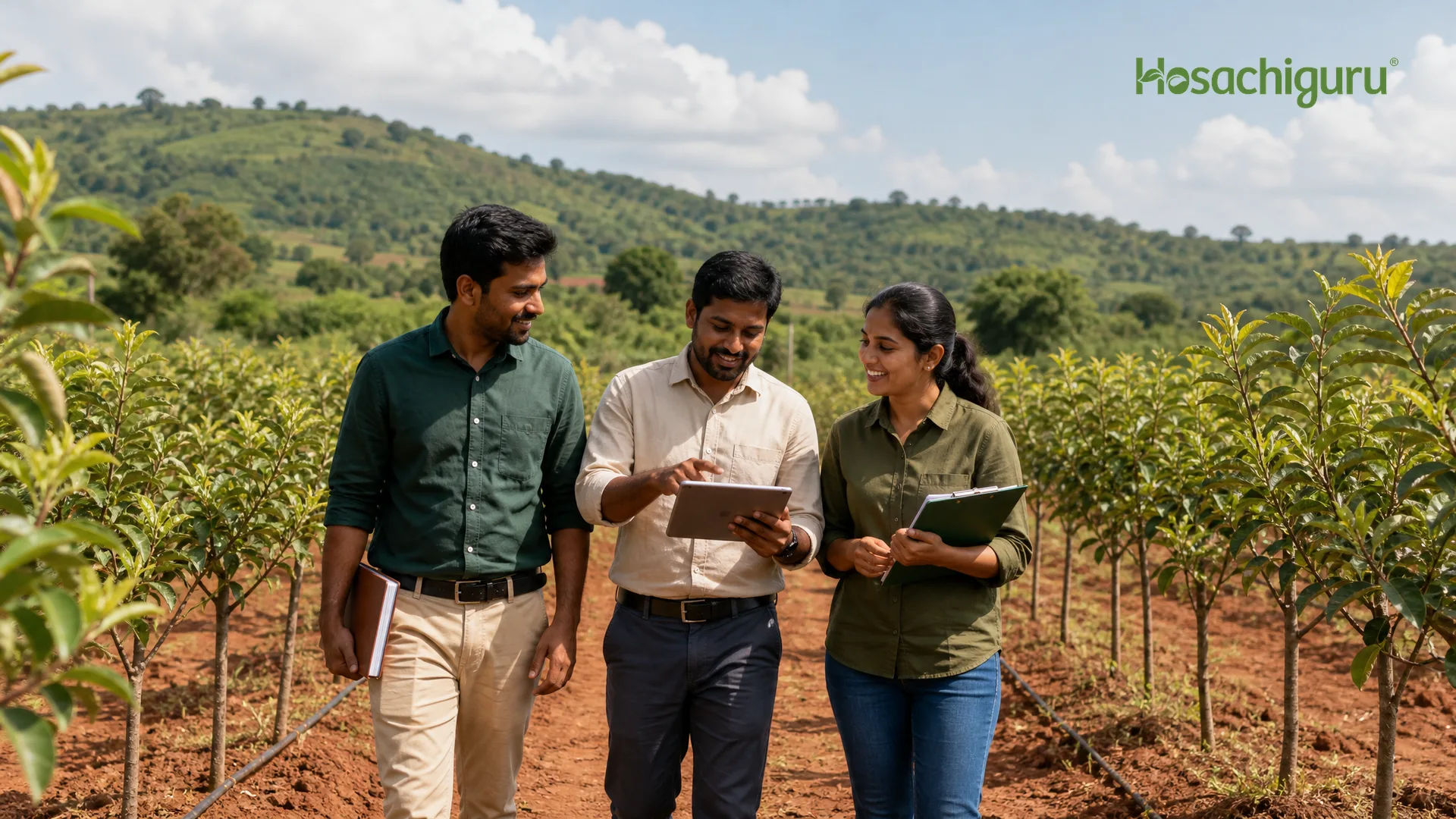
Hosachiguru’s agronomy team begins each cycle with soil analysis. They test for pH levels, nutrient profiles, organic carbon content, and drainage characteristics. These plot specific soil reports determine which tree species, companion crops, and ground cover plants will thrive on a given parcel. Without this data, planting decisions become guesswork.
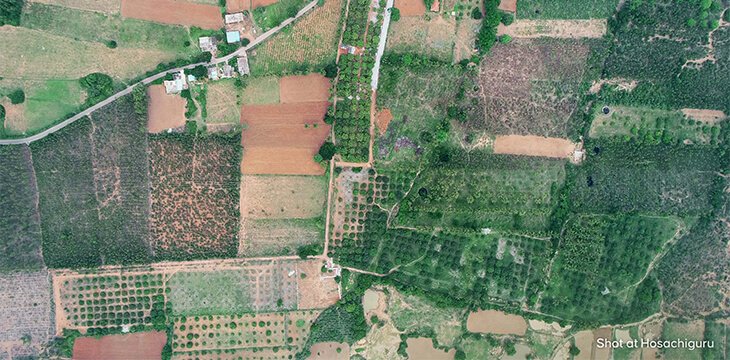
The team then maps each plot’s tree mix. Across Hosachiguru’s projects in Chikkaballapur, Ramanagara, Hindupur, Bagepalli, and Denkanikottai, the species selection varies. A mango orchard in Ramanagara faces different soil and rainfall conditions than an agroforest project near Hindupur. The agronomy team accounts for these differences rather than applying a single template across all locations.
How seasons shape decisions
Karnataka’s agricultural calendar revolves around three broad phases: the monsoon (kharif), the post monsoon (rabi), and the dry summer months. Each phase demands different interventions from the agronomy team.
During the monsoon, the focus shifts to water management. Rainwater harvesting systems, swales, and recharge pits collect and store water. The team monitors drainage to prevent waterlogging, which can damage root systems. Companion crops suited to high moisture conditions are planted alongside primary trees.
In the post monsoon period, the team turns to pruning cycles, mulch layer application, and soil care. Mulching helps retain moisture as rainfall tapers off. Pruning encourages healthy canopy formation and directs energy toward fruit production. Soil amendments, guided by the latest soil test data, replenish nutrients drawn down during the growing season.
Summer is the most demanding phase. Irrigation planning becomes critical. Hosachiguru uses drip irrigation systems to deliver water efficiently to root zones. The team adjusts schedules based on borewell recharge rates and stored rainwater reserves. Pest management also intensifies in warmer months, and the team relies on chemical free methods, including companion planting and biological controls, to protect crops without synthetic inputs.
Why soil testing comes first
Soil testing is not a formality. It is the foundation of every agronomic decision. Before Hosachiguru plants a single sapling on a new plot, the team conducts a thorough soil assessment. This includes measuring pH, electrical conductivity (EC), available nitrogen, phosphorus, potassium, and organic carbon levels.
These results tell the team whether the soil can support a mango plantation, a food forest with layered planting, or a timber and fruit tree agroforestry model. They also reveal whether the soil needs organic amendments, such as compost or green manure, before planting begins.
For existing plots, soil testing recurs at regular intervals. Soil health is not static. Seasons, rainfall, and cropping patterns all change the nutrient balance. Repeated testing allows the agronomy team to catch deficiencies early and adjust fertilization or crop rotation plans before yields suffer. This soil first approach is central to how Hosachiguru manages farmland for long term productivity.
Tree and crop mix strategy
Hosachiguru’s projects use permaculture and agroforestry principles to design multi layered planting systems. Rather than monocropping, the team selects a mix of fruit trees, timber species, companion crops, and ground cover plants. This approach can help improve biodiversity, build soil organic carbon, and create a more resilient farm ecosystem.
A typical food forest plot might include a high canopy layer of timber trees, a mid layer of mango or other fruit trees, and a low layer of vegetables or herbs. Each layer serves a function: shade regulation, nitrogen fixation, pollinator attraction, or erosion control. The agronomy team selects species based on the specific soil report and microclimate of each project site.
This mixed species planting also spreads harvest timing across the year. Mango harvests peak in summer, while certain vegetables and herbs produce through the monsoon and post monsoon seasons. Owners can receive seasonal produce from their plots, and harvest reports keep them informed about what was picked and when.
Keeping owners connected
One concern prospective buyers raise is visibility. If professionals manage the farm, how does the owner know what is happening? Hosachiguru addresses this through harvest reports and the MyFarm app, which is designed to provide real time farm updates, water management data, and payment tracking.
Owners can also visit their plots. Whether it is a weekend trip to a Ramanagara mango orchard or a family retreat at a Chikkaballapur project with cottages and a clubhouse, the farm is accessible. The agronomy team’s work becomes tangible during these visits: healthy trees, active soil biology, and visible biodiversity are the direct results of season by season planning.
This transparency is what separates managed farmland from a static land purchase. The land is a living asset. Its value, both in terms of produce and long term soil health, depends on the quality of agronomic decisions made every season.
For families and professionals exploring managed farmland investment near Bangalore, understanding the agronomy behind the model is essential. Hosachiguru’s seasonal planning process, grounded in soil testing, location aware crop selection, and chemical free farm management, is designed to help ensure that each plot performs as a productive, sustainable asset over the long term. The agronomy team’s year round work is what turns a plot of land into a functioning farm.
FAQs
1. How does managed farmland work in India?
In managed farmland, buyers hold legal title to the land while a professional team handles all farming operations. This includes soil testing, crop planning, irrigation, pest management, and harvest logistics. Hosachiguru’s agronomy team manages these tasks year round across its projects in Karnataka and neighboring regions.
2. Why is soil testing important before buying farmland?
Soil testing reveals pH, nutrient levels, organic carbon content, and drainage capacity. These factors determine which crops and trees a plot can support. Without a soil test report, planting decisions lack a scientific basis, which can lead to poor yields and declining soil health over time.
3. How is soil health tested?
Soil samples are collected from multiple points across a plot and analyzed for pH, electrical conductivity, nitrogen, phosphorus, potassium, and organic carbon. Hosachiguru conducts these assessments before initial planting and repeats them at intervals to track changes and adjust agronomic plans accordingly.
4. What does an agronomist do in managed farmland?
An agronomist evaluates soil conditions, selects appropriate tree and crop species, plans irrigation schedules, manages pest control using chemical free methods, and adjusts seasonal care routines. At Hosachiguru, the agronomy team tailors these decisions to each project site’s specific climate and soil profile.