
Beyond the Excel Sheets: Why Farming Isn’t a Quick Fix for Passive Income

Beyond the Excel Sheets: Why Farming Isn’t a Quick Fix for Passive Income

Author Name: Anusha Bilimagga
Read Time: 5 mins

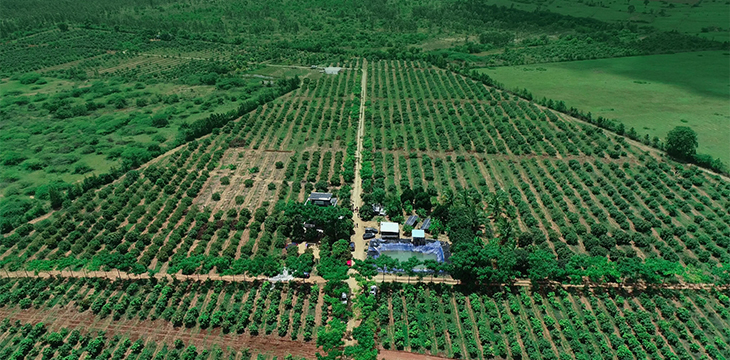
In recent years, a growing number of urban professionals have shown a keen interest in owning farmland, viewing it as an opportunity for passive income. The idea of retreating to a rural paradise, cultivating plantations, and making money while embracing nature is enticing.  

The common misconception is that farming, even on a small scale, can quickly generate significant returns. However, the truth is far more complex. Agriculture, especially in India, faces numerous challenges that urban dwellers may not be fully aware of. For instance, out of India’s 328.7 million hectares of land, only one-third is irrigated, another third is cultivable, and the remaining is left fallow. This stark underutilization of agricultural land reveals the difficulty of sustaining plantation’s production, particularly for small farmers.

The Harsh Realities of Agriculture

Farming is an occupation that requires a significant amount of manual labor, effort, and patience. Yet, despite subsidies on seeds, fertilizers, and equipment, profit margins for farmers remain razor thin. The reliance on external inputs, such as agrochemicals and genetically modified seeds, has created a cycle where farmers are heavily dependent on big agricultural companies. The shocking reality is that, in some cases, seeds won’t even germinate without the application of specific chemicals. This dependency leaves farmers vulnerable to high input costs and fluctuating market prices, making it difficult to achieve consistent returns.

Moreover, the agricultural market is notoriously unpredictable. If there is a surplus harvest, prices drop, while a poor harvest can drive prices up. This volatility leaves small farmers at the mercy of market forces they have little control over. Even protected cultivation, which might offer some buffer, comes with its own set of challenges, such as machinery maintenance and breakdowns.

The Debt Crisis Among Farmers

One of the gravest consequences of these challenges is the growing debt burden among farmers. A significant proportion of India’s farming population, particularly in South Indian states like Andhra Pradesh and Telangana, are heavily indebted. Government policies have often failed to provide sufficient support, forcing farmers to rely on high-interest loans from private money lenders. Rising costs, reduced subsidies, and inadequate procurement prices further exacerbate this issue, making farming not just a difficult occupation, but also a life-threatening one in extreme cases. It’s the only sector where many, disillusioned by their struggles, take the extreme step of suicide due to their occupation.

Cash Crops, Silviculture, Horticulture: The False Promise of High Returns

Urban investors are often enticed by companies promising quick profits from cultivating exotic fruits, horticulture crops, and vegetables. These high-value crops are marketed as offering substantial short-term returns. However, many of these promises come with significant risks. Exotic fruits and vegetables may require specialized care, expensive inputs, and are vulnerable to diseases, pests, and erratic weather patterns. 

Moreover, companies often emphasize lucrative projections on paper, claiming secured partnerships and guaranteed markets, but in reality, the market for such crops can become oversaturated. As demand fluctuates, growers may face price drops, leaving them with lower-than-expected returns. Additionally, large corporations and intermediaries may further exploit small investors by controlling the supply chain, driving up costs, and reducing the share of profits that reach the farmers, despite their substantial investments in time, labor, and resources. The reality is often far more challenging than the rosy picture painted by these companies.

The Mirage of the “Rentable Farmhouse”

Another emerging trend is the idea of building farmhouses on agricultural land and renting them out on platforms like Airbnb. While this might seem like a clever way to generate income, the legalities surrounding it are often overlooked. In many cases, farmhouses cannot be used for commercial purposes, as they are intended solely for the use of the farmer and their family. Strict laws govern the use of farmhouses, limiting them to personal residences or for agricultural-related activities like storing equipment or tethering cattle.

Sustainable Farming: A More Realistic Approach

Rather than chasing the dream of huge profits through monoculture cash crops, there is a growing movement toward sustainable and integrated farming practices. Mixed plantations, agroforestry, and diversified planting models offer a more stable, albeit modest, income. These practices are less vulnerable to the whims of weather and market fluctuations and reduce dependency on costly external inputs. Though the profits might not be enormous, they offer a more realistic and steady approach. 

The Path Forward

For those considering investing in agriculture as a source of passive income, it is crucial to approach it with a realistic mindset. The glamour of farming, often romanticized in the media and advertisements, does not reflect the true struggles faced by small-scale farmers. Success in agriculture requires careful planning, a deep understanding of the market, and a willingness to embrace sustainable practices. Without this knowledge, what may seem like a lucrative investment could quickly become a financial drain.

In conclusion, agriculture can be a rewarding venture for those with the time, resources, and commitment to making it work. However, for urban professionals seeking passive income with minimal involvement, the harsh realities of farming must be understood. The promises of quick profits are often exaggerated, and the risks far outweigh the rewards for the unprepared. Agriculture is not just about planting crops and waiting for them to grow—it’s a labor-intensive, uncertain, and often unforgiving occupation. With proper research, a balanced approach, and realistic expectations, however, it can offer a sustainable, albeit modest, return.

Latest Blogs

Hosachiguru Farm Showcase: See Real Land, Meet Real Farmers, Ask Real Questions

What to Expect from Villa Plot Developments Near Bangalore’s Airport in the Next 5 Years

Why Villa Plots Near Bangalore Airport Are Ideal for Vacation Homes

Privacy Policy

At Hosachiguru, accessible from https://www.hosachiguru.com/, one of our main priorities is the privacy of our visitors. This Privacy Policy document contains the types of information that are collected and recorded by Hosachiguru and how we use it.

If you have additional questions or require more information about our Privacy Policy, do not hesitate to contact us.

This Privacy Policy applies only to our online activities and is valid for visitors to our website with regard to the information that they share and/or collect in Hosachiguru. This policy is not applicable to any information collected offline or via channels other than this website.

Consent

By using our website, you hereby consent to our Privacy Policy and agree to its terms.
Information we collect

  • We will always make it clear to you what personal information we need and why we need it when we ask you to provide it. 
  • If you contact us directly, we may receive additional personal information about you, such as your name, email address, phone number, and any other information you choose to provide, including the contents of any messages or attachments you send us.
  • When you register for an Account, we may ask for your contact information, which may include your name, company name, address, email address, and telephone number.

How we use your information

We use the information that is collected in various ways, including:

  • To provide, operate, and maintain our website
  • To improve, personalize, and expand our website
  • To understand and analyze how you use our website
  • To develop new products, services, features, and functionality
  • To communicate with you, either directly or through one of our partners, including for customer service, to provide you with updates and other information relating to the website, and for marketing and promotional purposes
  • To send you emails
  • To find and prevent fraud
  • Log Files

Hosachiguru follows a standard procedure of using log files. These files log visitors when they visit websites. All hosting companies do this and are a part of hosting services’ analytics. The information collected by the log files includes internet protocol (IP) addresses, browser type, Internet Service Provider (ISP), date and time stamp, referring/exit pages, and possibly the number of clicks. These are not linked to any information that is personally identifiable. The purpose of the information is for analyzing trends, administering the site, tracking users’ movement on the website, and gathering demographic information.

When you voluntarily send us electronic mail, we will keep a record of this information so that we can respond to you. We only collect information from you when you register on our site or fill out a form. Also, when filling out a form on our site, you may be asked to enter your: name, e-mail address or phone number. Your data is confidential and will not be shared with any 3rd party. You may, however, visit our site anonymously. In case you have submitted your personal information and contact details, we reserve the rights to Call, SMS, Email or WhatsApp about our products and offers, even if your number has DND activated on it.

Cookies and Web Beacons

Like any other website, Hosachiguru uses ‘cookies’. These cookies are used to store information including visitors’ preferences, and the pages on the website that the visitor accessed or visited. The information is used to optimize the users’ experience by customizing our web page content based on visitors’ browser type and/or other information. For more general information on cookies, please read “What Are Cookies”.

Advertising Partners Privacy Policies

You may consult this list to find the Privacy Policy for each of the advertising partners of Hosachiguru.

Third-party ad servers or ad networks use technologies like cookies, JavaScript, or Web Beacons that are used in their respective advertisements and links that appear on Hosachiguru, which are sent directly to users’ browsers. They automatically receive your IP address when this occurs. These technologies are used to measure the effectiveness of their advertising campaigns and/or to personalize the advertising content that you see on websites that you visit.

Note that Hosachiguru has no access to or control over these cookies that are used by third-party advertisers.

Third-Party Privacy Policies

Hosachiguru’s Privacy Policy does not apply to other advertisers or websites. Thus, we advise you to consult the respective Privacy Policies of these third-party ad servers for more detailed information. It may include their practices and instructions about how to opt out of certain options.

You can choose to disable cookies through your individual browser options. To find more detailed information about cookie management with specific web browsers, it can be found on the browsers’ respective websites.

CCPA Privacy Rights (Do Not Sell My Personal Information)

Under the CCPA, among other rights,

Request that a business that collects a consumer’s personal data disclose the categories and specific pieces of personal data that a business has collected about consumers.

Request that a business delete any personal data about the consumer that a business has collected.

Request that a business that sells a   consumer’s personal data, not sell the consumer’s personal data.

If you make a request, we have one month to respond to you. If you would like to exercise any of these rights, please contact us.

GDPR Data Protection Rights

We would like to make sure you are fully aware of all of your data protection rights. Every user is entitled to the following:

Right to access – You have the right to request copies of your personal data. We may charge you a small fee for this service.

The right to rectification – You have the right to request that we correct any information you believe is inaccurate. You also have the right to request that we complete the information you believe is incomplete.

The right to erasure – You have the right to request that we erase your personal data, under certain conditions.

The right to restrict processing – You have the right to request that we restrict the processing of your personal data, under certain conditions.

The right to object to processing – You have the right to object to our processing of your personal data, under certain conditions.

The right to data portability – You have the right to request that we transfer the data that we have collected to another organization, or directly to you, under certain conditions.

If you make a request, we have one month to respond to you. If you would like to exercise any of these rights, please contact us.

Children’s Information

Another part of our priority is adding protection for children while using the internet. We encourage parents and guardians to observe, participate in, and/or monitor and guide their online activity.

Hosachiguru does not knowingly collect any Personal Identifiable Information from children under the age of 13. If you think that your child provided this kind of information on our website, we strongly encourage you to contact us immediately and we will do our best ‌to promptly remove such information from our records.

Contact Us