Author: Srinivas Abhilash
Introduction
Within the expansive and ever-evolving domain of sustainable agriculture, multiple ideologies have surfaced, each promoting a more environmentally friendly and robust future. It is fascinating to observe that while these approaches share the common destination of sustainability, they originate from distinct starting points, addressing diverse ecological challenges.
From organic farming to permaculture, regenerative agriculture to agroforestry, each method offers its unique perspective on achieving harmony between agriculture and the environment. In the diverse array of sustainable methodologies, syntropic farming emerges as a captivating and comprehensive approach.
Origin of Syntropic Agriculture
Syntropic Agriculture is a sustainable farming approach that harnesses the principles of syntropy (an inherent inclination of a closed system to autonomously arrange, structure, and advance in complexity), which refers to the natural inclination of a closed system to autonomously arrange, structure, and advance in complexity. Originating in Brazil 25 years ago and gaining popularity in countries like Australia, this method draws inspiration from the work of Mr. Ernst Götsch, a Swiss farmer and researcher.
Syntropic Agriculture encompasses a comprehensive farming methodology that integrates principles derived from permaculture, regenerative farming, and natural farming into a cohesive framework. Its core focus is on the cultivation of timber and food forests, with the ultimate objective of reforesting the planet. At Hosachiguru-managed farmlands, we are passionately committed to collaborating with our co-farmers in the creation of agroforests and food forests, as part of our mission to contribute to a greener and more sustainable future.
Unlike modern agricultural approaches, Syntropic Agriculture prioritizes soil health and follows flexible principles inspired by nature’s functioning. By embracing the complexities of natural ecosystems, it seeks to mimic their regenerative processes. This comprehensive approach to sustainable land management establishes harmonious farming systems for humans and the environment, offering a resilient and ecologically sound agricultural practice
Key Principles and Guidelines of Syntropic Agriculture
Principles
Keep the soil covered
- It is accomplished by growing large amounts of biomass on-site, which is then pruned or cut and applied to the soil on a regular basis.
- According to Ernst, uncovered soil is like a wound on Earth. A thick layer of organic matter is repairing the damage. Over time, it degrades into rich compost, acting as an organic fertilizer. It also shields the soil from the sun and prevents water evaporation, reducing the need for frequent rainfall. It makes farming easier by preventing competitive grass and weeds. It also keeps the harvest clean.
- At all farmlands managed by Hosachiguru, a combination of green and brown mulch is utilized, comprising grass, leaves, wood chips, twigs, mulberry sticks, and crop residues. Mulching not only regulates soil temperature but also conserves moisture and inhibits weed proliferation. It acts as a protective layer, ensuring the soil remains warm and snug. To learn further about Hosachiguru’s soil and microorganism care practices, take a look at the blog post on International Compost Awareness Week available at https://www.hosachiguru.com/blog/international-compost-awareness-week/.
Maximize Photosynthesis
- By laying out tree rows from north to south, syntropic farming aims to maximize photosynthesis. As opposed to managing water solely through contour planting, this is the primary design layout strategy. Also, this is accomplished through extremely dense planting; 20-40 plants/seeds/cutting per square meter.
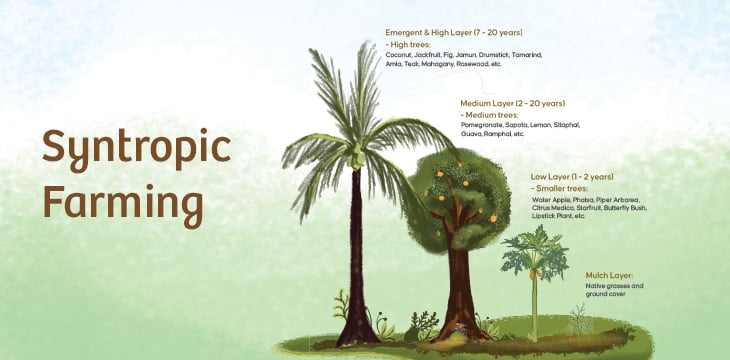
- The plants are arranged in space according to the stratification principle, which refers to where a plant grows in its optimal habitat. The four commonly used strata are Emergent, High, Medium, and Low, and they mostly refer to the species’ light requirements, but also to the species’ form/habit and leaf structure.
- All farmplots at Sambrahma and Dhaanvi Farms, managed by Hosachiguru, are meticulously stratified according to the principle of syntropic farming. This stratification ensures the optimal utilization of space and resources, fostering a thriving ecosystem.
- In the uppermost layer, the Emergent level, timber trees such as coconut, papaya, ice apple, and areca nut dominate the landscape, providing shade and a canopy for the layers below.
- Moving down to the High layer, we find majestic fruit trees like mango, avocado, tamarind, and jackfruit. These towering trees offer shade and bear delicious fruits, contributing to the farm’s biodiversity and productivity.
- The Medium layer comprises cashew fruit, custard apple, rose apple, amla, wood apple, and ramphal. These trees play an essential role in enhancing the farm’s diversity, providing valuable yields, and contributing to the overall ecosystem balance.
- Lastly, in the lower layer, one can find lemon, banana, pomegranate, sapota, orange, and sweet lime trees. These fruit-bearing trees complete the stratification, adding variety and further enriching the farm’s offerings.
- All farmplots at Sambrahma and Dhaanvi Farms, managed by Hosachiguru, are meticulously stratified according to the principle of syntropic farming. This stratification ensures the optimal utilization of space and resources, fostering a thriving ecosystem.
Synchronization
- Synchronization in agriculture involves harvesting and pruning plant biomass to make room for the next generation of species. This process stimulates new growth by triggering the release of root hormones. Additionally, at Hosachiguru, our dedicated ground staff practices biomass planting. By planting trees and perennial crops, we enhance soil fertility and sequester carbon, benefiting both the environment and our crops. It’s a sustainable win-win for all. Hosachiguru Managed farmlands feature a variety of biomass plants, divided into three types.
- Tree Species, including Agasey, Drumstick, Erythrina, Gliricidia, and Albizzia, provide shade, biomass, and aid in carbon sequestration.
- Shrub Species like Mexican Sunflower, Cassava, Red Gram, and Turmeric contribute to soil health, nitrogen fixation, and biodiversity.
- Grass Species, such as Vetiver Grass, Napier Grass, and Lemon Grass, stabilize soil, prevent erosion, and offer organic matter for nutrient cycling.
- Synchronization in agriculture involves harvesting and pruning plant biomass to make room for the next generation of species. This process stimulates new growth by triggering the release of root hormones. Additionally, at Hosachiguru, our dedicated ground staff practices biomass planting. By planting trees and perennial crops, we enhance soil fertility and sequester carbon, benefiting both the environment and our crops. It’s a sustainable win-win for all. Hosachiguru Managed farmlands feature a variety of biomass plants, divided into three types.
Natural Succession
- Succession, the inherent tendency of a natural system to evolve from simplicity to complexity, plays a crucial role in the essence of syntropic farming. As we embark on this enchanting expedition of plant arrangement, starting from pioneering species to secondary ones, we bear witness to the awe-inspiring culmination of a mature forest. At Hosachiguru, we wholeheartedly embrace the power of managed successions, fostering a harmonious growth that thrives on the constant interplay of diverse strata.
- As the succession unfolds, each plant finds its rightful place, contributing to the ever-evolving story of the forest. This process propels the system towards species capable of capturing and harnessing more energy, resulting in the concentration of energy itself, precisely what “syntropy” signifies. By harnessing the power of natural succession, we unlock the inherent potential of syntropic farming, allowing us to cultivate thriving ecosystems where every plant plays a vital role.
How Does Syntropic Farming Work
The underlying principles of a prosperous syntropic system can be distilled into two essential traits: Energy capture and management, and Accelerated growth and development.
Energy Capture and Handling
- A forest system captures solar energy through photosynthesis, converting carbon dioxide and water into sugars and storing the sun’s energy in organic compounds.
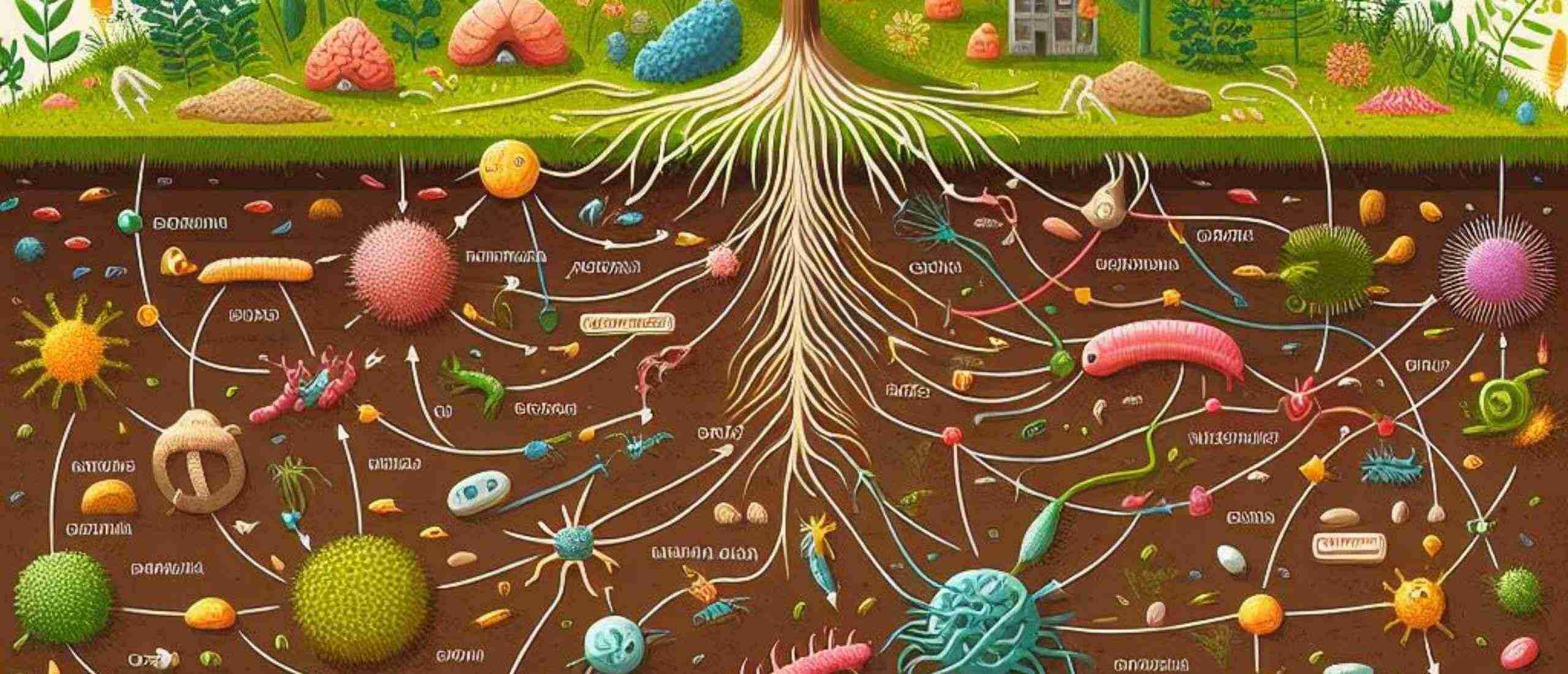
- Nitrogen, an essential plant nutrient, is obtained through a symbiotic relationship with nitrogen-fixing bacteria in plant roots and decaying wood.
- Energy in a forest system is managed through complex networks and relationships among organisms. Forests provide a protective environment that supports these networks.
Accelerated Growth and Evolution
- A healthy living system is dense, diverse, and well-adapted to its environment, with a multitude of different organisms. A healthy forest, for instance, showcases this diversity with various trees, shrubs, and vegetation. This diversity is vital as it mitigates the impact of wind, rain, and sunlight.
- The multiple layers of vegetation serve as buffers, enabling the land to absorb and withstand these elements while offering protection during severe weather.
- In a healthy living system, all organisms collaborate to create a unified and intelligent system that evolves for the benefit of the whole.
Unleash the Power of Syntropic Farming: Greening the Planet, One Forest at a Time!
Advantages
- Bountiful Harvests: Syntropic farming yields abundant crops, ensuring a steady income throughout the growing season.
- Sustainable Income: Over time, fruit and lumber trees mature, increasing profitability and providing a stable source of revenue.
- Maximizing Land Space: By integrating vegetables with trees, the land is optimized for optimal productivity and efficient space utilization.
- Cost-Effective: Say goodbye to costly pesticides, fertilizers, and machinery, as nature’s balance takes care of the farm’s needs.
- Thriving Soil: Syntropic practices enrich the soil, creating fertile, aerated, and workable land that sustains healthy plant growth.
- Water-wise: Improved water retention minimizes reliance on rainfall, ensuring crops thrive even in drier periods.
- Nature’s Shade: As trees flourish, they create a pleasant working environment, offering respite from the sun’s glare.
- Weed-Free Wonder: Natural mulch suppresses unwanted growth, reducing the need for laborious weeding.
- Strength in Diversity: Biodiversity fosters resilient crops, enhancing plant health and natural defense against pests and diseases.
Disadvantages
- Delayed Rewards: Syntropic farming requires patience as it takes time for trees to mature and yield significant harvests.
- Visual Aesthetics: To the untrained eye, syntropic farms may appear “messy” due to the integration of diverse crops and trees.
- Learning Curve: Embracing syntropic farming entails acquiring specific knowledge and skills, which requires time and effort.
- Limitations on Cash Crops: Sun-loving cash crops can only be grown for a limited period before shade becomes too dense.
Conclusion – Act Now for a Greener Future!
Embracing the ecological revolution of syntropic farming is not only a transformative step towards reforesting our planet but also a vital path to cultivating sustainable agriculture. By starting your syntropic journey today as a co-farmer at Hosachiguru, you become a steward of thriving ecosystems that benefit not only you and your family but also the Earth as a whole. This approach surpasses the limitations of conventional/modern farming by relying on internal resources rather than external inputs, leading to improved land quality and comparable or even higher harvest yields.
By promoting biodiversity, optimizing resource utilization, and emphasizing ecological balance, syntropic farming can actively contribute to the conservation and restoration of forests. It recognizes that forests are not mere sources of wood, but crucial elements for maintaining the stability and livability of our planet. Through sustainable agricultural practices inspired by the complexity and resilience of forests, we can forge a harmonious coexistence between forests and farmland, securing a sustainable future for both.
Now is the time for action. Let us join hands and unlock the boundless potential of syntropic farming. By adopting this regenerative approach, we can establish a win-win situation, where abundant and sustainable harvests flourish in harmony with nature’s wisdom. Together, we have the power to make a profound impact on the future of our planet. Start your syntropic farming journey today and become a catalyst for positive change. The Earth awaits our united effort to create a flourishing and resilient world.