The ability to grow food forms the bedrock of human civilization. Imagine if we were still hunters and gatherers, spending every waking moment hunting and foraging for food—we would never have had the time or opportunity to build a civilization. Humanity’s transformation began with the discovery and understanding of plant life, learning to harness its potential. This shift marked the evolution from hunter-gatherers to creators and innovators, capable of shaping the world around us. It was only through the cultivation and storage of food that we could focus on exploring aspects of life beyond mere survival, enabling the growth of culture, science, and society as we know it.
India’s agricultural history spans an extraordinary 15,000 years. Few countries, apart from some in South America, can claim such a deeply rooted connection to farming. Agriculture has been central to the evolution of civilizations, and India’s success in this realm stems from unique and favourable conditions. The country is blessed with fertile soils, a wide latitudinal and longitudinal range, over 300 days of abundant sunlight each year, and an extensive network of rivers and water bodies. Most importantly, Indian farmers have historically exhibited a profound ability to observe and connect with the rhythms of life and nature. These factors have enabled farmers in this region to master agricultural practices, from their earliest beginnings to their most advanced forms.
After the Green Revolution, many farmers worldwide began to recognize the harmful effects of synthetic fertilizers and chemicals on human health, soil quality, and the environment. This led some to transition back to traditional and sustainable farming methods. Natural Farming, at its core, involves cultivating crops without synthetic fertilizers, pesticides, herbicides, tillage, weeding—hence the term “do nothing.” However, this philosophy refers to working with nature rather than imposing artificial control over it.
What is Natural Farming?
Natural Farming is an ecological approach of growing plants without intervening in or altering their natural life processes through the usage of synthetic chemical inputs or artificial methods.
Masanobu Fukuoka, a Japanese farmer and philosopher, is considered the pioneer of Natural Farming. He introduced the term in his groundbreaking book “The One-Straw Revolution”, published in 1975. Natural Farming is also referred to as “the Fukuoka Method,” “the natural way of farming,” or “do-nothing farming.” Despite the term, it does not imply that the farmer does nothing; rather, it emphasizes minimal intervention. The farmer’s role is to nourish and support plants, allowing them to thrive and produce flowers and fruits naturally.
Principles of Natural Farming
1. No Tillage
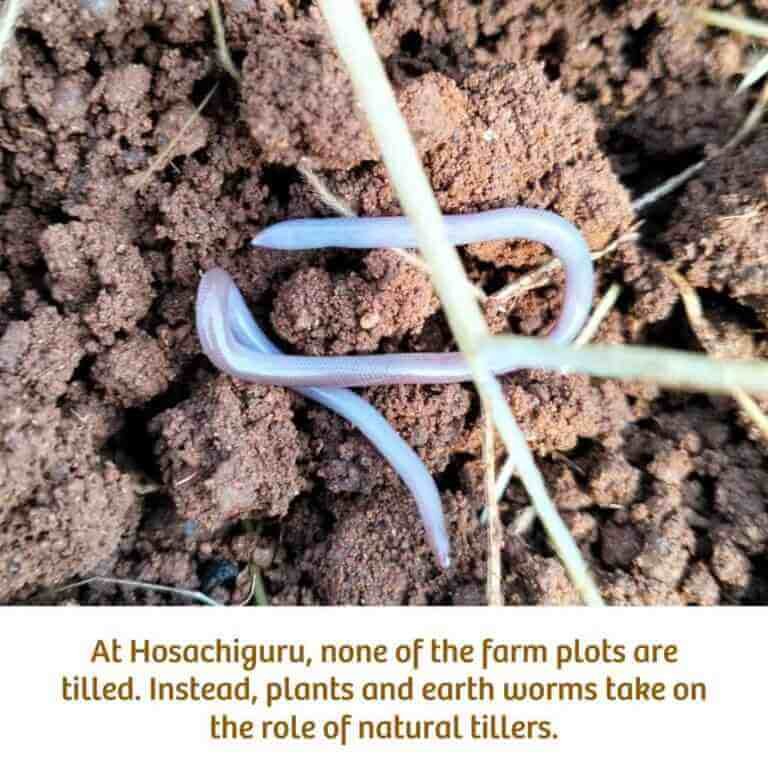
Tillage is typically performed to loosen the soil, improve aeration, and mix manure or organic waste before sowing seeds or transplanting the saplings. However, nature performs this process effortlessly. Trees naturally loosen the soil through the growth and movement of their root systems. Worms create tunnels as they move through the soil, enhancing aeration. Birds dig for worms, while insects and animals create holes and burrows for nesting. Organic matter also contributes by holding moisture and maintaining aeration, keeping the soil loose and fertile.
2. No Fertilizers
Most fertilizers available in the market are predominantly chemical based. While only a fraction of the fertilizer provides nutrients, the rest comprises toxic substances. When synthetic fertilizers are applied to the soil, they disrupt and destroy life forms, including worms, insects, birds, animals, and vital microbial life. Over time, the soil loses its moisture content, microbial diversity, organic matter, and humus, eventually turning into barren land and, ultimately, sand.
3. No Weeding
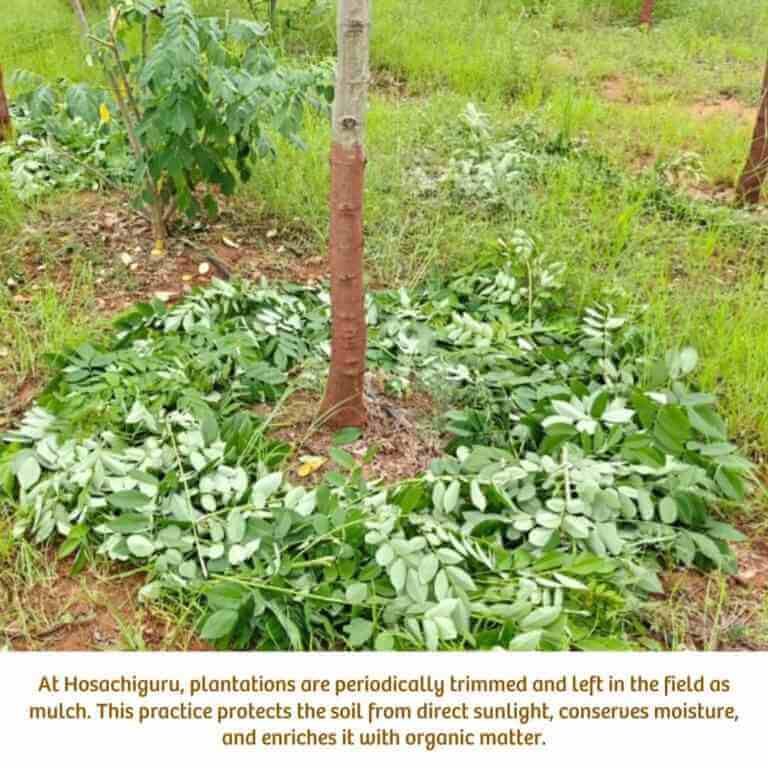
Weeds play an essential role in enhancing soil fertility and maintaining the balance of the biological community. As a core principle of Natural Farming, weeds should be managed rather than eradicated.
There are two primary methods to control weeds:
Using live mulch – This involves planting cover crops to keep the soil alive and protected.
Using dried plant matter as mulch – Branches, twigs, leaves, and other plant residues are used to cover the soil.
4. No Pesticides
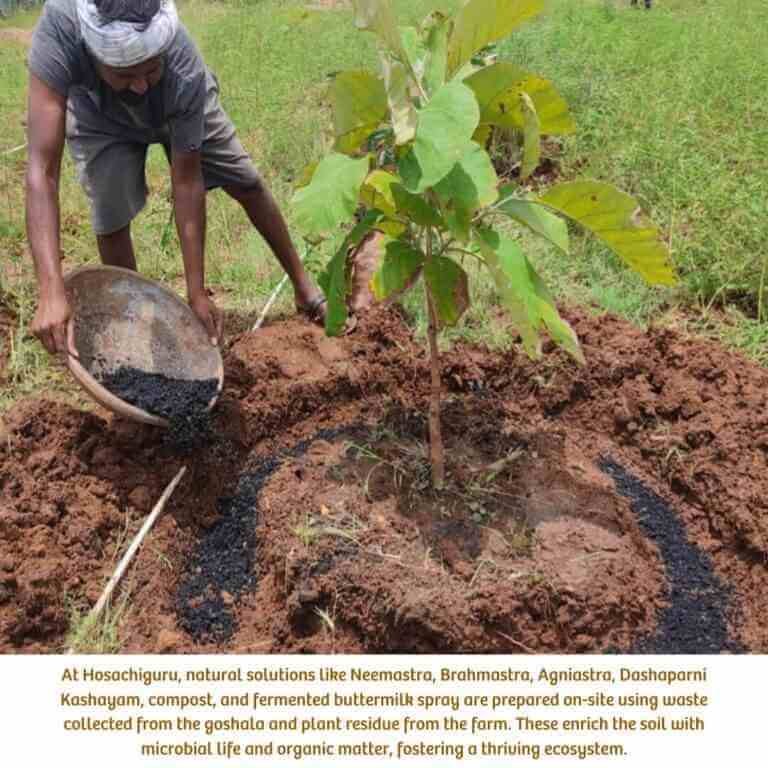
At Hosachiguru, natural farming techniques are strengthened by the use of organic astras such as Neemastra, Brahmastra, Agniastra, Dashaparni Kashayam, and fermented solutions. These natural preparations are made using farm-based resources like neem leaves, cow urine, plant residues, and fermented plant extracts. They serve as effective pest management solutions, protecting crops without disrupting the ecological balance.
These astras work by repelling harmful pests, inhibiting their reproduction, and enhancing plant immunity, while being safe for beneficial insects like pollinators and soil dwellers.
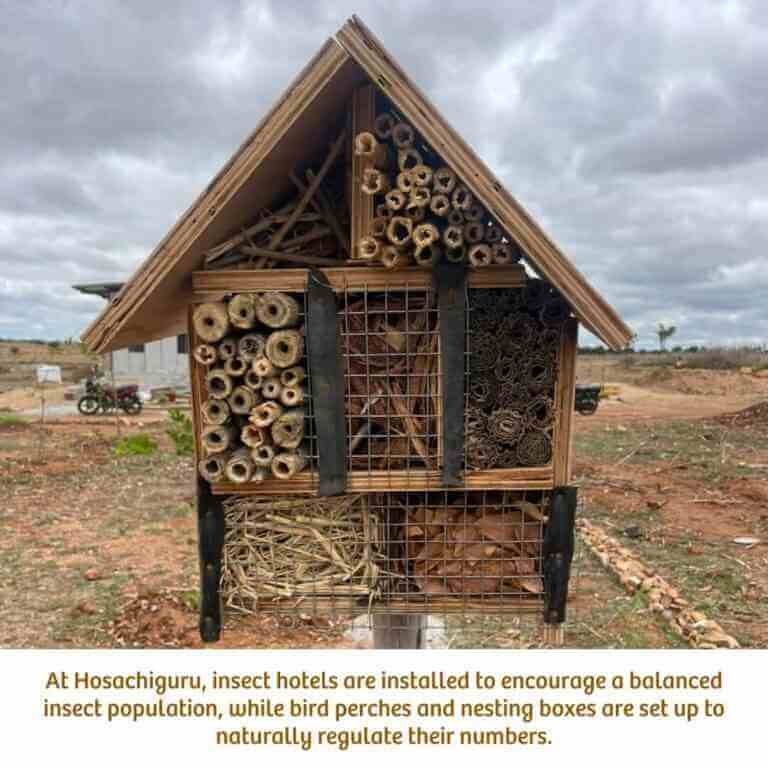
In natural farming, the aim isn’t to eradicate pests but to manage their activity by fostering biodiversity. Many insects labeled as pests are integral to the ecosystem, contributing to organic matter breakdown, pollination, soil aeration, and turning. When vegetation is removed due to excessive ploughing or de-weeding, these insects lose their habitat and food sources, often resorting to feeding on crops.
Hosachiguru adopts a balanced approach to disease and pest control by cultivating resilient crops in a biodiverse environment. By maintaining this harmony and using these astras, we ensure that both plants and their surrounding ecosystem flourish, emphasizing sustainability over short-term fixes.
5. Biodiversity
Biodiversity is a cornerstone of Natural Farming, as it minimizes imbalances and vulnerabilities in the environment.
Natural farmers avoid monoculture practices, as cultivating a single crop can disrupt the ecosystem, making it more susceptible to diseases, viruses, and pest attacks. Instead, balance is achieved by growing a diverse array of plants and trees, tailored to their purpose—whether for fodder, fruits, flowers, medicine, timber, or seasonal crops. This diversity can be incorporated through intercropping or mixed cropping methods.
Crop rotation further supports biodiversity by managing soil nutrients and fostering the growth of seasonal crops, ensuring sustainable agricultural practices.
6. Native Seeds
Native seeds play a vital role in preserving local biodiversity by maintaining a wide range of plant varieties that have naturally adapted to thrive in specific ecological niches over time. These native varieties are easy to grow, rich in life energy and nutrition, and possess a strong immunity that helps them resist and combat pests, viruses, and even survive in harsh climatic conditions.
In contrast, hybrid varieties are engineered for specific purposes, such as maximizing yield or meeting market and consumer demands. By using native seeds, farmers promote seed sovereignty, empowering them to save, exchange, and use their own seeds. This practice protects biodiversity and reduces dependence on external seed sources.
Native seeds preserve traditional agricultural practices and the cultural heritage associated with specific crops. They support the continuation of indigenous knowledge in seed saving, crop management, and sustainable farming methods. Native plants are often more water-efficient, having evolved to thrive in local conditions with limited water availability. This is especially crucial in regions facing water scarcity, contributing to more sustainable water management. Additionally, native seeds are adapted to local nutrient cycles, reducing the need for external fertilizers.
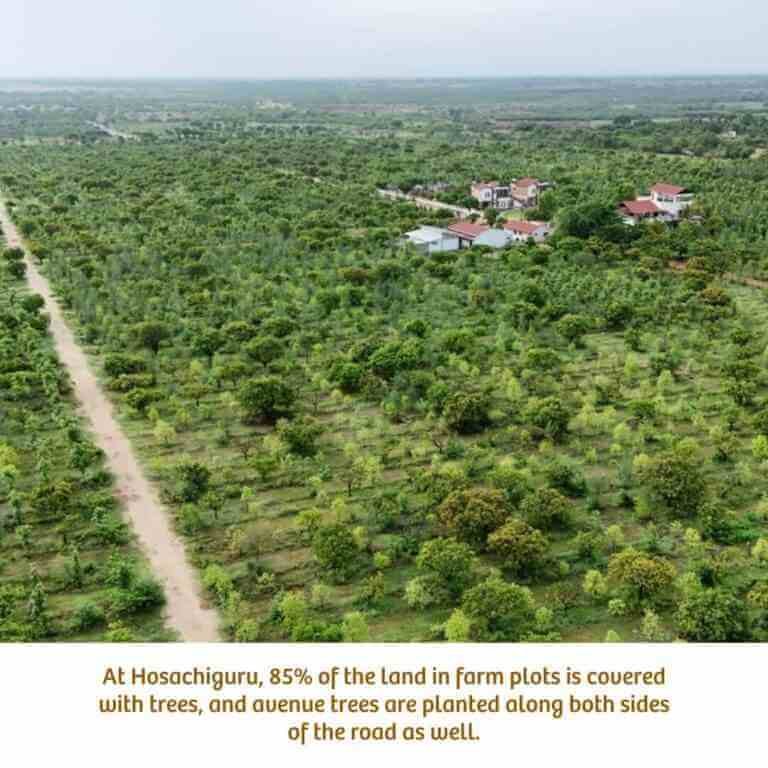
7. Minimum 30% of the Land should be Cultivated with Trees
Trees play a crucial role in restoring ecological balance and providing economic benefits to farmers. They help re-establish balance in farmlands by offering habitats for animals, providing shade for the land, holding rainwater, and recharging groundwater. Trees also prevent soil erosion, reduce runoff, mitigate flooding, create organic matter, and contribute to humus formation. Additionally, they absorb atmospheric carbon and help mitigate local weather extremes.
Natural farmers rely on their own farm inputs to create concoctions, manures, and mixtures. Trees provide essential resources for farmers, including seasonal fruits and vegetables, firewood, shelter, flowers, timber, medicinal plants, fodder, rubber, gum, resin, fiber, and many other valuable products.
8. Adopting Local Farm Animals such as Cattle, Buffaloes, Birds, Horses, Donkeys etc.
Farm animals are an integral part of natural farming, and it is nearly impossible to do natural farming without them. Farm animals are involved in every stage of farming, from ploughing to harvest, and they can even serve as draft animals for tasks such as ploughing fields, transporting goods, and performing physical labour. Even today, in many parts of the world, animals continue to be used for draft power, particularly in subsistence farming operations.
One of the quickest ways to enrich the soil is through animal waste. Animals contribute significantly to soil fertility through grazing and manure deposition. Grazing animals help break up soil compaction, improving soil structure, while their manure adds valuable organic matter and nutrients, enhancing soil fertility and productivity.
9. Watersheds Should be Part of Every Farm or Village
A watershed is an area of land where all the water drains to a common point, such as a stream or river, lake, or pond. Watersheds serves as catchment area for rainwater, often utilized for irrigation and consumption, reducing dependence on external water sources.
In natural farming, water problems and irrigation challenges are addressed by enriching the soil with organic matter. Organic matter can retain more water than the watershed itself, which significantly reduces irrigation requirements. Watersheds also play a key role in regulating runoff water, preventing soil erosion, and minimizing nutrient loss.
Watersheds support diverse ecosystems by providing habitats for a variety of plant and animal species. As water moves through the watershed, it undergoes natural filtration processes, improving water quality and making surface water available for animals.
Since watersheds often extend beyond individual farms, effective management requires cooperation at the community level. Natural farming encourages collaboration and community engagement to promote sustainable water use and conservation.
Conclusion
Natural Farming is a regenerative approach inspired by Masanobu Fukuoka’s philosophy, which emphasizes working with nature rather than against it. Fukuoka’s “do-nothing” farming advocates minimal intervention, relying on natural processes to cultivate resilient crops and nutrient-rich food. Key principles include no-tillage, native seeds, organic composting, and fostering biodiversity, which together enrich the soil and create thriving ecosystems.
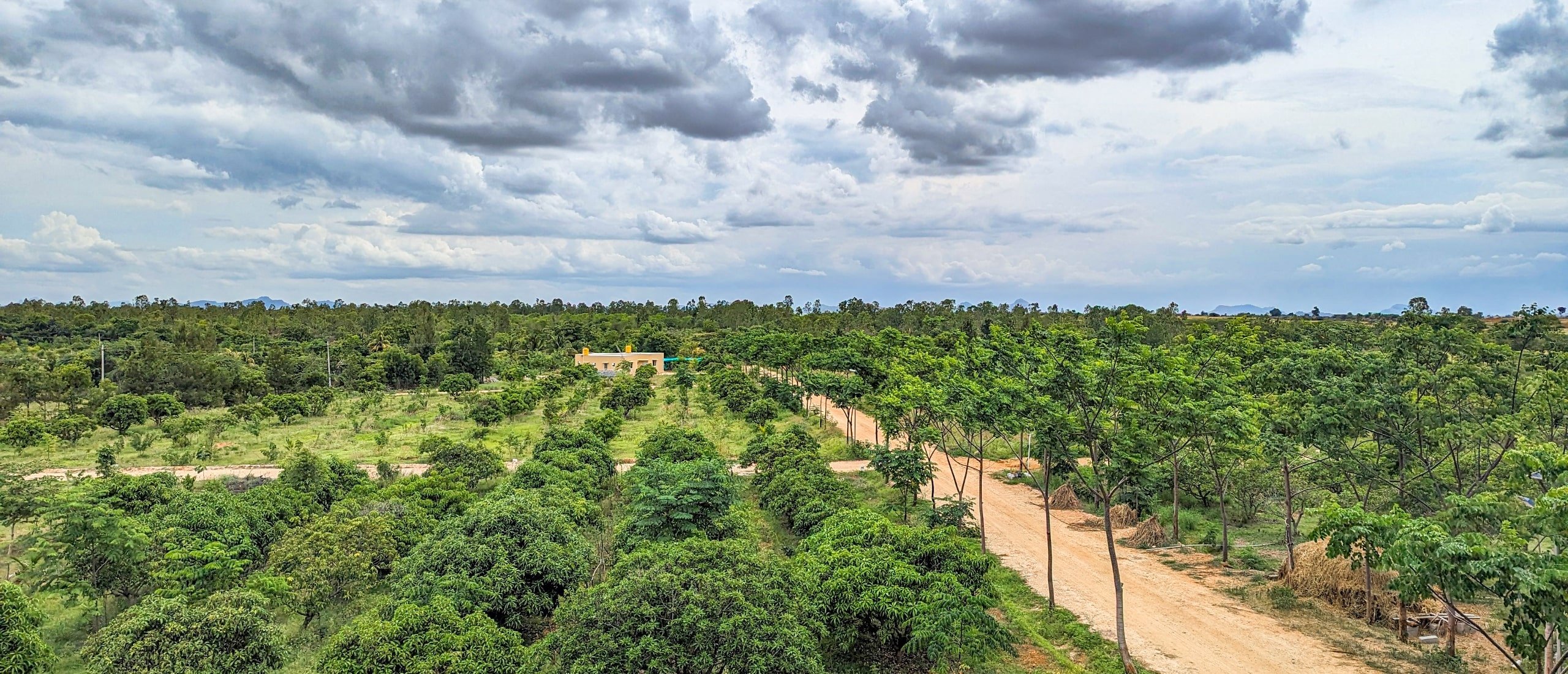
At Hosachiguru’s managed farmlands, these principles come to life. Practices such as using natural astras, intercropping, planting diverse native trees, and conserving water through swales and watersheds embody our commitment to ecological harmony. By adopting Fukuoka’s approach, we focus on enhancing soil health, reducing dependency on external inputs, and creating self-sustaining ecosystems.
Hosachiguru integrates these time-tested methods with modern techniques to redefine farming, nurturing biodiversity, promoting sustainability, and ensuring a healthier, more balanced future for people and the planet.