Author – Srinivas Abhilash
When faced with pests that threaten our gardens and vegetable patches, the common response often involves resorting to insecticides and pesticides. Yet, there’s a more sustainable and harmonious way to address this challenge—by inviting beneficial insects into our spaces. This alternative approach stands as one of the most effective ways to manage pests while maintaining ecological balance.
Flowers are friendly invitations, alluring insects with nectar and pollen. This teamwork, known as pollination, not only supports plants but also showcases nature’s interconnectedness. Visualize a scenario where vegetables and flowers coexist, not just for aesthetics, but to intelligently control pests in an environmentally friendly manner. This lies at the core of regenerative farming.
By embracing diverse captivating plants, each claiming a 4′ by 4′ space, we can attract an array of beneficial insects. These allies, in turn, maintain the equilibrium of our gardens. With these flowers blossoming in different seasons, a consistent food source sustains these diligent partners year-round. It’s an open invitation for both birds and insects to join the rhythm of nature.
As guardians of our own farm plots and farmlands, we hold a unique role—nurturing life and forging connections. Each petal and leaf symbolizes our commitment to sustainability and progress. Together, we embark on a journey, crafting a world where life thrives, connections deepen, and the bond between flowers and beneficial insects flourishes. This not only infuses vitality into our gardens but also contributes to the overall well-being of our planet. So, let’s choose this path—a path that cultivates harmony, sustenance, and thriving ecosystems.
Choose Native and Pollinator-Friendly Plants
Opt for native flowers that are adapted to your region’s climate and soil. These plants are more likely to attract local beneficial insects. Pollinator-friendly plants like sunflowers, lavender, coneflowers, and bee balm are excellent choices. For the Indian context, below are the plants that one can choose from
- Holy Basil (Ocimum sanctum): Also known as Tulsi, this aromatic herb attracts bees and butterflies with its fragrant flowers.
- Marigolds (Tagetes spp.): Marigolds are popular in Indian gardens and attract a variety of pollinators, including bees and butterflies.
- Lantana (Lantana camara): Despite being considered invasive in some regions, lantana’s vibrant flower clusters are loved by butterflies and bees.
- Crimson Bottlebrush (Callistemon citrinus): This shrub’s distinctive red flower spikes can attract nectar-loving birds and insects.
- Indian Milkweed (Calotropis gigantea): This milkweed species is native to India and can attract butterflies and other insects.
- Indian Almond (Terminalia catappa): While not a traditional flowering plant, its flowers can attract beneficial insects and birds.
- Indian Plum (Flacourtia indica): The small, fragrant flowers of the Indian plum can attract pollinators like bees.
- Coral Jasmine (Nyctanthes arbor-tristis): Also known as Parijat, this plant’s fragrant white flowers are pollinated by moths.
- Gulmohar (Delonix regia): While not a traditional pollinator plant, the Gulmohar’s bright orange-red flowers can attract insects.
- Indian Mallow (Abutilon indicum): The bell-shaped flowers of the Indian Mallow can attract bees and butterflies.
- Indian Lotus (Nelumbo nucifera): This aquatic plant’s large flowers are pollinated by beetles and can attract other insects as well.
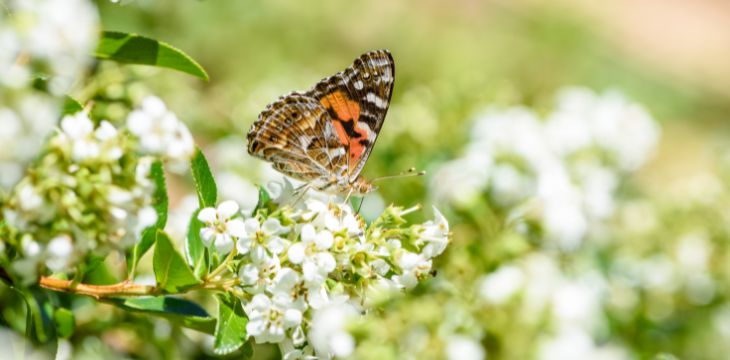
- Colorful wildflowers like Indian Blanket and Flame Lily, along with the Butterfly Bush and Passionflower, make a special place for butterflies and bees. These flowers have nectar and vibrant petals that attract these pollinators, creating a beautiful and interconnected natural space.
Native and Pollinator-Friendly Plants at Hosachiguru Managed Farmlands
Variety of Flower Shapes and Colors
Various insects, such as bees, butterflies, hoverflies, and ladybugs, are naturally inclined toward specific types of flowers due to their individual preferences for particular shapes and colors. This affinity has developed over time through a symbiotic relationship.
Bees are drawn to flowers by their appearance and the nectar they offer, while butterflies choose blooms that match their graceful nature. Hoverflies and ladybugs also have their own flower preferences. These preferences are not arbitrary; they are the outcome of a longstanding partnership between these insects and specific flowers.
The logic behind this strategy is straightforward: it’s a mutually beneficial arrangement. Insects find sustenance in the form of food or prey from flowers, while plants benefit from pollination, pest control, and the chance to reproduce.
By planting a diverse array of flowers, we effectively present a range of choices to different insects. This approach not only enhances the visual appeal of our garden but also establishes an equilibrium where each insect type contributes to the ecosystem. Let us deep dive into the details.
- Tubular Flowers for Hummingbirds and Long-Tongued Insects
- Example: Penstemon (Penstemon spp.)
- Flat and Open Flowers for Bees
- Example: Marigold (Tagetes spp.)
- Clusters of Small Flowers for Hoverflies
- Example: Fennel (Foeniculum vulgare) – Fennel produces clusters of tiny flowers that are attractive to hoverflies.
- Spiked Flowers for Butterflies
- Example: Indian Blanket (Gaillardia pulchella) – This wildflower has spiked petals that attract butterflies.
- Umbel Flowers for Hoverflies and Lacewings
- Example: Dill (Anethum graveolens – Dill’s umbrella-like flower clusters appeal to hoverflies and lacewings.
- Brightly Colored Flowers for Bees, Butterflies, and Beetles
- Example: Flame Lily (Gloriosa superba) – The vividly colored flowers of the flame lily attract various pollinators.
- Blue and Purple Flowers for Bees and Butterflies
- Example: Butterfly Bush (Buddleja asiatica)
- Yellow and Orange Flowers for Bees and Ladybugs
- Example: Marigold (Tagetes spp.)
- Red Flowers for Birds and Insect
- Example: Coral Jasmine (Nyctanthes arbor-tristis)
- White and Light-Colored Flowers for Moths and Night-Flying Insects
- Example: Night-Blooming Jasmine (Cestrum nocturnum)
- Irregular Shaped Flowers for Bees and Butterflies
- Example: Passionflower (Passiflora spp.)
- Flowers with Landing Pads for Hoverflies
- Example: Zinnia (Zinnia spp.) – Zinnias have flat, wide flowers that serve as landing pads for hoverflies.
- Scented Flowers for Nocturnal Insects
- Example: Night-Blooming Jasmine (Cestrum nocturnum) – The strong fragrance of this plant attracts nocturnal insects like moths.
Plan for Year-Round Blooms
Planning for year-round blooms in your garden is crucial to provide a consistent food source for beneficial insects throughout the different seasons. By ensuring a continuous supply of flowers, you’ll encourage these insects to stay in your garden longer and contribute to its health. Here’s how you can achieve year-round blooms in the Indian context, along with examples:
- Spring (March to May)
- Examples: Indian Blanket (Gaillardia pulchella), Marigold (Tagetes spp.), Sweet Alyssum (Lobularia maritima)
- Explanation: These spring-blooming flowers provide early-season nectar for emerging beneficial insects like bees and butterflies.
- Examples: Indian Blanket (Gaillardia pulchella), Marigold (Tagetes spp.), Sweet Alyssum (Lobularia maritima)
- Spring (March to May)
- Examples: Indian Blanket (Gaillardia pulchella), Marigold (Tagetes spp.), Sweet Alyssum (Lobularia maritima)
- Explanation: These spring-blooming flowers provide early-season nectar for emerging beneficial insects like bees and butterflies.
- Examples: Indian Blanket (Gaillardia pulchella), Marigold (Tagetes spp.), Sweet Alyssum (Lobularia maritima)
- Summer (June to August)
- Examples: Cosmos (Cosmos spp.), Zinnia (Zinnia spp.), Sunflower (Helianthus spp.)
- Explanation: These summer flowers offer abundant nectar and pollen for a variety of insects, including bees, butterflies, and hoverflies.
- Examples: Cosmos (Cosmos spp.), Zinnia (Zinnia spp.), Sunflower (Helianthus spp.)
- Monsoon (July to September):
- Examples: Rain Lily (Zephyranthes spp.), Spider Lily (Hymenocallis spp.), Four O’Clock (Mirabilis jalapa)
- Explanation: Monsoon-blooming flowers attract insects during rainy periods, providing sustenance when other plants might not be as active.
- Examples: Rain Lily (Zephyranthes spp.), Spider Lily (Hymenocallis spp.), Four O’Clock (Mirabilis jalapa)
- Post-Monsoon (October to November):
- Examples: Chrysanthemum (Chrysanthemum spp.), Marigold (Tagetes spp.), Salvia (Salvia spp.)
- Explanation: These flowers bridge the gap between the monsoon and winter, ensuring a continuous food source for insects.
- Examples: Chrysanthemum (Chrysanthemum spp.), Marigold (Tagetes spp.), Salvia (Salvia spp.)
- Winter (December to February):
- Examples: Marigold (Tagetes spp.), Pansy (Viola spp.), Petunia (Petunia spp.)
- Explanation: Winter-blooming flowers provide essential nourishment for insects during the cooler months.
Avoid Pesticides
Minimize or eliminate the use of chemical pesticides, as they will harm not only pests but also beneficial insects. These insects help control pest populations naturally, reducing the need for chemical intervention.
Create Insect Habitats
By strategically arranging flowers in clusters and providing shelter through features like insect hotels, you can enhance the habitat for beneficial insects and encourage their presence. Here’s an elaboration on this concept and examples:
1.Flower Clusters:
- Visual Attraction: Grouping flowers together creates a visual impact, making it easier for insects to locate food sources.
- Efficient Foraging: Beneficial insects can efficiently move from one flower to another when they are grouped closely, conserving their energy.
Examples
- Butterfly Feeding Stations: By planting a variety of nectar-rich flowers like marigolds, zinnias, and cosmos in clusters can surely serve as feeding stations for butterflies.
- Bee-Friendly Patches: By creating patches of native wildflowers like Indian Blanket or sunflowers will surely attract native bees that prefer to forage in large groups.
2.Insect Hotels:
Insect hotels, also known as bug hotels or bee hotels, are structures designed to provide nesting and shelter opportunities for a variety of beneficial insects. They consist of different materials and compartments tailored to the nesting habits of different species.
- Nesting Sites: Insect hotels offer safe spaces for solitary bees, ladybugs, lacewings, and other insects to lay eggs and establish nests.
- Biodiversity: By providing diverse nesting options, we can attract a wide range of beneficial insects, contributing to garden biodiversity.
- Natural Pest Control: Some insects that take up residence in insect hotels, like predatory beetles, can help control pest populations naturally.
Examples:
- Bamboo Bundles: Bundle together bamboo stalks of varying diameters to create nesting spaces for solitary bees.
- Straw or Reed Hotels: Assemble dried straw or reeds in a frame to create nesting tubes for solitary bees and insects.
- Wooden Blocks: Drill holes of different sizes into wooden blocks or logs to create nesting chambers for insects like solitary bees and beetles.
Creating insect habitats through the use of flower clusters and insect hotels serves a dual purpose in your garden. Not only does it provide a safe and inviting environment for beneficial insects, but it also significantly contributes to the overall health and resilience of your garden ecosystem. These thoughtfully designed habitats play a crucial role in promoting natural pollination and pest control, all while fostering a sense of harmony within the ecosystem.
At Samruddhi Farms by Hosachiguru Managed Farmlands, we are actively planning and implementing an insect hotel as an integral component of our ecosystem strategy. This insect hotel is strategically placed to encourage the presence of beneficial insects that play a pivotal role in facilitating pollination and enhancing biodiversity within our farm.
Nectar-Rich and Pollen-Rich Plants
Nectar provides energy for adult insects, while pollen is a vital protein source. By incorporating flowers that produce ample nectar and pollen, such as zinnias, marigolds, and asters, we can attract and sustain a diverse range of beneficial insects.
Nectar-Rich Plants
- Indian Borage (Plectranthus amboinicus): The small tubular flowers of Indian Borage produce nectar that bees and butterflies love.
- Lantana (Lantana camara): Despite being invasive in some regions, lantana’s clusters of small flowers are rich in nectar and attract various pollinators.
Pollen-Rich Plants
- Sunflower (Helianthus spp.): Sunflowers produce abundant pollen on their large central disks, attracting bees and other pollen-collecting insects.
- Indian Mustard (Brassica juncea): This flowering vegetable plant provides both nectar and pollen for bees.
By including a diverse range of nectar-rich and pollen-rich plants in our garden, we can offer beneficial insects a balanced diet that promotes their overall health and longevity. This variety also attracts pollinators, increasing their presence and enhancing pollination rates. The provision of abundant food sources encourages the thriving of beneficial insects, ultimately leading to improved natural pest control and more effective pollination services in your garden.
Minimize Weeding
Minimizing excessive weeding in our garden can yield unexpected benefits for insects. Certain plants often labeled as “weeds” can play a positive role by providing additional food sources for insects. Embracing plants like dandelions and clover, which flower and produce nectar, can contribute to a healthier ecosystem when grown alongside cultivated garden plants.
Conclusion
To wrap it up creating a garden buzzing with helpful insects requires patience and commitment. As these valuable bugs slowly find their place in your garden, you’ll notice them pitching in to control pests and pollinate your plants. Remember to water them correctly, take good care of the soil, and maintain the garden as a whole to keep them flourishing.
It’s critical to realize that creating an environment for these beneficial insects involves taking the larger picture into account and gardening in a way that not only supports your plants but also the environment as a whole. By carefully picking and placing flowers, you’re cultivating a balanced garden where you and nature both find joy.
When we think about sustainability, regenerative farming, and permaculture ethics, we’re reminded that building a diverse ecosystem works best when we consider how everything fits together, making sure our garden is in harmony with nature.