Author – Srinivas Abhilash
Greenery Day and its Significance in Japan
Greenery Day is dedicated to appreciating and respecting nature, as well as promoting environmental conservation and sustainability. It is celebrated on May 4th each year and was established in honor of Emperor Hirohito and was chosen to acknowledge his love for plants.
This is a great event to celebrate and express gratitude towards nature, plants, and their importance. Greenery Day’s theme expanded beyond Emperor Hirohito’s love of plants and became a symbol of appreciating Mother Nature in all her glory, including the close relationship between land and water.
Japan’s Principles of Nature Preservation
Japan’s reverence for nature is a shining example for people all around the world. One aspect that is often overlooked is Japan’s remarkable recycling efforts. In fact, according to the OECD, Japan has the highest recycling rate in the world with over 99% of PET plastic bottles recycled. Masanobu Fukuoka, a Japanese farmer, and philosopher, spent his life promoting natural farming methods that work in harmony with nature. His philosophy emphasizes the interconnectedness of all living things and the importance of respecting and working with natural systems, resulting in healthier ecosystems, better soil health, and higher-quality produce. The principles of nature preservation are deeply ingrained in Japanese culture, from the ancient religion of Shintoism to modern practices like Shinrin-yoku. Mottainai and Satoyama serve as reminders of the need to live in balance with the environment and to cherish and protect the natural world for future generations. These principles embody Japan’s cultural legacy and its unwavering bond with the natural world. Let us look at each of these principles in brief.-
- Shintoism is a beautiful and ancient religion that originated in Japan. It emphasizes the importance of connecting with nature and showing respect for the spirits that inhabit all living things. It teaches us to be grateful for the blessings of life and to show reverence for the natural world that sustains us.
- Ki, the life force that connects all living things, lies at the heart of Shinto beliefs and practices. It reminds us that our actions have consequences and encourages us to live in harmony with nature, treating all living things with kindness and respect.
- Mottainai is a powerful word that captures the essence of Japanese culture. It means “don’t waste” or “what a waste” and is used to encourage people to be mindful of their consumption and to appreciate the value of all things. It reminds us that every resource we have is precious and should be used with care.
- Shinrin-yoku is the practice of “forest bathing” or spending time in nature to promote physical and mental well-being. It involves taking in the sights, sounds and smells of the forest to calm the mind and rejuvenate the body. Shinrin-yoku is a beautiful way to connect with nature and find peace and tranquility in our busy lives.
- Satoyama is a term that describes the traditional Japanese landscape, which features a harmonious blend of forests, fields, and human settlements. It is a testament to the deep connection that Japanese culture has with the natural world and emphasizes the importance of living in balance with the environment.
- Shintoism is a beautiful and ancient religion that originated in Japan. It emphasizes the importance of connecting with nature and showing respect for the spirits that inhabit all living things. It teaches us to be grateful for the blessings of life and to show reverence for the natural world that sustains us.
Greening Life
At Hosachiguru, the concept of “Greening Life” is more than just a principle – it’s a way of life, a passion, and a commitment to making a positive impact on the world. With our hearts full of love for nature and a deep sense of responsibility, we strive to adopt environmentally friendly practices and cultivate a deeper appreciation for the beauty and wonder of the natural world.Greenery Day and Greening Life at Hosachiguru
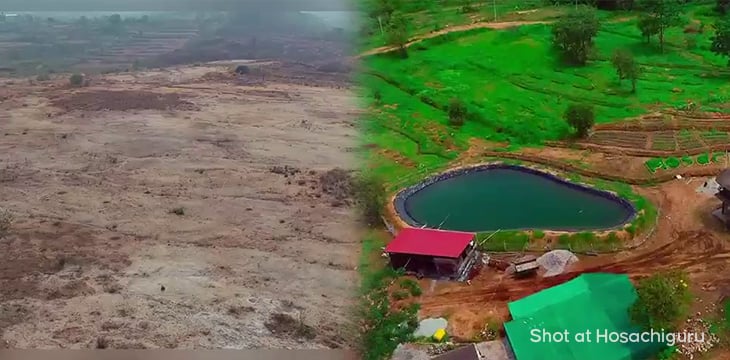
Our burning desire at Hosachiguru is to contribute to a more sustainable future for ourselves, our communities, and the planet that drives us every day. As we celebrate Greenery Day, we are reminded of the very essence of our core values and the principles that guide us. We passionately embrace the principles of Greening Life, which align perfectly with the Japanese tradition of nature preservation. Through the use of syntropic farming methods, agroforestry, and permaculture principles, Hosachiguru promotes regenerative farming practices. By building thriving ecosystems today, we ensure a brighter tomorrow for generations to come. We are dedicated to nurturing the land, respecting the environment, and honoring the interconnectedness of all things.Ki and Ethics of Permaculture
The Japanese concept of Ki, which means energy or life force, encourages us to live in harmony with nature and to treat all living things with kindness and respect is closely related to the core ethics of permaculture: earth care, people care, and fair share.Ki and Earth Care
Earth Care is the idea that we must respect and care for the Earth, recognizing that it is a complex and interconnected system of which we are a part.- An example of the connection between Earth care and Ki can be seen in the practice of agroforestry, which involves planting trees and crops together in a way that mimics the natural forest ecosystem. By doing so, we can improve soil health, conserve water, and reduce the need for chemical inputs. At the same time, we provide habitat for a variety of plant and animal species, promoting biodiversity and supporting the interdependence of all living things.
-
-
- At Hosachiguru, forest ecosystems are designed, developed, and maintained to help keep this interconnectedness and interdependence intact which enables the ecosystem to thrive for generations to come.
-
Ki and People Care
People care is the idea that prioritizes the well-being of people and communities, recognizing that they are also part of the natural world.- A relevant example that can connect People Care and Ki is community gardens, where people come together to cultivate the land, connect with nature, and build social connections with each other, all while producing fresh and healthy food for themselves and their community.
- Mandala gardens, Trellies gardens, and Vegetable gardens at Hosachiguru’s managed farmlands are focal points to build social connections.
- Another example of how People Care and Ki are related is through the practice of Shinrin-yoku, which translates to “forest bathing.” This practice involves immersing oneself in nature, particularly in forests, to promote physical and mental health. This not only benefits us as individuals but also promotes a culture of environmental stewardship and sustainability.
- Hosachiguru’s co-farmers enjoy peaceful weekends and holidays on the farms, taking in the fresh air and starry skies. They also benefit from the surrounding forest ecosystem, promoting physical and mental health and reducing stress levels. They prioritize their well-being and appreciate nature’s beauty.
Ki and Fair Share
Fair share is the principle that resources should be distributed fairly among all living beings, ensuring that everyone has access to the basic necessities of life.- A relevant example of this is practicing sustainable consumption habits, such as reducing waste, recycling, and using renewable energy sources, to ensure that resources are available for future generations. By doing so, we can embody the principle of Fair Share and honor the interdependence of all
living things.
- Hosachiguru farms use solar energy to power street lights, promoting sustainability and reducing reliance on fossil fuels.
- Managed farmlands at Hosachiguru follow Fair Share principles by planting diverse crops, creating hedgerows, and preserving areas for wildlife habitats, benefitting all species equitably.
- Compost pits are an integral part of land management practices that are followed at Hosachiguru. By composting, we not only reduce waste and greenhouse gas emissions but also return valuable resources back to Earth.
Ki and Syntropic Farming: Harnessing the Power of Interdependence
This idea of Ki is mirrored in the world of microorganisms that exist in the soil, and the relationship between these microorganisms and plants and trees. In a biodiverse ecosystem, everything thrives on this interconnectedness. Syntropic farming creates a harmonious system by planting tall trees for shade and fruit; medium trees for biomass, and short trees for diverse crops. The biomass plants are periodically cut and left on the soil surface, providing organic matter that decomposes to become food for insects and microorganisms. As the microorganisms break down organic matter, they release nutrients back into the soil, which in turn nourishes plants and trees. This is the essence of interdependence. Each element in the ecosystem relies on the others for survival and growth. By utilizing the principles of Ki and recognizing the interconnectedness of all living things, syntropic farming demonstrates a way of working with nature to create a more sustainable and harmonious world. The syntropic plantation process is strongly followed at Hosachiguru’s managed farmlands, which offer the Co-Farmers varied yields at various times of the year. The diverse plantations also increase microbial diversity to ensure good soil health.Satoyama and Syntropic Farming
Satoyama and syntropic farming integrate agriculture and forestry to balance human needs with the conservation of natural resources. Satoyama manages rural landscapes with forest thinning and small fields, promoting biodiversity and sustainable resource use. Syntropic farming mimics natural forest ecosystems with diverse crops planted together to increase productivity- For example, fruit trees are planted alongside vegetables and nitrogen-fixing plants to create a system that mimics the structure and function of a forest ecosystem. The plants interact in ways that increase overall productivity and create a self-sustaining system that requires minimal inputs of external resources.