
Introduction
As we celebrate Independence Day, the theme “Health First, Nation First, Always First” resonates deeply, urging us to reflect beyond the festivities. This theme encapsulates a truth: our nation’s progress is intricately tied to the well-being of its people.
As Independence Day nears, we recall sacrifices for freedom and honor sovereignty’s architects. This year, we delve into upholding our nation’s ideals. “Health First, Nation First, Always First” signifies a vital philosophy for a flourishing nation. In our interconnected world, prioritizing health isn’t just vital but strategic, guiding actions from individual to global levels.
Through this blog, we’ll unravel the relationship between health and nation-building. Beyond economics and technology, a healthy populace fuels innovation and resilience.
Join us in discovering the dimensions of this theme: from health as a patriotic act to celebrating those who safeguard our well-being. Together, we’ll understand how a healthy nation breeds unity, progress, and sustainability.
As we raise our flags and sing anthems, let’s also raise awareness for our nation’s well-being. By putting “Health First,” we nurture ourselves, our fellow citizens, and our nation. Through the exploration of health’s role in our nation’s journey, may we ignite a spirit of “Nation First, Always First.”
Health as the Foundation
Importance of Individual and National Health
Imagine our nation as a vibrant garden, flourishing when we nurture its valuable resources. These include not just water and land, but also the air we breathe and the people who call this place home. It’s a shared responsibility to wisely utilize and maintain these resources, not only securing our future but also bolstering the strength of our country.
Health as a Pillar of Progress and Prosperity
In our journey of growth, we require two steadfast companions: a strong body and a contented mind. To genuinely serve our nation and prioritize its needs, we must commence with self-care – tending to our body, mind, and spirit.
In our nation’s story of growth, the strong health of our people is a crucial building block. It’s not just about economic strength, but also the vitality of individuals. Prioritizing health fuels productivity, innovation, and creativity. A nation’s wealth truly shines when its citizens are healthy and thriving. This link between health and prosperity forms a virtuous cycle, paving the way for a brighter future. By putting “Health First,” we ensure our nation’s potential is maximized. Embracing “Nation First, Always First,” we set a course for holistic progress, where individual health drives our nation’s prosperity.
Rediscovering the Holistic View of Health
- While contemporary discussions often center on physical health, our ancestors understood it as a broader concept. In their opinion, health entailed overall well-being, a strong body, a calm mind, and a spiritual connection to something greater.
- As we navigate modern times it is critical to pursue this holistic well-being by remaining rooted in nature’s core elements, the Panchabhootas- Earth, water, fire, air, and space.
- Amid our urban growth, this connection is slowly slipping away. It’s time to break free from our bustling routines and revive our bond with nature, our genuine abode.
Achieving Holistic Well Being Through Food
While various factors contribute to the state of Holistic well-being, one of the most powerful and fundamental aspects is the food we consume. The saying “You are what you eat” holds a deeper truth – the nutrients and energy we derive from our diet play a crucial role in shaping our overall well-being.
Eating responsibly isn’t just a personal choice – it’s an act that ripples through society, impacting public health, productivity, and the overall well-being of a nation.
Nutrition as the Foundation
- Our bodies require a balanced mix of macronutrients (carbohydrates, proteins, fats) and micronutrients (vitamins, minerals) to function optimally. Consuming a diverse range of whole foods ensures that our bodies receive the necessary nutrients for growth, repair, and maintenance.
Mind-Gut Connection
- The foods we eat can impact our mood, emotions, and cognitive function. Consuming food grown using Heirloom seeds and clean farming practices loaded with probiotics supports a healthy gut microbiome, which can positively influence mental well-being.
Mindful Eating
- Mindful eating involves being fully present while consuming a meal. This practice encourages us to savor each bite, notice our body’s hunger and fullness cues, and cultivate a deeper appreciation for the nourishment we receive. By slowing down and paying attention to our eating habits, we can develop a healthier relationship with food and prevent overeating.
Empowering the Future Generation
- As parents, we hold the power to gift our nation with a generation marked by robust physical and mental health. Our children can emerge as invaluable assets, championing environmental care and a strong sense of responsibility.
- Dr. APJ Abdul Kalam’s sagacious words resonate profoundly: “If a country is to be corruption-free and become a nation of beautiful minds, I strongly feel there are three key societal members who can make a difference. They are the father, the mother, and the teacher.”
- As parents, educators, and institutions, we must foster this exceptional generation by offering clean, nutritious food. By doing so we can enhance their resonance and conscious living. Accelerating this, value-based education empowers them to be responsible drivers of their lives.
- Dr. APJ Abdul Kalam’s sagacious words resonate profoundly: “If a country is to be corruption-free and become a nation of beautiful minds, I strongly feel there are three key societal members who can make a difference. They are the father, the mother, and the teacher.”
Weaving Health, Duty, and Nature
In this fabric of health, duty, and nature, a powerful message emerges: “Health First, Nation First, Always First.” This message reverberates like a pledge – a commitment to safeguard ourselves, our nation, and the world that surrounds us.
Strengthening the Nation through Health and Ethics
Elevating the health of the above-mentioned nation’s resources and cultivating conscientious individuals requires a fundamental shift towards a system rooted in ethics and conscious living. Permaculture and regenerative farming stand as a beacon in this endeavor.
By harnessing these methods, we create a ripple effect that not only elevates the nutritional value of our food but also cultivates a healthier populace, fostering strength and resilience within our nation.
Permaculture operates on three core ethics: earth care, people care, and fair share. When embraced as a holistic, sustainable farming system, permaculture becomes a powerful tool to elevate the health of the environment and the consciousness of humanity.
- Earth care underscores the preservation and nurturing of natural systems crucial to our existence. Practices such as agroforestry, rainwater harvesting, natural building, and composting fall under this umbrella, ensuring a harmonious relationship with our surroundings.
- People care, embodies social justice, aiming to ensure equal access to resources necessary for a fulfilling and healthy life. The principle of Fair Share emphasizes communal living, where designing systems that yield abundance allows us to meet our own needs while fostering care for each living organism – the bedrock of the permaculture philosophy.
Through techniques like agroforestry, the creation of food forests, rainwater harvesting, drip irrigation, and holistic grazing, the land and soil’s vitality is restored, ensuring a thriving environment for both present and future generations.
Following permaculture and regenerative farming practices simultaneously elevates the nutritional content of the food cultivated. Nutrient-rich soil yields crops that are abundant in both micro and macro nutrients – essential elements for robust health.
We can shape individuals who embody holistic well-being by managing our food systems responsibly, using traditional seeds, using clean farming practices, and practicing mindful consumption. Therefore, prioritizing holistic health holds substantial potential to profoundly influence our nation, evoking a spirit of unwavering devotion to “Nation First, Always First.”
Hosachiguru’s Endeavor to Cultivate Healthy Individuals
Embrace the role of a Co-Farmer at Hosachiguru and embrace ownership of your very own farmland. This unique opportunity allows you to cultivate a continuous supply of fresh, nutrient-rich fruits and vegetables through clean farming practices. By becoming a Co-Farmer, you not only nourish yourself and your family with wholesome food but also contribute to the well-being of the nation.
Our regenerative farming practices based on permaculture ethics and principles offer you the chance to reconnect with nature and play a crucial role in sustainable food production. Collaborate with like-minded individuals who share your passion for responsible agriculture and land stewardship. This co-farming journey isn’t just about cultivating crops; it’s about fostering a sense of unity, hope, and environmental consciousness.
Guided by in-house experts at Hosachiguru Managed Farmlands, you’ll learn to work in harmony with Mother Nature, gaining valuable insights and skills along the way. As a Co-Farmer, you’re not just reaping crops, but also cultivating a deeper understanding of community issues and holistic well-being.
Seize this opportunity to contribute to building a stronger, healthier, and more compassionate India. By prioritizing health and aligning with nature through co-farming, you become part of a movement that prioritizes the well-being of the nation.
Come, join hands with Hosachiguru to be a Co-Farmer, and let’s put Health First, Nation First, and Always First. It is a journey towards self-sufficiency, sustainability, and a healthier, more connected future. We wish you a very Happy and Healthy Independence Day.
Introduction
At the heart of every nation’s essence lie its invaluable resources, and chief among them is its human capital. Among this precious human resource, the youth, typically encompassing those up to the age of 35, emerge as the vanguards of boundless potential.
In a nation like India, where over 63% of the population is below 35 years old, endowed with abundant time, unwavering energy, and a wealth of skills, the youth possess the unique capability to reshape landscapes, surmount intricate socioeconomic challenges, and pave the way for a prosperous future.
Unfortunately, a considerable number of young people today encounter new and unfamiliar difficulties that were absent in previous generations. These challenges involve matters of mental well-being, the divide created by technology, changes in how work operates, shifts in our surroundings, and concerns about fairness and equality within society.
To tackle these challenges, young individuals must possess the capacity and courage to question, evaluate, and analyze issues, leading them to find peaceful and effective solutions. This requires not only the skill of critical thinking but also the ability to manage emotions and social interactions. They should also be conscious of the global environment and the diverse cultures it encompasses.
To effectively tackle these concerns and lay the foundation for a better future, it is crucial to instill a deep sense of mindfulness in our younger generation. They should cultivate the viewpoint of considering everyone as an extended family, driven by the core value of compassion and the philosophy of Vasudhaiva Kutumbakam. This involves fostering a nurturing and empathetic approach towards all forms of life, spanning from tiny microorganisms to complex human beings. This transformative journey starts with the youth taking proactive steps to enhance our shared home, the Earth, and make it a more desirable place to inhabit.
In light of this interconnectedness, the careful custodianship of Mother Earth, encompassing the realms of Air, Water, and Soil, emerges as a paramount duty for safeguarding the current welfare and future prosperity of humanity.
Empowering Youth: Green Skills for a Sustainable Future
International Youth Day 2023 echoes the theme ‘Green Skills For Youth: Towards A Sustainable World.’ This serves as a reminder of our duty to prepare the youth for shaping a sustainable global future.
In this year 2023, a significant responsibility rests upon urban dwellers of all generations: the adoption of regenerative gardening and farming practices with which we can receive and improve the quality of air, water, and soil on earth. This endeavor not only safeguards the Earth but also paves the way for secure and self-sufficient food sources.
As we celebrate International Youth Day and gaze forward, the chorus of purpose resounds – nurturing conscientious youth armed with green skills, embracing sustainable practices, and cultivating a world that harmonizes with nature.”
What are Green skills?
Green skills are a set of knowledge, abilities, competencies, and values needed to actively develop and maintain a sustainable and environmentally-conscious economy and society, according to the UN Industrial Development Organisation (UNIDO). These particular skills would enable individuals to contribute to sustainable development and growth.
Global Youth: Equipping for Green Skills and Sustainability
The youth, both in India and across the world, should equip themselves with green skills – the knowledge, abilities, values, and attitudes needed to thrive in a sustainable and resource-efficient society. This imperative transcends borders, encompassing both developed and developing countries.
Sustainable Development Goal (SDG) 9 emphasizes the need to transition industries and infrastructure toward sustainability, while Goal 12 aims for the efficient management of natural resources. This shift to a low-carbon, resource-efficient economy entails not only new products and services but also transformative changes in production processes and business models.
With India’s goal to reach net zero carbon emissions by 2070, the need for green jobs and, subsequently, the demand for green skills have increased in the country. In a time of mass layoffs, green skills may be the jobs of the future. As industries in India shift towards more resource-conscious and eco-friendly goals, the demand for people with green skills is going up.
Objectives of International Youth Day in 2023
- To raise awareness of green skills and their relevance for achieving the SDGs, while highlighting the central role of young people in the green transition
- To equip stakeholders with the knowledge and information necessary to understand the importance of green skills for young people
- To showcase policies and practices that can nurture the development of green skills among young people
- To provide an inclusive platform for stakeholders to exchange views on such topics.
Raising Awareness of Green Skills and SDGs:
- Farm Talks
-
- Join us every Friday for FarmTalks, Hosachiguru’s captivating webinar series. Immerse yourself in a fresh approach to embracing nature and sustainable living. If you’re a nature enthusiast longing to be part of a community dedicated to eco-friendly living, this is your chance. As co-farmers with Hosachiguru, urban youth, and dynamic individuals can effortlessly nurture the earth, grow heirloom produce, and reap the rewards without the complexities of traditional farming. Say hello to hassle-free farmland ownership as we introduce you to a vibrant world where sustainability blooms.
-
- We Share success stories and case studies from our agro and food forests, demonstrating how regenerative farming practices contribute to environmental sustainability and support the SDGs
- Green Superheroes Workshop
-
- Nurturing the concept of sustainable living in today’s children is pivotal, igniting their eco-passion from a young age, as they are the forthcoming eco-champions poised to shape the world of tomorrow.
-
- Through our Green Superheroes Workshop, a unique sustainability program, we amalgamate the forces of family and environmental stewardship. This workshop beckons family members to embark on a joint journey, immersing themselves in the realm of sustainability alongside their children, all while indulging in the joy of experiential learning and crafting.
-
- Activities such as crafting bird feeders from discarded materials and fashioning eco-friendly planters for tiny saplings serve as avenues of engagement.
-
- This dynamic approach cultivates a constructive imprint on the children’s consciousness, fostering their evolution into enduring eco-warriors and devoted guardians of our precious environment.
Equipping Stakeholders with Knowledge:
At Hosachiguru, our dedication extends beyond farming – we are committed to sharing our wisdom and experience with like-minded individuals, bridging the generational gap to educate both the young and the seasoned in the realms of regenerative farming and permaculture.
Through our periodic publication of insightful blogs and informative content, we cover a diverse array of topics. From the intricacies of permaculture and regenerative agriculture to the boundless benefits of creating food forests and agroforests, we delve into subjects encompassing health, nutrition, soil health, microorganisms, and beyond.
Moreover, we openly share our hands-on experiences and transformative learnings while executing projects guided by permaculture principles. Witness our journey as we rejuvenate barren lands into flourishing havens.
By fostering this knowledge-sharing ecosystem, we nurture the present and future generations, equipping them to embrace a harmonious relationship with Mother Earth and become stewards of her well-being.
Conclusion
In today’s world, the power of youth shines brightly. They hold the key to shaping a brighter future. International Youth Day 2023 serves as a powerful reminder of this potential. It’s essential to equip them with “green skills” – the know-how to nurture our planet.
Green skills encompass knowledge for a healthier Earth, a crucial foundation for our shared tomorrow. These skills are vital for young people in India and worldwide. They empower us to use resources wisely and combat the impacts of climate change.
A clear objective is in sight: India aims to achieve carbon neutrality by 2070. This ambition requires a workforce skilled in green practices. Moreover, green skills offer promising job opportunities, aligning with the needs of our planet and the aspirations of our youth.
This year’s International Youth Day is driven by specific goals:
- Spread awareness about the significance of green skills.
- Provide stakeholders with a comprehensive understanding of these skills.
- Highlight effective approaches to impart green skills to young individuals.
- Create an inclusive platform for discussions and exchange of ideas.
At Hosachiguru, we’re committed to our role in this mission. We’re engaging youth in caring for the Earth through:
- Engaging “FarmTalks” every Friday – an exciting platform for learning.
- Hosting workshops for families and children – nurturing a love for nature.
- Sharing informative blogs and insights from our experience.
- Undertaking transformative projects that convert barren lands into thriving forests.
Our message is simple yet profound: Youth, your involvement is crucial! Engage in conversations, embrace learning, and take action. Together, let’s be stewards of our world – safeguarding nature, conserving soil, capturing carbon, and replenishing water sources. Join hands with us to create a meaningful impact!
Are you tired of the bustling city life in Bangalore and longing for a refreshing escape? Well, fret not! Bangalore is surrounded by an array of enchanting destinations, perfect for a delightful weekend getaway. These hidden gems offer a splendid mix of nature, history, and culture, making them an ideal choice for every kind of traveler.
Lepakshi
Escape the city hustle with a delightful weekend drive from Bangalore to Lepakshi. Uncover mythical legends and stunning architecture that will leave you in awe. For travelers seeking deeper connections, explore the enigmatic Hanging Pillar and intricate stone carvings. Discover cultural riches through Vijayanagara-style paintings and find serenity at Lepakshi Lake. Tourists can marvel at the colossal Nandi statue and shop for local crafts like silk sarees and woodwork. Whether you’re a traveler or tourist, Lepakshi promises an unforgettable escape just a drive away from Bangalore.
But wait, there’s more! Why not turn your weekend drive into a sustainable living adventure? Calling all eco enthusiasts! If you’re yearning for a nature-filled getaway, Lepakshi offers a unique opportunity just 30 minutes away. Experience the magic of managed farmlands by Hosachiguru, where eco-living blends seamlessly with the beauty of nature. Surrounded by diverse flora and fauna, these farmlands create a paradise of biodiverse ecosystems. Whether you’re a traveler seeking a deeper connection or a tourist wanting to marvel at nature’s wonders, Hosachiguru’s managed farmlands offer the perfect opportunity to immerse yourself in sustainable living. So, why not escape the city chaos and find solace in the serenity of these green havens during your weekend drive to Lepakshi? Pack your bags and heed nature’s call!
Discover Ecohabitat Farms, a true gem in the Hosachiguru-managed farmland portfolio. With easy access to Hindupur town and a reliable water source from the HNSS water canal, cultivating your own food has never been easier. But it doesn’t stop there – you’ll also find yourself close to major industrial developments and exciting business opportunities.
Imagine owning a piece of heaven in Bristlecone, another magnificent managed farmland project by Hosachiguru. Nestled in a picturesque Savana-style grassland, it’s a haven for rare wildlife and abundant water sources. The allure of Bristlecone lies in its functional farmland infrastructure, including farm quarters and a goshala with Desi cows.
Nandi Hills
Nestled amid lush greenery and located just a stone’s throw away from Bangalore, Nandi Hills is a picturesque paradise that offers a mesmerizing journey. The drive to Nandi Hills takes you through scenic routes adorned with blooming flowers on both sides. Once you reach the hilltop, you are rewarded with a breathtaking sunrise that blankets the entire region in a golden hue. It’s advisable to carry a warm shawl as the morning breeze can get quite chilly. Additionally, the ancient Nandi Temple atop the hill adds a touch of spirituality to your visit. You can take a leisurely stroll around the serene lake or indulge in some paragliding for an adrenaline rush.
Travelers, tourists, and nature enthusiasts can experience the wonders of sustainable paradise just 90 minutes away from the foothills of Nandi Betta at the Managed farmlands by Hosachiguru, where the simplicity of nature meets the convenience of modern living. This unique environment embraces diverse flora and fauna, creating biodiverse ecosystems for our co-farmers.
If you’re looking for a visionary project, look no further than Abhivrudhi Farms. Strategically located near Bangalore International Airport, this vast expanse boasts 100,000 flourishing trees surrounding a breathtaking 300-acre lake and majestic canal. Here at Abhivrudhi, we take pride in employing natural and organic methods to ensure sustainable land and water management, opening up boundless possibilities for you. Cultivate timber trees like sandalwood and teak, securing a reliable source of passive income with promising long-term returns.
And last but not least, experience the tranquility of Madhuvana Farms by Hosachiguru, aptly named “serene forest.” Located near Nandi Hills, this project epitomizes the essence of self-sufficient food forests. Embrace a life of pure farm leisure and gain invaluable experiences at Madhuvana Farms.
Hosachiguru’s managed farmlands present a plethora of opportunities, where nature and convenience seamlessly blend to create a harmonious and enriching lifestyle. For all nature lovers seeking agricultural land for sale near Bangalore, these farmlands are an absolute must-visit. Besides being a perfect choice for agricultural ventures, they also serve as an excellent option for weekend getaways from Bangalore. Embrace the beauty of nature while exploring these well-managed and captivating lands.
Shivanasamudra Falls
If you’re looking for a rendezvous with nature’s raw beauty and considering a weekend getaway from Bangalore, Shivanasamudra Falls should be at the top of your list. The drive from Bangalore to this cascading wonder via Kanakpura Town offers a delightful blend of vibrant landscapes and quaint villages, making it an ideal weekend drive from the city.
As you approach Shivanasamudra Falls, get ready to witness the awe-inspiring sight of the Kaveri River gushing down in two spectacular segments. The refreshing mist from the falls will embrace you, offering a truly rejuvenating experience. Adventure enthusiasts will be thrilled to find opportunities for trekking and wildlife spotting in the nearby forest reserves, making it an ideal destination for a quick escape into nature’s wonders.
En route to Shivanasamudra Falls via Kanakpura Town, you’ll come across Dhaanvi Farms, a managed farmland by Hosachiguru, which offers a unique experience for those interested in sustainable farming and conscious living. This farmland, located near Bangalore, epitomizes the essence of agriculture land for sale near Bangalore, where nature is nurtured, and regenerative ecosystems are fostered.
Dhaanvi Farms’ design is harmoniously crafted by nature itself, preserving its innate beauty while incorporating various innovative methods for soil rejuvenation and sustainable farming practices. The farmland encompasses elements such as wild zones, permaculture gardens, adventure zones, and nature experiences areas, all working in harmony to build a thriving and regenerative ecosystem for all living beings.
With a focus on maintaining the existing natural beauty and creating sustainable human systems, Dhaanvi Farms offers a unique opportunity for co-farmers to connect with more than what nature can provide. The landscape is thoughtfully planned for efficiency of movement and maintenance, ensuring sustained yields over time, improved biodiversity, water infiltration, and habitat creation, all while reducing resource inputs as it matures.
So, for a perfect weekend getaway from Bangalore that combines the enchanting beauty of Shivanasamudra Falls with the opportunity to explore sustainable agriculture land for sale near Bangalore at Dhaanvi Farms, your journey promises to be a memorable one, filled with raw natural beauty and conscious living experiences.
Serene Retreat to BR Hills
For those yearning for tranquility and seeking a serene weekend retreat amid the lap of the Western Ghats, BR Hills is the perfect destination. The journey to BR Hills itself is a captivating expedition, winding through dense jungles and occasionally offering glimpses of wildlife, making it an exciting weekend drive from Bangalore. Once you arrive, the Biligiri Rangaswamy Temple, perched atop the hill, envelops you in a sense of peace and spirituality.
Nature enthusiasts will find delight in embarking on a nature walk, where encounters with deer, elephants, and a myriad of bird species are possible. The hilltop provides a panoramic view that photography enthusiasts will find irresistible, making BR Hills an ideal weekend getaway from Bangalore for a memorable and tranquil experience.
And for those who love nature, trekking, and are passionate about sustainability, Sambrahma Farms by Hosachiguru is the place to be. Located en route to Cauvery Wildlife Sanctuary and accessible through a scenic drive through the quaint hamlet known as Little England, this managed farmland spanning 120+ acres offers a unique opportunity for eco enthusiasts and sustainability warriors.
The farm’s strategic location, with forest views on one side and picturesque countryside on the other, contributes to its extreme fertility, aided by natural water sources and an annual rainfall of 750mm. The farm enjoys a hill station-type climate, creating an ideal environment for cultivating a variety of vegetables and presenting ever-changing landscapes that make each visit a distinctive experience.
Investing in this farmland is not only an opportunity to own a piece of nature but also to contribute to reducing environmental impact and transforming drylands into sustainable arable land. The adoption of syntropic and permaculture farming methods fosters increased biodiversity, creating a haven for flora and fauna. The farm’s proximity to Electronic City (45 minutes), Hosur Airport (25 minutes), Cauvery Wildlife Sanctuary (20 minutes), and the Elephant Watch Tower (15 minutes) makes it easily accessible for a refreshing weekend escape from Bangalore.
By choosing this greener option in real estate and investing in farm plots for sale, you not only make a conscious environmental choice but also secure the benefits for a lifetime. Whether you seek a peaceful retreat in BR Hills or wish to be part of the sustainable farming movement at Sambrahma Farms, these weekend getaways from Bangalore promise an enriching and soul-reviving experience.
Shravanabelagola
Steeped in history, Shravanabelagola is a culturally significant destination worth exploring. The drive to this ancient town takes you back in time, passing through villages with traditional houses and rustic charm. The colossal statue of Lord Bahubali atop the Vindhyagiri Hill is a sight to behold. The climb to the statue is both invigorating and contemplative. Witnessing the grand Mahamastakabhisheka ceremony is a once-in-a-lifetime experience that occurs once every twelve years.
Ramanagara
For all the Bollywood fans out there, Ramanagara will ignite a sense of nostalgia as this is where the iconic movie “Sholay” was shot. The rocky terrain and rugged hills add an adventurous touch to the drive. As you reach the top, a magnificent view of the entire landscape unfolds before your eyes. Apart from being a film enthusiast’s paradise, Ramanagara offers trekking and rock climbing activities for adrenaline junkies.
Conclusion
There you have it—a curated list of weekend drives from Bangalore that promise to leave you awe-inspired and rejuvenated. So, the next time you feel the urge to escape the city’s chaos, embark on one of these exhilarating journeys and experience the magic that lies just beyond the city’s limits. Embrace the perplexity of nature’s beauty and the burstiness of your emotions as you explore these hidden gems! Happy driving!
Author – Arun Kumar
Experience the poetic essence of Hosachiguru’s mission in this heartfelt composition by our esteemed Director & Co-founder, Mr. Sriram Chitlur. With each verse, he beautifully captures the essence of what we do at Hosachiguru, transforming barren lands into flourishing havens of life.
From barren land, our journey starts,
An empty canvas, waiting for parts.
Farm Trails, Avenue plants and Fence,
Adding value, So it makes sense.
Soil enrichment and water harvesting too,
Drip irrigation and power that’s true.
With machaans, retreats and gardens bright,
Our Managed Farms are truly a sight.
Growing diverse trees, in harmony they thrive,
Adding value, oxygen, and so much more alive.
From fruit to timber, they bring incredible worth,
To the planet and owners, for joy and mirth.
The sun beats down, the rain pours in,
Weather challenges we face with a grin.
But we endure and work hard each day,
To create a farm that’s here to stay.
Like a diamond, we refine and create,
A community sustainable, our pride, our fate.
The strength and beauty of a little sapling and how it thrives when nurtured, mirroring the essence of nature itself. It’s a testament to the success Hosachiguru has achieved as an organization.
At Hosachiguru, our team of passionate and dynamic individuals is dedicated to offering a greener future and aligning with nature. Our work culture is truly remarkable, fostering inclusivity, fun, and encouragement. It’s a place where we feel inspired to give our best every day.
We prioritize keeping our Co-Farmers well informed and ensuring that we always deliver the best to them. Our ultimate goal is to help people fulfill their dreams of owning a farm and living a life of abundance surrounded by greenery.
Within Hosachiguru, we have various teams working in harmony to provide exceptional services to our co-farmers. Our legal team ensures the safety and security of their land, while the design, tech, hospitality, agronomy, sales, marketing, customer support and procurement teams collaborate seamlessly to deliver top-notch solutions on time.
Conclusion
Creating farmland and bringing nature to people is no easy task. It requires tremendous effort and expertise. But as a Hosachiguru hive we are committed to going the extra mile. Our wealth of experience guides us as we work tirelessly to make the wonders of nature accessible to everyone.
It perfectly complements our mission of being deeply rooted in nature and practicing sustainable methods. At Hosachiguru, we strive to provide our customers with a fulfilling and enriching experience, making their journey with us truly remarkable.
Linkedin Profile:
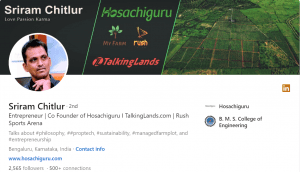
Linkedin post: Read the poem on LinkedIn
Author: Arun Kumar
Our Proprietary Innovation: My Farm App
My Farm App by Hosachiguru: Embrace a Greener Life at Your Fingertips
In this digital age, where technology has seeped into almost every aspect of our lives, it was only a matter of time before it made its way to the agricultural sector. My Farm App by Hosachiguru is an innovative mobile application that revolutionizes the farm-owning experience. With its user-friendly interface and an array of powerful features, this app brings farming enthusiasts one step closer to a greener life. Let’s explore the highlights that make this app a noteworthy addition to your farming journey.
Multi-Farm Support:
Whether you own a single plot or multiple farms, My Farm App has got you covered. Its multi-farm support feature allows you to effortlessly manage and monitor all your farms from a single platform. This convenience saves time and enables you to stay connected with your agricultural ventures more efficiently.
Real-Time Notifications:
Staying updated on farm activities is crucial for any farmer. With the app’s real-time notification feature, you receive instant updates on important events and activities taking place on your farm. From irrigation schedules to harvest reminders, these in-app notifications ensure that you are always in the loop, no matter where you are.
Dashboard and Media Updates:
The app’s dashboard provides a comprehensive overview of your farms, including the latest media updates. Stay connected with the progress of your crops, view images and videos of your farm’s development, and witness the tangible results of your hard work, all at the tip of your fingers.
Activities and Assets Screens:
The activities screen displays a log of recent tasks and operations carried out on your plot. This feature allows you to track the progress of various activities, making it easier to analyze and optimize your farming practices. Furthermore, the assets screen provides detailed information about your land extent, plantations, and other fruit-bearing plants, giving you a comprehensive understanding of your farm’s resources.
Real-Time Monitoring:
The monitoring screen offers real-time farm data about weather conditions, plant health, and soil quality. This invaluable information empowers you to make informed decisions regarding irrigation, fertilization, and pest control. By accessing accurate and up-to-date data, you can optimize your farming techniques and enhance productivity while minimizing environmental impact.
Green Certificate:
Hosachiguru understands and appreciates the importance of sustainable farming practices. As a testament to your commitment to the planet, My Farm App awards you a personalized Green Certificate. This certificate acknowledges your contribution to creating a sustainable future and serves as a badge of honor for your eco-friendly farming endeavors.
Retreat Booking:
As a member of the Hosachiguru community, you can use your membership points to book retreats and rejuvenate yourself amidst nature. This integration with retreat bookings adds an exciting dimension to the app, fostering a sense of community and offering well-deserved breaks for farmers.
Upcoming Features:
The developers of My Farm App are constantly working on adding new features to enhance the user experience. Some upcoming features include e-commerce integration, allowing you to conveniently make payments for maintenance services, adopting a pet to add an extra touch of companionship to your farm, and a DIY Garden feature that offers helpful tips and guidance for setting up your own garden.
Conclusion:
At Hosachiguru, we are on a mission to revolutionize agriculture by merging the power of technology with the wisdom of the land. Through our tech journey, we are transforming the way we farm, ensuring sustainable and efficient practices that pave the way for a prosperous future. Join us as we embrace the exciting possibilities that lie ahead.
My Farm App by Hosachiguru empowers farmers with a powerful tool to monitor, manage, and optimize their farms with ease. From real-time updates to comprehensive farm data, this app simplifies the farm-owning experience and brings you closer to a greener life. With its dedication to sustainability and continuous improvements, Hosachiguru sets an impressive standard in the world of farming apps. Download the app today and embark on a journey towards a more sustainable and rewarding farming experience.
Hear from our Director & Co-founder Mr. Sriram Chitlur on how My Farm app helps customers to virtually connect with their farmlands.
Visualize, Manage and Monitor your farmland with real-time activity updates, social media engagement, retreat bookings and much more. Now bringing the joy of owning farms to your fingertips!
Introducing My Farm App by Hosachiguru
Author – Srinivas Abhilash
In our rapidly changing world, the impacts of climate change have brought forth new and daunting challenges for life on Earth. One pressing concern is the alarming rate at which our forests are being lost. Each year, approximately 10 million hectares of forest, equivalent to the size of Iceland, fall victim to deforestation world over. This relentless destruction has far-reaching consequences for both habitats and livelihoods.
Forests are vital in combating climate change. They store immense amounts of carbon, making them the largest land-based reservoir on Earth. Forests clean water, purify the air, capture carbon, provide food, and offer life-saving medicines. Forest conservation, afforestation, and eco-restoration are effective, affordable ways to fight climate change.
To address this urgent issue, we must recognize the imperative need to increase forest and tree cover in India. This can only be accomplished when each individual takes responsibility and actively participates in tree plantation.
India’s commitment to forest conservation is reflected in the National Forest Policy of 1988, which mandates that 33% of the country’s geographical area should be under forest or tree cover. Encouragingly, according to the India State of Forest Report 2021, forest cover now spans 7,13,789 square kilometers, accounting for 21.71% of the nation’s geographical area. This marks a significant increase of 67% from the 2019 reports.
Reduction in Natural Forests
The State of Forest Report 2021 of India has registered a reduction in the area of “Moderately Dense Forests” which are also called “Natural Forests”. The trend is accompanied by a huge increase in areas under “Open Forests” indicating forest degradation in India. It is also worth noting that the “Scrub Area” has also shown an alarming increase which means the complete degradation of Forests.
Van Mahotsav – A Festival to Celebrate Forests in India
Van Mahotsav is an annual tree-planting festival in India that takes place from July 1st to July 7th every year. It was initiated by Mr. K. M. Munshi in 1950, the then Union Minister for Agriculture and Food of India, with the purpose of raising awareness about forest conservation and tree planting. The festival serves several purposes, such as enhancing fruit production, creating protective barriers for farming, supplying livestock with fodder, and encouraging the preservation of the soil.
This celebration presents a significant opportunity to promote afforestation and engage in tree plantation drives, thus safeguarding and conserving existing forests. By joining hands and actively participating with dedicated communities, such as the Hosachiguru-managed farmlands, individuals can play a vital role in contributing to this crucial cause. Each person has the power to make a difference in combating climate change by planting, nurturing, and caring for trees.
At Hosachiguru, we are committed to growing and managing agro and food forests along with our 700+ co-farmers on 1000+ acres of managed farmlands around Bangalore. We take pride in the fact that we plant and manage 250+ trees per acre on behalf of our Co-farmers at Hosachiguru and manage the farmlands near Bangalore for decades together.
To help India achieve the benchmark of 33% forest cover, we all individuals need to think big and start out small by owning a piece of agricultural land and growing trees. If managing it is a concern, we invite you to join hands and become a co-farmer with Hosachiguru where you own the land and we manage it for you.
Plantation Drives and their Challenges
Plantation drives aim to grow large trees that sequester carbon and help the environment. However, many planted saplings die due to lack of care. To improve the chances of survival, it is important to take into account factors such as site location and species selection, correct planting methods, sufficient watering, ongoing maintenance, and active community participation. These measures will ensure the success of the drives and the long-term growth of carbon-sequestering trees.
Tree Plantation and Tree Care at Hosachiguru
At Hosachiguru, we prioritize the care and well-being of trees through various stages and steps. Here is an overview of our approach to tree maintenance:
- Watering: Adequate watering is crucial for the health of trees. We ensure that trees receive sufficient water based on their specific requirements. We monitor soil moisture levels and use techniques such as drip irrigation or sprinklers to provide the necessary hydration.
- Pruning: Regular pruning is essential for tree maintenance. We remove dead or diseased branches, shape the tree for optimal growth, and improve its structural integrity. Pruning also promotes airflow and sunlight penetration, reducing the risk of pests and diseases.
- Protection: We take measures to protect trees from potential threats such as pests, diseases, and extreme weather conditions. This may include using organic/natural pesticides, implementing physical barriers, or providing support structures during storms or heavy winds.
- Mulching: Mulching involves applying a layer of organic material around the base of the tree. This helps conserve moisture, suppresses weed growth, regulates soil temperature, and improves soil fertility.
- Compost Application: We enrich the soil around trees by applying compost. Compost provides essential nutrients, improves soil structure, and enhances microbial activity, promoting healthy tree growth.
- Fertigation: It is the process of applying fertilizers through irrigation systems. We carefully analyze the nutritional requirements of trees and deliver appropriate fertilizers in precise quantities through drip irrigation. This ensures the trees receive the necessary nutrients for optimal growth and productivity.
- Sprays: To protect trees from pests and diseases, we use targeted sprays. These sprays are chosen carefully, considering their efficacy, environmental impact, and safety for humans and other organisms. Our aim is to minimize chemical intervention and prioritize organic and sustainable alternatives whenever possible.
- Replanting: In cases where trees need to be replaced due to age, disease, or damage, we ensure proper replanting. We follow best practices for tree transplantation, including site selection, root ball preparation, and post-planting care to maximize the survival and growth of the new trees.
Through these comprehensive measures, we strive to provide the best care for trees, promoting their longevity, health, and ecological benefits.
Conclusion
The co-farmers at Hosachiguru are at the forefront of a noble initiative, tree plantations. They are not only securing their own lives and families towards food security but also spearheading a vision to achieve a 33% forest cover in our country. Together, we can actively contribute to sequestering carbon, increasing forest cover, and attaining this crucial target for India. By joining hands as co-farmers at Hosachiguru, you have the opportunity to transition from being an eco-enthusiast to an eco-warrior, playing a significant role in creating a healthier nation for generations to come. Take a pledge today to plant more trees by registering with us at the link below. By doing so, you will receive updates on plantation drives and community-driven green initiatives. Let’s celebrate Van Mahotsav by taking the first step towards greening our lives. Join us and be part of this transformative movement.
Author – Srinivas Abhilash
Introduction
Charcoal possesses remarkable porosity, making it a valuable substance with diverse applications. It is a product of carbonization through controlled heating without oxygen. Just a gram of charcoal expands into approximately 9000 square feet. Its extensive surface area is unlocked through the formation of minuscule pores during carbonization.
While charcoal showcases its value in various applications, the “End of plants’ and trees’” life cycles often lead to a different fate. Instead of utilizing their organic matter effectively, it is frequently burned or left to disintegrate, causing the released carbon to return back to the atmosphere. This unfortunate outcome diminishes the positive effects of photosynthesis, where plants and trees capture carbon dioxide, sunlight, and moisture to produce glucose and carbon compounds.
Fortunately, there is an intriguing alternative known as pyrolysis, which involves subjecting biomass to high temperatures in the absence of oxygen. This transformative process results in the creation of biochar, a unique combination of biomass and char. Unlike other methods, biochar goes beyond carbon neutrality and becomes carbon negative by actively sequestering carbon and preventing its release into the atmosphere.
The remarkable benefits of biochar can be observed in the Amazon rainforest. In this area, there exists a particular kind of rich soil known as Terra Preta, which was skillfully produced by ancient civilizations many millennia ago. Biochar, a specialized form of charcoal, was added to the soil, significantly enhancing its fertility and capacity to retain nutrients. Terra preta’s composition, including biochar, creates an environment that supports thriving microorganisms that result in plant growth and sustainable agricultural practices.
Furthermore, the addition of biochar to the soil ensures that this carbon becomes a long-term resident, continuously improving its surroundings. This process offers a lasting solution to carbon sequestration and provides ongoing benefits to the ecosystem.
What truly distinguishes biochar is its enduring impact. Once incorporated into the soil, it becomes a permanent and ever-improving upgrade for the environment for thousands of years. Its remarkable properties perpetuate over time, making it a valuable tool for enhancing soil fertility and contributing to sustainable practices.
Wonders of Biochar
Biochar possesses incredible properties that have transformative effects on soil quality. Its microscopic pores and increased surface area enable outstanding water and nutrient retention capabilities, fostering a conducive environment for essential microorganisms. These microorganisms, in turn, protect plant roots from pests and diseases, promoting plant health and strength. Additionally, biochar prevents soil compaction and ensures unhindered access to vital nutrients for plants.
Similar to how human skin regulates moisture, biochar, especially in its porous form, offers numerous benefits. It facilitates moisture retention, and enriches the soil, addressing the challenges of climate change.
The remarkable properties of biochar make it an invaluable ally for plants, creating optimal conditions for growth and nourishment. Its porous structure allows for air circulation while effectively retaining water, ensuring that plants can satisfy their thirst as needed.
Harnessing the power of biochar has the potential to revolutionize agriculture, reduce water usage, and mitigate the impact of climate change. Its extraordinary capabilities offer a promising pathway toward sustainable and resilient ecosystems.
Biochar and Sustainable Development Goals
Biochar holds great potential in contributing to several Sustainable Development Goals (SDGs) outlined by the United Nations. The SDGs are a set of 17 interconnected global goals aimed at achieving a sustainable future for all. Let’s explore how biochar aligns with some of these goals:
SDG 2: Zero Hunger
- Biochar has the potential to enhance agricultural productivity and food security. By improving soil fertility, water retention, and nutrient availability, biochar can help increase crop yields and reduce the need for chemical fertilizers. Its use in small-scale farming systems can contribute to the sustainable intensification of agriculture and help alleviate hunger and malnutrition.
SDG 13: Climate Action
- Biochar plays a crucial role in climate change mitigation. Through the process of pyrolysis, carbon from organic materials is locked in the stable form of biochar, thus preventing its release into the atmosphere as a greenhouse gas. By sequestering carbon in the soil for long periods, biochar helps reduce carbon dioxide levels and mitigate climate change.
- At Hosachiguru, we have implemented a comprehensive system where some parts of raw organic materials like twigs, dry leaves, and stems are collected and converted into biochar. This biochar is then reintroduced back into the soil, effectively fixing carbon back into the ground. Through this process, we ensure the sustainable utilization of organic materials while promoting carbon sequestration and soil health.
SDG 15: Life on Land
- Biochar can contribute to the conservation and restoration of terrestrial ecosystems. It improves soil structure, enhances soil biodiversity, and promotes the growth of beneficial microorganisms. These factors aid in soil regeneration, reforestation efforts, and the restoration of degraded lands, thus supporting biodiversity conservation and ecosystem resilience.
- At Hosachiguru, the applied biochar serves as a fundamental food source for the microorganisms residing in the soil. This nourishment enhances the resilience of our food forests, enabling them to thrive. By providing a nutrient-rich environment for soil microorganisms, we support the health and vitality of our agricultural ecosystems. Through this approach, we cultivate sustainable and resilient food forests.
SDG 6: Clean Water and Sanitation
- Biochar has the potential to improve water quality and promote sustainable water management. It helps retain water in the soil, reducing irrigation needs and minimizing water runoff and erosion. By filtering contaminants and retaining nutrients, biochar can also mitigate water pollution and enhance water availability for both agricultural and domestic purposes.
SDG 11: Sustainable Cities and Communities
- Biochar can be used in urban landscapes to enhance soil quality and promote green infrastructure. Its application in urban gardens, parks, and green roofs can help improve soil fertility and urban resilience. By sequestering carbon and reducing pollutant runoff, biochar supports sustainable urban development and creates healthier living environments.
- At Hosachiguru, we are dedicated to incorporating biochar into our daily farm operations across various managed farmlands which are close to cities and towns. Our commitment lies in creating healthier, climate-resilient, and thriving sustainable ecosystems for our co-farmers and their families, ensuring a sustainable legacy for generations to come.
SDG 12: Responsible Consumption and Production
- Biochar production offers opportunities for sustainable waste management and circular economy practices. It can be produced from various organic waste streams, such as agricultural residues, forestry byproducts, and food waste. By converting these waste materials into valuable resources, biochar helps reduce waste generation, landfill usage, and associated environmental impacts.
- At Hosachiguru, instead of using industrial chemical fertilizers, which are hazardous to the environment, we apply biochar and organic compost to our soil. Thereby responsibly managing our farmlands on a consistent basis. In a planned way, we ensure that more than 90% of our soil applications are responsibly produced and consumed.
Conclusion
In conclusion, biochar is a remarkable solution that holds the key to safeguarding our planet. Its ability to permanently sequester carbon dioxide, improve soil quality, and prevent erosion makes it an essential tool for environmental sustainability. By incorporating biochar into agricultural practices, we can restore degraded soils, enhance plant growth, and reduce reliance on chemical fertilizers.
In addition, biochar’s versatile applications extend beyond agriculture. It can purify water, improve building materials, and serve as a sustainable biomass fuel. By embracing biochar, we not only contribute to renewable energy production but also reduce greenhouse gas emissions.
To all individuals and organizations involved in farming operations, regardless of scale, we at Hosachiguru urge you to explore the opportunities offered by biochar and integrate them into your systems. Let us join hands in promoting sustainable land management practices, combating climate change, and preserving our planet for future generations. Together, we can make a lasting impact and create a brighter future.
Author- Srinivas Abhilash
Introduction
Among the diverse threads that compose our daily existence, few things hold as much significance as food. It is more than mere sustenance; it shapes who we are, inside and out.
The ancient wisdom of the Chandogya Upanishad reveals the profound significance of food in our lives. It emphasizes that food is not only essential for nourishing the body but also for nurturing the mind and spirit. According to the Upanishad, all beings arise from food, subsist on food, and ultimately merge back into it. It highlights that food is the fundamental source of energy and life.
In a concise Sanskrit verse, the Upanishad states, “annamaśitaṃ tredhā vidhīyate tasya yaḥ sthaviṣṭho dhātustatpurīṣaṃ bhavati yo madhyamastanmāṃsaṃ yo’ṇiṣṭhastanmanaḥ” (6.5.1). It reveals that when we consume food, it divides itself into three parts: the grossest part becomes excreta, the less gross part becomes our flesh, and the finest part becomes our mind. In these words, we unravel a profound truth—that the essence of the food we consume permeates our very being, shaping the physical, mental, and spiritual aspects of our existence, echoing the age-old saying, “We are what we eat,”
The statement “we are what we eat” emphasizes the profound impact our food choices have on our overall health and well-being. In comprehending the intense interplay between food and our existence, we begin to acknowledge its inherent power. Every morsel we consume becomes an opportunity—an offering to nurture not only our bodies but also our minds and spirits. It invites us to approach food with reverence, embracing the sacredness it holds.
Given the profound significance of food in shaping our physical, mental, and spiritual well-being, it becomes evident that ensuring the safety and quality of our food is of utmost importance. From the selection of seeds to the methods of cultivation and farming, the ethical harvesting practices, and the way food is prepared and consumed, every step along the food chain can influence our destiny. However, adopting a vigilant and conscious approach toward our food can lead to positive outcomes. A nation’s strength lies in the health and vitality of its individuals, and this is directly influenced by the food they consume.
Grow Your Food, Sow Your Own Safety : Empower Your Plate
- Growing your own food gives you control over what you cultivate, including seed choice, fertilizers, and pesticides. This ensures fresh, healthy produce without harmful chemicals, while promoting food sovereignty and empowering individuals to determine their own food systems.
- Homegrown food offers the unmatched pleasure of enjoying flavors, textures, and aromas. A tomato picked from your own garden, still warm from the sun, creates a unique sensory experience.
- Growing your own food contributes to global food security and sustainability. By reducing reliance on mass-scale agriculture, it lessens the need for transportation, packaging, and resources. This promotes a localized and eco-friendly food system, reducing the carbon footprint while supporting food sovereignty.
In an era of rising health concerns and soaring medical costs, it’s time for us to take back control. We’ve forgotten the root cause: the food we eat. Let’s reclaim our plates and prioritize nourishing, chemical-free food. The true heroes are family farmers who prioritize the land, people, and sustainability. They provide food with a story we know, nourishing both body and soul. Now is the pivotal moment to break free, reconnect with nature, and cultivate our own safety.
Read blog: Choose family farmer over family doctor
Achieving Food Safety through Food Sovereignty and Food Security
Food safety, food sovereignty, and food security are interconnected in achieving safe and accessible food for all.
- Food security ensures reliable availability, accessibility, and utilization of safe, nutritious, and culturally appropriate food. It enhances overall well-being and productivity.
- Food sovereignty emphasizes the rights of individuals, communities, and nations to control their food systems, prioritizing local needs over market forces.
Ensuring food safety is vital not only for food security but also for food sovereignty. It involves implementing practices and regulations that prevent contamination and preserve nutritional quality. When we grant control over our food systems through food sovereignty, we promote the production of safe, clean, and nutritious food, which contributes to our overall well-being.
By making intentional choices, we empower ourselves to take charge. Growing our own food allows us to resist manipulation and cultivate resilience as we embark on this collective journey. Whether it’s in our terrace gardens, backyards, front yards, or farmlands, we reclaim our autonomy and weave a vibrant tapestry of health. This pursuit of food safety through food sovereignty and food security reinforces our commitment to a nourishing and sustainable future.
Food Sovereignty, Food Security and Food Safety with Hosachiguru Managed Farmlands
At Hosachiguru-managed farmlands, we have democratized and decentralized farming. With a vision to equip every urbanite with a piece of agricultural land, we are prioritizing food sovereignty and food security where we empower individuals, families, and communities to make informed choices about their food production and consumption. This entails selecting high-quality, indigenous seeds that are well-suited to local environments, thus preserving biodiversity and promoting sustainability. Additionally, we employ responsible and regenerative farming practices such as organic/natural farming, agroforestry, and permaculture that help us minimize the use of harmful chemicals and protect ecosystems.
Ethical harvesting practices are followed at Hosachiguru which also play a vital role in ensuring food security for all living organisms on this earth. This aligns with the permaculture ethic of Fair Share, which emphasizes equitable distribution and responsible resource use. By practicing sustainable harvesting techniques, we share the surplus with animals, birds, and various living organisms, and consider the needs of future generations and by doing so, we promote fairness and sustainability. This approach ensures the long-term viability of resources and fosters a harmonious relationship between humans and nature.
Conclusion
On World Food Safety Day, take a crucial step towards ensuring safe, clean, and nutritious food. Join Hosachiguru as a co-farmer and embrace sustainable farming practices. Experience the joy of growing your own food while contributing to your family’s well-being and supporting the larger goal of promoting food safety for all.
Hosachiguru empowers urbanites through co-farming, enabling them to own and cultivate their own plots. This initiative provides access to clean, chemical-free, and non-industrialized nutritious food. By adhering to ethical farming practices and conscious cultivation, Hosachiguru ensures the production of safe, nourishing food that supports individual and community well-being.
By growing your own food, you have complete traceability and confidence in its safety. Take the first step today and become a co-farmer with Hosachiguru. Serve your family safe, clean, and nutritious food while experiencing the satisfaction of nurturing and harvesting your own crops. Be a Co-farmer with Hosachiguru and join the movement towards food safety and make a positive impact on your health and the well-being of future generations. Start your journey towards food safety now.
Author – Srinivas Abhilash
Introduction
In the world of forests, something magical occurs. Imagine a realm where the soil remains undisturbed, plants thrive without human intervention, and the ecosystem flourishes. Inspired by this natural balance, “NoTill” farming emerges as a revolutionary approach.
At Hosachiguru, we embrace the wisdom of nature and cultivate the land in harmony with its innate design. By avoiding constant tilling, we foster a thriving ecosystem that prioritizes soil health and biodiversity. With “NoTill” farming, we embark on a journey where the land becomes its own caretaker, resulting in enduring and productive agricultural systems.
Inspired by the resilience and diversity of pristine forests, our core objective aligns with the principles of “NoTill” agriculture: nurturing an agricultural ecosystem capable of prospering naturally for future generations. Though initial efforts may require more attention, the possibility of creating thriving agro and food forests becomes a tangible reality.
“NoTill” Agriculture: Towards Sustainable Solution
“NoTill” farming is a sustainable alternative that addresses the urgent need for food production without depleting soil fertility. This approach minimizes soil disturbance during planting and cultivation, preserving its natural structure and composition. By adopting it, farmers can reduce greenhouse gas emissions, improve soil health, conserve water, and prevent erosion.
The history of “NoTill” farming showcases the ingenuity of farmers striving to revolutionize agricultural practices. Agronomist Edward Faulkner and farmer Masanobu Fukuoka played pivotal roles in challenging conventional beliefs and promoting minimal soil disturbance. Their methods, including “NoTill” seeding, cover crops, and natural pest control gained momentum in the 1970s as effective solutions for soil conservation. This type of approach helps in making sustainable agriculture, inspired by visionary individuals and organizations committed to sustainable practices.
Benefits of Grass Mulching and Root Systems in “NoTill” Approach at Hosachiguru
At Hosachiguru-managed farmlands, when the grass is cut (not totally uprooted), it becomes mulch on the soil. It serves several important purposes. Firstly, it helps to preserve soil moisture by acting as a protective layer. It reduces evaporation and retains moisture. Secondly, it regulates temperature by providing insulation to the soil. The act of cutting grass sends a signal to the plant, prompting it to regrow rapidly. The new vegetation that emerges engages in photosynthesis, a process that utilizes carbon dioxide and sunlight to produce oxygen, sugars, carbohydrates, and other carbon-rich compounds.
Interestingly, when the cut grass with new vegetation decomposes, it releases up to 40% of these carbon-rich compounds into the soil as exudates. These exudates serve as a food source for fungi and bacteria, helping their growth. This, in turn, promotes the proliferation of these beneficial microorganisms, leading to a return of nutrients to the grass/plants.
This relationship between plants and microorganisms is mutually beneficial and essential for sustainable agriculture. While microorganisms contribute to plant growth and health, plants provide nourishment and shelter for these microorganisms. Thus, this symbiotic relationship plays a crucial role in maintaining the long-term viability of agricultural systems. The preservation of the grass/weeds through “NoTill” approach over a period of time results in the formation of Humus in the topsoil and the increase of soil organic carbon.
When grass is cut above the ground, it leaves the root systems intact. By keeping the roots in place, they continue to firmly anchor the soil, preventing soil erosion. This becomes particularly important during periods of excessive rainfall or stormwater runoff. With the root system still intact and securely holding the soil, the water has an opportunity to infiltrate into the ground. As a result, the groundwater table is replenished, contributing to an increase in the water level below the surface.
Furthermore, “NoTill” approach has multiple benefits resulting in overall soil health improvements sustainably.
Hosachiguu’s “NoTill” approach finds inspiration from accomplished experts in the field.
- Masanobu Fukuoka, a Japanese farmer, and philosopher, popularized “NoTill” approach through his “Natural Farming” method. Fukuoka’s “do-nothing farming” approach challenged the prevailing belief in excessive human intervention. Fukuoka emphasized sowing seeds directly onto untilled soil and maintaining a permanent ground cover to promote natural processes and increase soil fertility. This philosophy of minimal interference in farming practices promotes a harmonious coexistence with nature. His teachings have inspired sustainable agriculture worldwide.
- Raju Titus, a farmer from Hoshangabad, Madhya Pradesh, has achieved remarkable success with “NoTill” farming. Inspired by Masanobu Fukuoka, his method involves covering fields with weeds and grass to improve soil fertility. With just one acre of land, Raju cultivates various crops, showcasing the potential of “NoTill” farming. https://www.thebetterindia.com/106908/raju-titus-no-till-natural-farming/
- Shri late Narayana Reddy ji, a farmer from Varthur, Karnataka, transitioned to organic farming in 1979 after being inspired by Fukuoka’s book. Fukuoka’s visit to his farm in 1988 further strengthened his commitment to sustainable agriculture. https://www.youtube.com/watch?v=Eh7FftIxGHs
Conclusion
“NoTill” agriculture challenges industrial farming practices and offers a promising solution for the future. By recognizing the limitations of tillage, we can embrace sustainable approaches that promote soil health, biodiversity, and food production. “NoTill” eliminates erosion, retains water, and reduces greenhouse gas emissions, contributing to climate change mitigation. It preserves soil structure, allowing beneficial organisms to thrive and supporting soil health and fertility. While “NoTill” isn’t a cure-all, it’s a vital part of a broader vision of sustainable agriculture that values diversity in farming methods. Let’s unite in promoting “NoTill” farming practices, sow the seeds of change, and create a thriving future for our lands, communities, and planet. Now is the time for action.